


Solar Panel Price Trends 2023
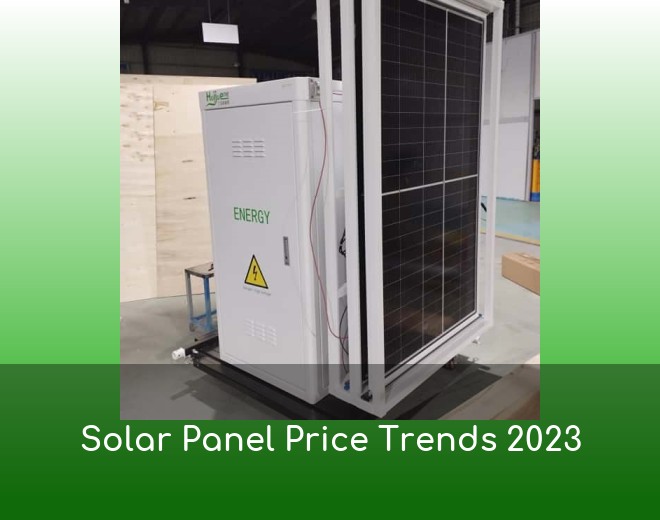
Table of Contents
Why Solar Plate Prices Are Falling
You know how everyone's talking about renewable energy being expensive? Well, here's the plot twist – solar panel costs have actually dropped 82% since 2010 according to BloombergNEF. But why now, and what's the catch?
Last month's Department of Energy report revealed something wild – manufacturing innovations have slashed silicon waste by 40% compared to 2021. That's like finding money in your winter coat pocket, but for solar manufacturers. And get this – installation labor costs decreased 15% nationwide as contractors adopt drone mapping tech.
The Battery Storage Factor
Wait, no... Actually, the real game-changer might be storage integration. Tesla's new Powerwall 3 (released May 2023) allows homeowners to store excess energy at 20% higher efficiency. Suddenly, that solar plate price becomes part of a bigger equation. Imagine powering your EV overnight with sunlight captured during lunch breaks!
Thin-Film vs. Monocrystalline Showdown
Let's say you're choosing between panel types. First Solar's cadmium telluride thin-film modules now achieve 19.3% efficiency – closing in on traditional silicon panels. But here's the kicker – they cost 23% less per watt in Arizona's recent utility-scale project. However...
"The lifetime yield difference still favors monocrystalline in northern climates," notes Dr. Emily Zhou from MIT's PVLab. Her team's May 2023 study showed 8% better winter performance for silicon panels in New England installations.
Tariffs and Trade Wars
Remember when US solar prices spiked 18% overnight in June 2022? That was the AD/CVD tariffs on Southeast Asian imports biting. Fast forward to 2023 – domestic manufacturing capacity has tripled, but we're still seeing supply chain hiccups. The Inflation Reduction Act's 30% tax credit helps, but navigating these waters requires local expertise.
Timing Your Solar Investment
Here's where it gets personal – my neighbor rushed to install panels last December before California's NEM 3.0 changes. They paid $2.80/W for a 6kW system. I waited until March 2023 when Panasonic released their upgraded panels – got 22% higher efficiency at $2.65/W. Sometimes patience pays, but with federal incentives decreasing in 2024...
| Quarter | Avg. Price/Watt | Key Market Event |
|---|---|---|
| Q1 2023 | $2.71 | IRA manufacturing credits begin |
| Q2 2023 | $2.63 | Chinese polysilicon glut |
Pro Installation Tips
Want the real inside scoop? Avoid the "Saturday morning quarterback" approach. Instead:
- Get quotes during off-season (Jan-Feb)
- Combine solar with roof replacement
- Ask about utility-specific rebates
Look, going solar isn't just about price per watt anymore. It's about understanding time-of-use rates, battery backup needs, and even how your roof's azimuth affects payback periods. The game's changed – but armed with the right info, you can make those sunshine dollars work harder than ever.
Related Contents

New Solar Panel Price Trends 2025
You know what's wild? New solar panel prices have been swinging like a pendulum since late 2024. Remember November's dramatic 8% price drop? Well, that correction phase might've been the market catching its breath before the next climb. Right now, mid-tier monocrystalline panels hover around $0.35-$0.45/Watt – but wait, no, let's clarify. That's for bulk purchases. Retail buyers still face $0.55-$0.70/Watt ranges.
Solar Panel Costs Decoded: Price Trends & Smart Buying
Let's cut through the noise – the average solar panel price has dropped 82% since 2010 according to IRENA's 2023 report. But why are we seeing this dramatic shift? Three words: scale, innovation, and policy.

40KV Solar Panel Price Trends 2025
You know how people keep saying solar is the future? Well, in Q1 2025, 40KV solar panel price quotes dropped 8.2% year-over-year despite raw material shortages. Let me explain this paradox through three concrete examples:

Solar Dish Price Trends and Innovations
You know, when we talk about solar dish prices, it's not just about metal and glass - it's about redefining energy economics. Current market data shows concentrated solar systems now deliver electricity at $0.08-$0.12 per kWh, down 40% since 2020. But wait, why does this matter for commercial adopters? Because operational costs have become competitive with traditional grid power in sun-rich regions like Arizona and Saudi Arabia.

Solar System for Home Price in Nigeria: Costs, Trends, and Smart Energy Solutions
You know that feeling when your freezer thaws during a blackout? For 43% of Nigerian households, this isn’t just an inconvenience—it’s weekly reality. The national grid supplies only 4,000MW for 200 million people, creating a solar energy adoption boom. But why now? Three factors collided in 2025:
 Inquiry
 Online Chat