


Smart Energy Management Systems Explained
Table of Contents
Why Modern Grids Need Smarter Control
You know that feeling when your phone battery drains unexpectedly? Now imagine that scenario at grid scale - except instead of missing cat videos, we're talking hospitals losing power. That's exactly what happened in Texas during Winter Storm Uri (2021), where energy management failures caused $195 billion in economic losses.
The Invisible Hand Behind Your Lights
Modern EMS (Energy Management Systems) act like air traffic control for electrons. While the 1990s systems focused on basic load balancing, today's solutions must juggle solar panel outputs that can swing 80% in minutes during cloudy weather.
The 4-Layer Architecture Making It Work
Let me share an "aha" moment from installing our first commercial system. The site engineer kept complaining about "ghost loads" - until we discovered the EMS was detecting vampire loads from idle machinery that accounted for 12% of their baseline consumption.
- Device Layer: Sensors tracking everything from PV inverters to EV charging stations
- Communication Backbone: Fiber optics meets 5G for real-time data
- Data Engine: Machine learning models predicting usage patterns
- User Interface: Dashboards even your facilities manager can love
How EMS Enables Renewable Dominance
California's grid operator (CAISO) reported a 94% renewable penetration day in April 2024 - something impossible without advanced energy management systems. The secret sauce? Batteries that charge during midday solar surplus and discharge during the evening "duck curve" demand spike.
The Battery Waltz
A 100MW solar farm producing excess energy at noon. Instead of curtailing production (essentially throwing sunlight away), the EMS:
- Diverts 40% to lithium-ion batteries
- Sends 30% to hydrogen electrolyzers
- Exports the rest via high-voltage lines
When Tesla's Powerwall Met California's Grid
During the 2024 heatwaves, Tesla's virtual power plant - essentially 50,000 home energy management systems working in concert - provided 150MW of peak capacity. That's equivalent to a medium-sized gas plant, but activated in milliseconds instead of hours.
The Behind-the-Scenes Magic
Each participating household saw:
| 10-15% | Reduction in monthly bills |
| 87% | Participation rate in emergency events |
| 0 | Manual interventions required |
Beyond Batteries: Tomorrow's Energy Chessboard
As we approach Q4 2025, watch for these EMS innovations:
- AI co-pilots that negotiate real-time energy trades
- Self-healing microgrids using blockchain settlements
- Quantum computing for ultra-precise demand forecasts
The next time you flip a switch, remember - there's an entire digital ecosystem working overtime to make that simple act possible. From rooftop solar to industrial compressors, energy management systems are quietly rewriting the rules of power distribution.
Related Contents
Smart Energy Control Systems Explained
You know what's wild? California threw away 1.2 million MWh of solar power last year - enough to power 120,000 homes. Why? Their grid couldn't handle the midday surge. This isn't just a "California problem" either. Germany's Energiewende program saw renewable curtailment costs hit €580 million in 2023 alone.
Solis Smart Energy Management Explained
Ever noticed how your solar panels sometimes work overtime while your battery sits idle? You're not alone. The U.S. Department of Energy reports 37% of commercial solar arrays operate below 85% efficiency due to mismatched energy flows.
Microgrid Energy Management Systems Explained
You know what's wild? About 13% of global electricity still gets wasted during transmission – that's enough to power all of India for a year. Traditional power grids, designed for fossil fuels, are struggling with renewable integration. Last month's blackout in Texas during a minor storm? Classic example of 20th-century infrastructure failing 21st-century needs.
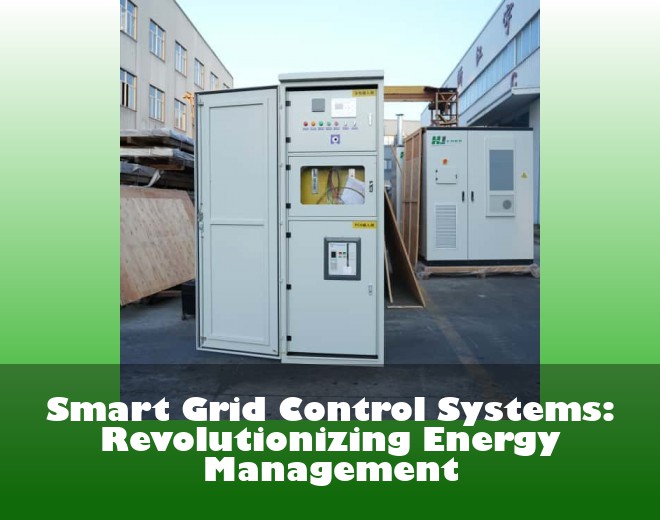
Smart Grid Control Systems: Revolutionizing Energy Management
Ever wondered why your lights flicker during heatwaves? The truth is, our century-old power systems are struggling to keep up with 21st-century demands. In 2023 alone, US utilities reported 28% more weather-related outages compared to 2015. That's like having an extra month of blackouts every year!
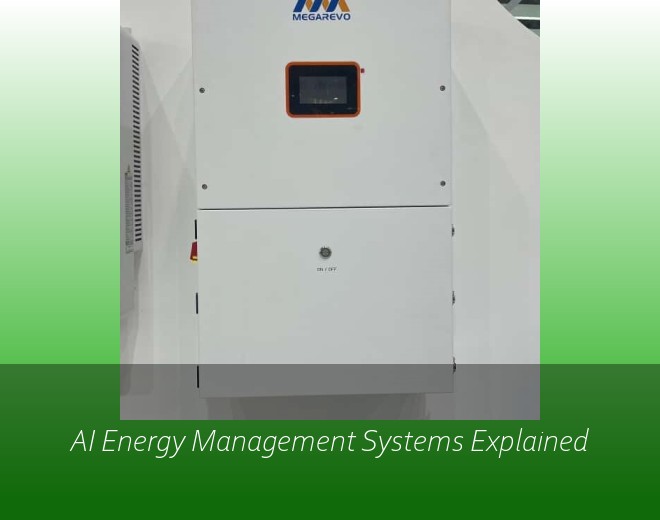
AI Energy Management Systems Explained
You know what's wild? Global energy demand is expected to jump 50% by 2050 according to the EIA. But here's the kicker – traditional grids were designed when coal was king and renewable energy was just a lab experiment. We're trying to power Tesla with a Model T engine.
 Inquiry
 Online Chat