


Battery Storage for Balkonkraftwerk: Solving Renewable Energy’s Biggest Challenges
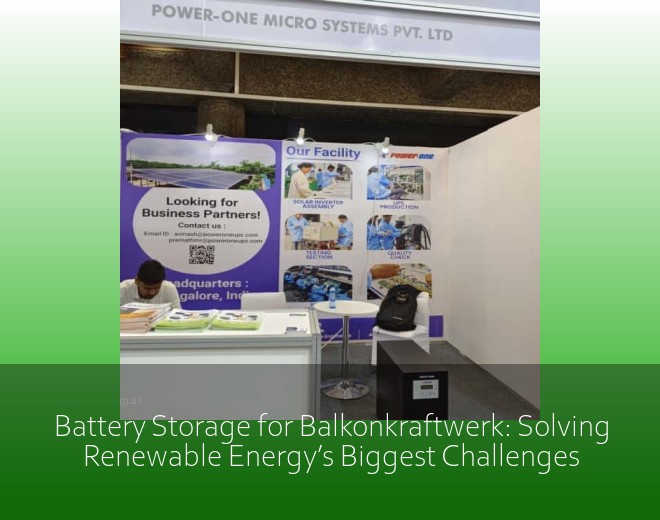
Table of Contents
Why Your Solar Balcony Needs a Battery Storage
You've probably seen those sleek balcony power plants popping up across European cities. But here's the kicker – Germany's Fraunhofer Institute reports 68% of balkonkraftwerk users still rely on grid power after sunset. That's like buying a sports car but keeping it in first gear.
Let's break this down. A typical 800W balcony system generates 600-800kWh annually – enough to power your fridge and laptop. But without storage, you're literally throwing sunlight away. The solution? Pair those panels with lithium iron phosphate (LiFePO4) batteries. These units can store excess daytime energy with 95% efficiency, shrinking your evening grid dependence by 40%.
The Midnight Electricity Paradox
Modern homes consume 37% of their energy after 6PM when solar production drops. This mismatch costs EU households €230/year in grid fees alone. Battery storage flips this equation – Munich's Stadtwerke utility now offers €0.12/kWh rebates for stored solar versus €0.32/kWh peak grid rates.
Chemistry vs Physics: The Storage Showdown
When choosing a storage system, you're really picking between two energy time travelers:
- Chemical storage (Batteries): LiFePO4 dominates 78% of residential installations. Safety first – these won't thermal runaway like old lithium-ion models.
- Physical storage (Water/air): Great for utilities, but try fitting a pumped hydro plant on your 10th-floor balcony!
Here's where it gets interesting. The latest modular batteries integrate maximum power point tracking (MPPT) directly into the battery management system. Translation? Your system automatically adjusts to cloudy days or panel shading without manual tweaks.
How Berlin Families Beat Grid Limitations
Take the Müller family in Prenzlauer Berg. Their 1920s apartment couldn't handle grid feed-in, so they installed a 2kWh battery with their balcony system. Result? 83% self-consumption versus 52% for battery-less neighbors. The secret sauce:
- Time-shifting: Run dishwasher/washer during solar peaks
- Emergency backup: 12-hour outage protection
- Smart integration: Alexa-controlled load prioritization
Their payback period? 4.2 years with Berlin's rising electricity prices. Compare that to the 6-8 year average for standalone PV systems.
The Hidden Costs of Waiting
"I'll wait for better tech" sounds prudent, but here's the reality check. China's CATL just slashed LiFePO4 prices by 22% this quarter – partly due to oversupply. Meanwhile, EU tariffs on Chinese batteries take effect October 2024. Early adopters who bought this spring saved €480 on average 5kWh systems.
But the real value isn't just financial. Modern energy storage systems act as grid citizens – Bavaria's pilot program pays participants €60/year for voltage stabilization services. Your battery becomes a community asset during heatwaves when grids strain under AC loads.
So where does this leave homeowners? The sweet spot combines 600-800W balcony PV with 3-5kWh storage. This setup avoids complex permits (under Germany's 600W limit for plug-and-play systems) while delivering 70-80% energy autonomy. As for maintenance? Most systems self-diagnose via smartphone apps – no more than you'd need for a modern boiler.
Related Contents
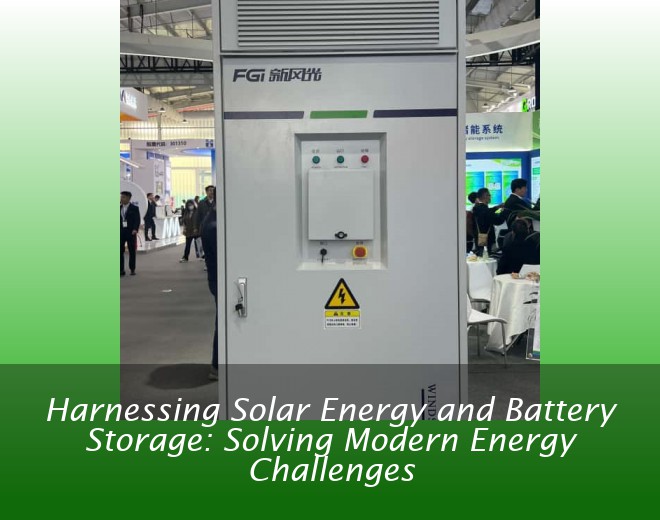
Harnessing Solar Energy and Battery Storage: Solving Modern Energy Challenges
our energy systems are broken. While the world added 295 GW of new solar capacity in 2023 alone , 675 million people still lack reliable electricity access. The solution isn't just generating more power, but storing it smarter. Solar energy production grew 24% in EU countries last year, but without adequate storage, we're literally letting sunlight go to waste.
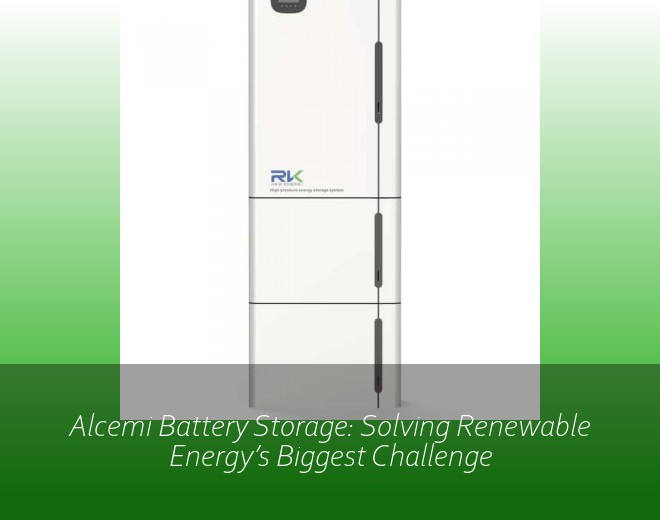
Alcemi Battery Storage: Solving Renewable Energy’s Biggest Challenge
Let’s face it: solar panels don’t work at night, and wind turbines stall on calm days. These renewable energy sources are brilliant—until they’re not. In 2025, the global energy storage market hit $45 billion, yet grid instability remains a $12 billion annual problem for utilities. Why? Because storing green energy efficiently is still the missing puzzle piece.
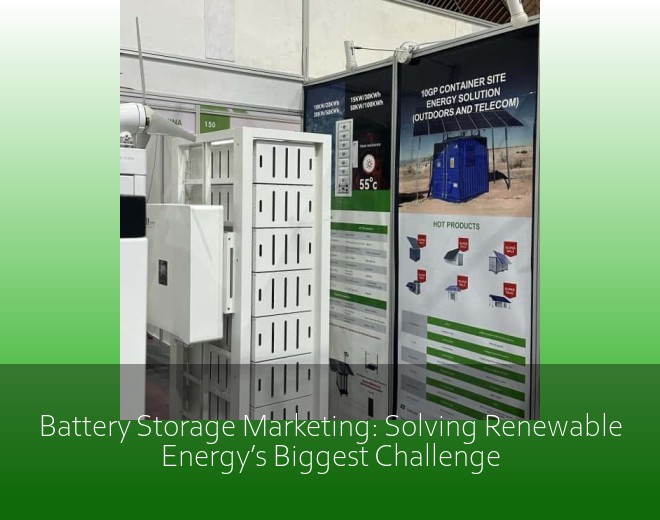
Battery Storage Marketing: Solving Renewable Energy’s Biggest Challenge
You know, the renewable energy transition isn’t just about generating clean power—it’s about storing it. While solar panels and wind turbines grab headlines, batteriespeicher (battery storage systems) remain the unsung heroes. In Germany alone, residential battery installations jumped 47% last quarter, yet most consumers still don’t understand why they need one. Let’s face it: we’ve got a marketing problem disguised as a tech problem.
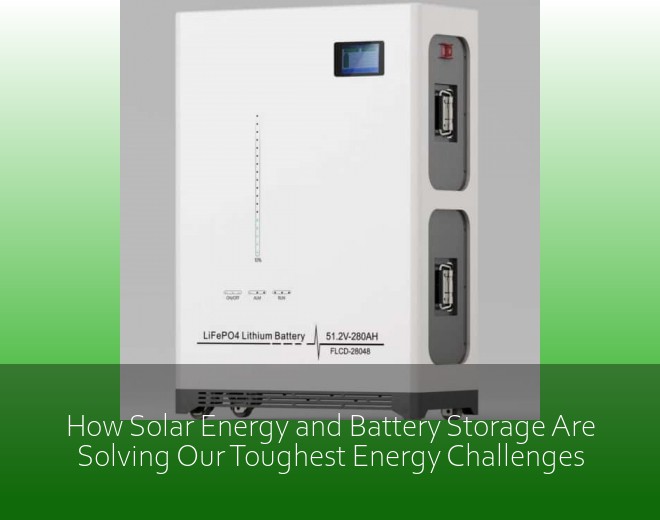
How Solar Energy and Battery Storage Are Solving Our Toughest Energy Challenges
Let's face it – our current energy model's about as stable as a house of cards in a windstorm. Fossil fuel prices swung wildly last quarter, with natural gas hitting $8.50/MMBtu in February before crashing to $4.20 by March. Meanwhile, extreme weather events knocked out power for 2.3 million U.S. households just last month. Solar energy isn't just an alternative anymore; it's becoming our safety net.
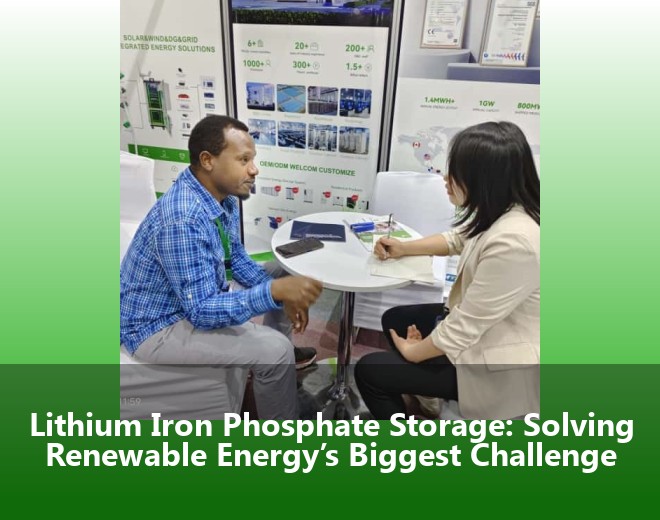
Lithium Iron Phosphate Storage: Solving Renewable Energy’s Biggest Challenge
We’ve all seen the graphs—solar panels and wind turbines now generate electricity cheaper than fossil fuels in most regions. But here’s the kicker: renewable energy adoption grew 12% globally last year, while grid-scale storage only expanded by 7%. That mismatch? It’s like building Ferraris with bicycle brakes.
 Inquiry
 Online Chat