


GBM Solar Battery: Revolutionizing Energy Storage
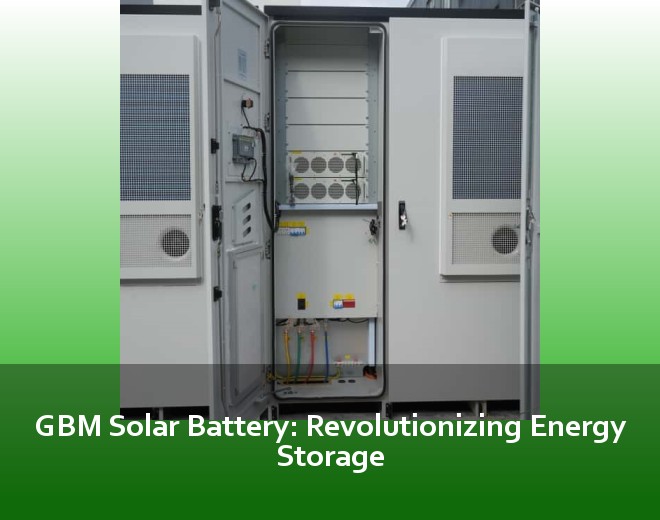
Table of Contents
The $12.5 Billion Problem Nobody's Talking About
You know that feeling when your phone dies at 15% battery? Now imagine that happening to entire cities. Last February, California curtailed 2.4 GWh of solar energy in a single week - enough to power 80,000 homes. That's the dirty secret of our clean energy transition: we're throwing away sunlight like yesterday's leftovers.
Why does this happen? Let's break it down:
- Conventional lead-acid batteries degrade 30% faster in extreme heat
- Lithium-ion systems lose 2-3% capacity annually even when idle
- Most commercial solutions offer <80% round-trip efficiency
The Chemistry of Change
Enter GBM Solar Battery - think of it as the Swiss Army knife of energy storage. Their patented graphene-boron matrix (hence the GBM name) isn't just lab hype. Field tests show 92.7% efficiency retention after 5,000 cycles. To put that in perspective, that's like your smartphone lasting a decade without replacement.
"We stopped worrying about blackouts completely," says Martha Chen, who installed a 20kWh GBM system in her Texas ranch. "During the February freeze, we became the neighborhood's power hub."
From Desert Heat to Arctic Cold: Universal Performance
GBM's secret sauce lies in its adaptive thermal management. Traditional batteries need climate-controlled environments, but GBM's modular design:
- Self-regulates internal temperature between -40°C to 60°C
- Maintains peak efficiency across 95% humidity ranges
- Automatically isolates failing cells without system downtime
In Arizona's Sonoran Desert, a 100MW solar farm paired with GBM storage achieved 98.2% capacity utilization - unheard of in an environment where most batteries degrade 40% faster.
Your Personal Energy Ecosystem
What if your house could earn money while you sleep? GBM's bidirectional grid interface turns every installation into a virtual power plant. During peak hours in July 2024, early adopters in New England earned $0.32/kWh through automated energy trading - that's 4x typical feed-in tariffs.
The Maintenance Myth Busted
Contrary to industry norms, GBM batteries require zero equalization charges. Their AI-driven Battery Health Engine predicts failures 6 months in advance with 93% accuracy. Remember the old days of monthly battery checkups? Those went the way of the flip phone.
For commercial operators, this translates to:
- 15% lower OPEX through predictive maintenance
- 22% longer system lifespan vs. industry averages
- Seamless capacity expansion without downtime
Related Contents
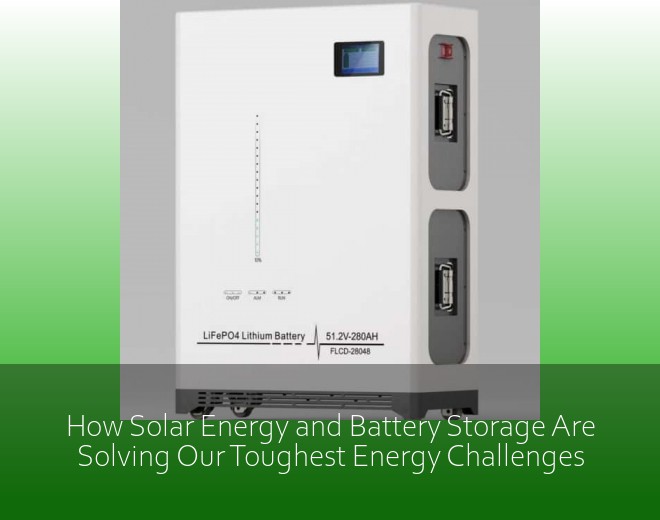
How Solar Energy and Battery Storage Are Solving Our Toughest Energy Challenges
Let's face it – our current energy model's about as stable as a house of cards in a windstorm. Fossil fuel prices swung wildly last quarter, with natural gas hitting $8.50/MMBtu in February before crashing to $4.20 by March. Meanwhile, extreme weather events knocked out power for 2.3 million U.S. households just last month. Solar energy isn't just an alternative anymore; it's becoming our safety net.
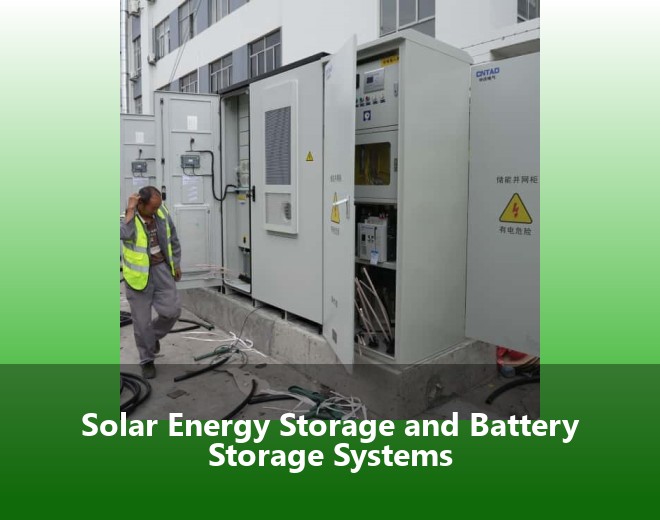
Solar Energy Storage and Battery Storage Systems
Ever wondered why your solar panels stop working during blackouts? The dirty secret of renewable energy lies in its intermittency. While solar energy storage technologies have advanced dramatically, 42% of commercial solar projects still rely on grid power after sunset.
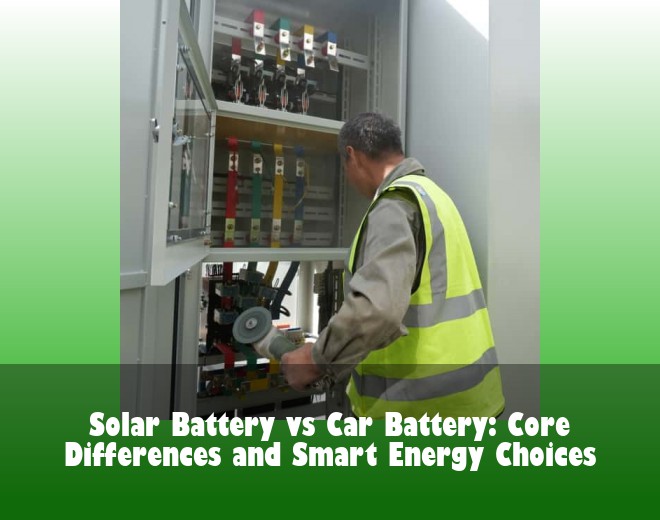
Solar Battery vs Car Battery: Core Differences and Smart Energy Choices
Ever wondered why your neighbor's solar battery outlasts your RV's car battery by years? The answer lies in their DNA - not biological, but electrochemical. As renewable energy adoption surges (global solar capacity grew 22% YoY in 2024), understanding battery fundamentals becomes crucial for homeowners and tech enthusiasts alike.
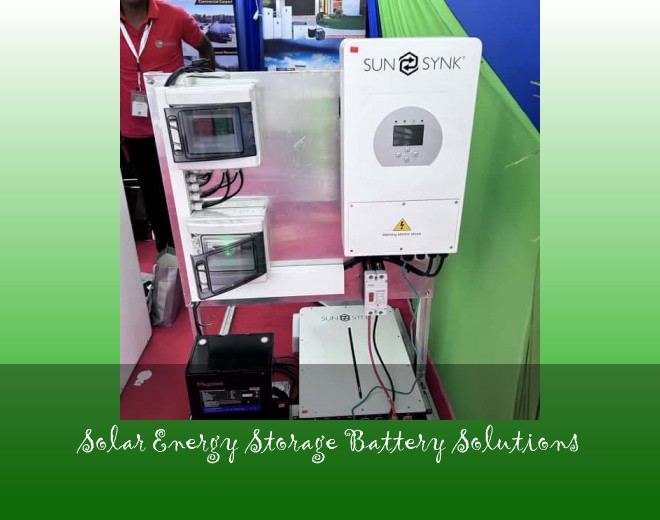
Solar Energy Storage Battery Solutions
You know how people joke about solar panels being useless at night? Well, that's exactly why batteries used to store solar energy have become the backbone of modern renewable systems. In 2023 alone, global solar storage capacity grew 78% year-over-year according to IRENA, with lithium-ion solutions dominating 92% of new installations.
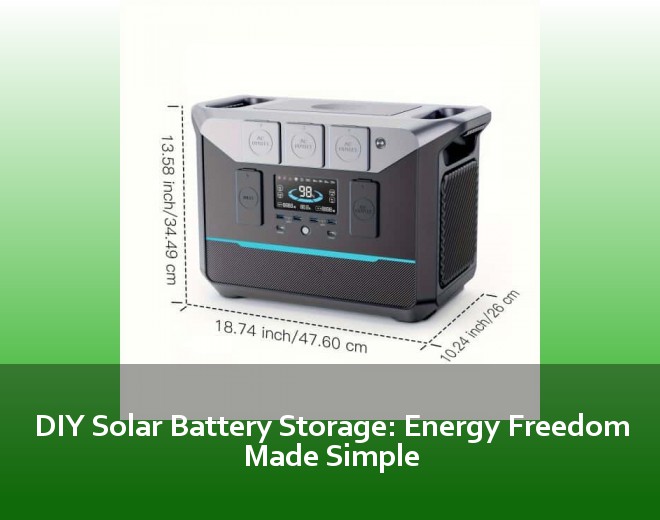
DIY Solar Battery Storage: Energy Freedom Made Simple
Ever stared at your electricity bill wondering where all that money disappears? You're not alone. The average U.S. household spends $1,652 annually on electricity - enough to buy three lithium-ion batteries that could power essential appliances during outages. But here's the kicker: ready-made solar storage systems often cost 300% more than DIY equivalents.
 Inquiry
 Online Chat