


High Voltage PV Panels: Powering Solar Innovation
Table of Contents
Why Voltage Matters in Solar Energy
Let's cut to the chase - high-voltage PV panels aren't just another industry buzzword. They're solving a fundamental bottleneck in solar energy systems that's been holding back efficiency gains for years. Traditional solar arrays often struggle with energy losses during transmission, especially in large-scale installations. But what if we could slash those losses by 30% or more? That's exactly what modern high-voltage systems are achieving through smarter engineering.
Here's the kicker: while residential systems typically operate at 600V, commercial high-voltage solar panels now routinely hit 1,500V. This voltage leap does more than just improve efficiency - it's reshaping how we design entire energy systems. Take the recent Hamburg Solar Farm project in Germany, where upgrading to 1,500V architecture reduced copper usage by 18% while boosting daily energy yield by 22%.
Recent Technical Breakthroughs
The secret sauce lies in three key innovations:
- Advanced bypass diode configurations
- PID-resistant module designs
- Smart MPPT controllers
Wait, no - let's rephrase that for clarity. What really makes these systems tick is their ability to maintain stable performance under partial shading conditions. Remember the 2023 California grid incident where conventional arrays faltered during the eclipse? High-voltage setups with distributed MLPE (Module-Level Power Electronics) kept humming along at 94% capacity factor.
Game-Changing Applications
A 50MW solar farm in Texas where high-voltage PV panels reduced balance-of-system costs by $0.12/Watt. That's not theoretical - it's actual data from Q1 2024 installation reports. The financial implications are staggering when you scale this across multi-megawatt projects.
But here's where it gets interesting for homeowners. New hybrid inverters are bridging the gap between commercial-scale voltages and residential needs. Companies like SMA and Fronius now offer 1,000V-capable inverters that pair perfectly with rooftop installations. Early adopters in Arizona are seeing payback periods shrink from 7 years to just 4.5 years.
Safety in High-Voltage Systems
"But won't higher voltages increase fire risks?" you might ask. Actually, modern arc-fault detection circuits have become incredibly sophisticated. The latest UL 3741 certification requirements mandate response times under 2.5 seconds for arc interruption - faster than most circuit breakers in your home's electrical panel.
The Road Ahead for Solar Tech
As we approach Q4 2024, the industry's buzzing about bifacial high-voltage PV panels combined with trackers. Preliminary data from NREL shows these combos achieving 29.3% efficiency in field tests - that's within spitting distance of theoretical limits for silicon-based cells.
The real wild card? How these voltage advancements will pair with emerging battery tech. Tesla's recent patent filings suggest they're developing direct high-voltage coupling between solar arrays and Powerwall 3 systems. If commercialized, this could eliminate entire conversion stages in residential energy storage.
So where does this leave us? High-voltage architecture isn't just the future - it's rapidly becoming the present. From utility-scale farms to suburban rooftops, these systems are proving their worth through hard numbers and real-world performance. The question isn't whether to adopt, but how quickly the industry can retool for this voltage revolution.
Related Contents
High-Efficiency Solar Panels: Powering Tomorrow
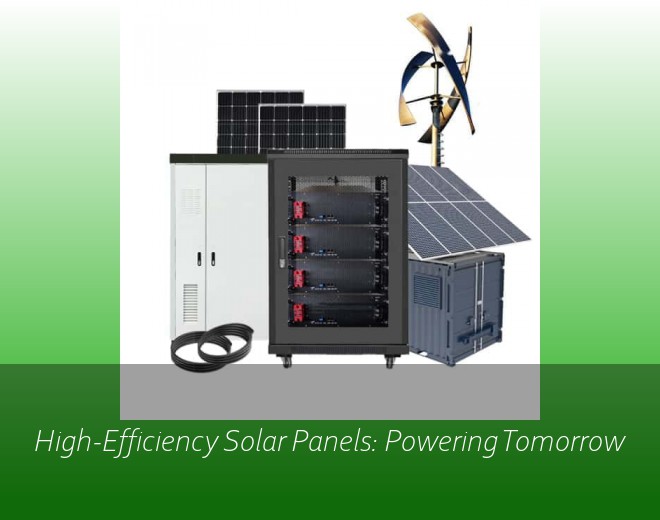
Let's face it – traditional energy costs have gone bananas lately. In 2023 alone, U.S. electricity prices jumped 12%, pushing homeowners and businesses alike to seek alternatives. That's where high-efficiency solar panels enter the picture, offering what some might call a financial lifesaver wrapped in environmental benefits.
High-Efficiency Solar Panels: Powering the Future
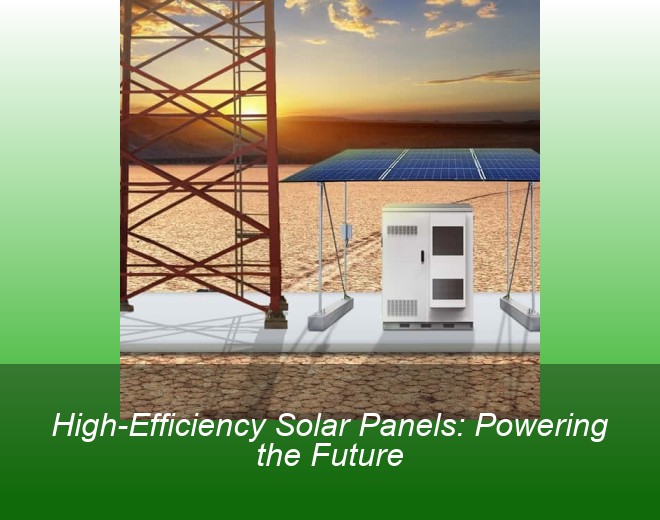
Ever wondered why your electricity bill keeps climbing while the sun literally showers free energy onto your roof? The global energy market saw a 23% price hike in Q2 2024, according to recent Department of Energy reports. Yet high-performance solar panels now convert 22.8% of sunlight to electricity on average - a 40% improvement from 2015.

Lithium Batteries for Solar Panels: Powering the Future
Solar panels only generate electricity during daylight hours - but what happens when clouds roll in or the sun sets? This fundamental limitation explains why 68% of solar adopters now pair their systems with lithium batteries for solar panels. The global lithium-ion battery market for renewable energy storage grew to $45 billion in 2023, proving this isn't just some niche solution.

Solar Panels in Addis Ababa: Powering Ethiopia’s Green Future
Let’s face it: Addis Ababa’s growing energy demand isn’t keeping pace with traditional power infrastructure. With frequent blackouts affecting 40% of businesses monthly, the city’s economic engine sputters unpredictably. Solar panels offer more than environmental benefits here – they’re becoming economic lifelines.
Solar Panels Oman: Powering the Future
With 342 days of annual sunshine, solar panels in Oman generate 40% more power than European installations. The Sultanate's updated 2040 Vision targets 30% renewable energy penetration, creating 8,000 new jobs in photovoltaic sectors by 2027.
 Inquiry
 Online Chat