


Powering a 200Ah Battery with Solar
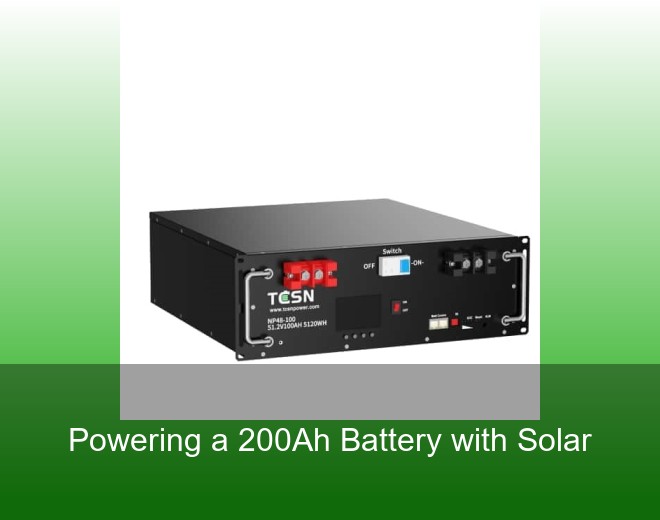
Table of Contents
Understanding Your 200Ah Battery
Let's start with what 200Ah really means. A 200 amp-hour battery stores 200 amps of current for one hour at 12 volts. But here's the catch - you shouldn't drain it completely. Most systems only use 50-80% of the total capacity to preserve battery life.
Imagine your battery as a water tank. If it holds 200 gallons, you'd only want to use 160 gallons before refilling. This "safe usage zone" concept is called Depth of Discharge (DoD). Lithium batteries typically allow 80% DoD, while lead-acid types might only handle 50%.
The Solar Panel Calculation Formula
The basic equation seems straightforward:
Daily energy needs ÷ Sunlight hours ÷ System efficiency = Solar panel wattage
Let's break this down for a 12V 200Ah lithium battery:
- Total storage: 200Ah × 12V = 2,400Wh
- Usable energy (80% DoD): 2,400Wh × 0.8 = 1,920Wh
- Daily recharge needed: 1,920Wh ÷ 0.85 (efficiency loss) = 2,259Wh
In a location with 5 peak sun hours:
2,259Wh ÷ 5h = 452W solar array needed
Beyond Basic Math: Real-World Variables
Wait, no... those textbook numbers don't tell the whole story. Actual performance depends on:
- Panel orientation (10-25% efficiency loss for non-optimal angles)
- Temperature fluctuations (output drops 0.5%/°C above 25°C)
- Cloud cover patterns (up to 50% reduction on overcast days)
Arizona resident Mia Chen learned this the hard way: "I installed three 150W panels assuming they'd cover my needs. During summer heatwaves, my system only delivered 65% of rated capacity!"
RV Owner's Success Story
Take Tom's converted school bus home. His 200Ah battery powers:
- 12V refrigerator (60W continuous)
- LED lighting (20W total)
- Laptop charging (50W)
After calculating 1,200Wh daily needs, Tom installed:
- 400W solar array (4×100W panels)
- MPPT charge controller
- 30A DC-DC charger
"The system maintains 70-90% charge even on cloudy days," Tom reports. "But I wish I'd known about temperature compensation earlier - my first controller fried during a heatwave!"
Keeping Your System Efficient
Three often-overlooked maintenance essentials:
- Monthly panel cleaning (dust can reduce output by 15%)
- Annual battery capacity testing
- Seasonal angle adjustments
As solar technician Luis Gomez notes: "I've seen systems gain 20% output simply by correcting a 10° tilt error. It's not just about how many panels you have - it's how you use them."
Recent developments add new considerations. The 2024 SolarEdge report shows modern panels lose 0.5% annual efficiency compared to older models' 0.8% degradation. This means your 2025 system might outlast earlier installations by 3-5 years.
Related Contents
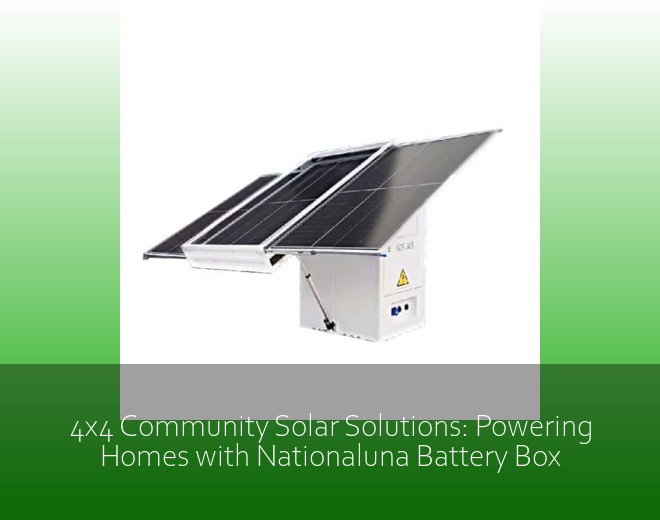
4x4 Community Solar Solutions: Powering Homes with Nationaluna Battery Box
You know what's wild? Over 300 community solar initiatives collapsed in 2023 alone. The culprit? Energy storage gaps that turn daylight abundance into nighttime scarcity. Let's break this down...
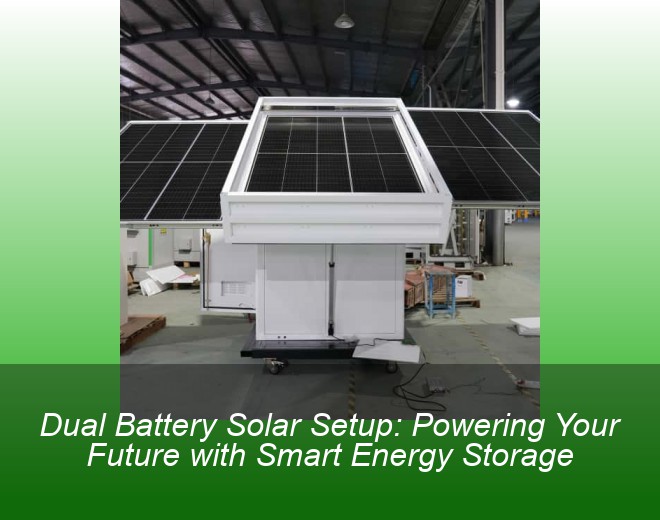
Dual Battery Solar Setup: Powering Your Future with Smart Energy Storage
You know what's worse than a blackout? Wasting solar energy you've already produced. While 68% of solar adopters report energy surplus, the harsh truth is most systems lose 20-30% of this bounty through inefficiencies. That's where a dual battery solar setup changes the game - it's like having both a checking and savings account for your electrons.
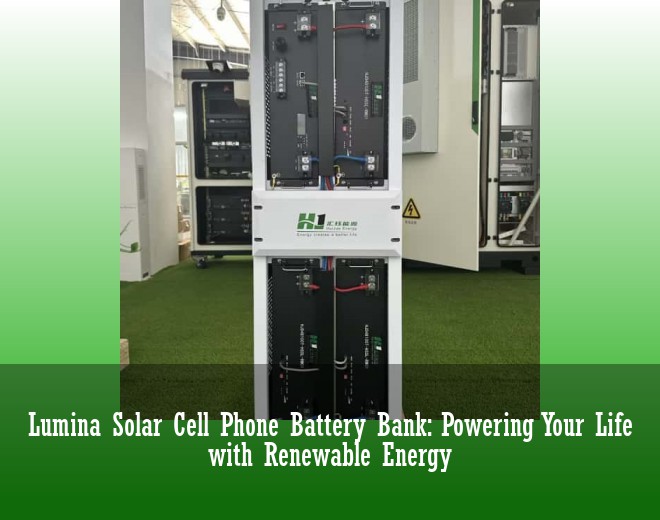
Lumina Solar Cell Phone Battery Bank: Powering Your Life with Renewable Energy
You've probably found yourself stranded with a dead phone battery during a hiking trip or festival. Well, here's the kicker: solar cell technology has quietly achieved what seemed impossible five years ago. The global portable solar charger market grew 28% in 2024 alone, driven by innovations like the Lumina battery bank that delivers reliable power through photovoltaic panels.
Powering South Africa: 15kW Solar Systems with Battery Backup
You've felt it - that sinking moment when Eskom's alert hits your phone. Stage 6 load shedding isn't just inconvenient; it's costing households R12k/year and businesses millions. But here's the kicker: South Africa receives 2,500+ annual sunshine hours - enough to power the continent twice over. Why aren't we harnessing this?
Solar Battery Packs for Light: Powering Tomorrow with Portable Energy
Ever tried charging your phone during a blackout? For 1.2 billion people worldwide, that's not an inconvenience - it's daily reality. Enter solar battery packs, the unsung heroes rewriting energy access rules. These compact systems combine photovoltaic cells with smart storage, turning sunlight into electricity you can actually use when you need it most.
 Inquiry
 Online Chat