


Battery Industry's Critical Crossroads
Table of Contents
Explosive Growth Meets Resource Reality
Let's face it—the battery industrial sector is growing faster than a lithium-ion cell on overcharge. Jiangxi Province reported 104.9% year-on-year growth in new energy vehicle production through October 2024, but here's the rub: Can our raw material supplies keep pace with this trajectory?
A single Tesla Model S battery pack contains about 12 kg of lithium. Now multiply that by the 30 million EVs projected to hit roads by 2025. Suddenly, that "green" future looks decidedly mineral-intensive. The International Energy Agency estimates lithium demand could increase 42-fold by 2040 if we stay on current paths.
The Cobalt Conundrum
While everyone's talking about lithium, cobalt remains the industry's dirty secret. Over 70% of cobalt production still comes from artisanal mines in the DRC, where supply chain ethics clash with commercial realities. Major players like CATL are pushing cobalt-free lithium iron phosphate (LFP) chemistries, but performance trade-offs persist.
The Closed-Loop Lithium Revolution
Chenzhou City's breakthrough offers hope. Their closed-loop lithium chain—from mineral extraction to battery recycling—achieved 92% material recovery rates in 2024 trials. This isn't just about sustainability; it's economic survival. "Our recycling facilities now provide 40% of production-grade lithium carbonate," reveals Joysun New Energy's CTO during our facility tour.
- Mining efficiency improved 22% through AI-powered ore sorting
- Recycled nickel now costs 35% less than virgin material
- Water usage per battery pack reduced by 18 metric tons
Beyond Batteries: Smart Storage Systems
Here's where things get interesting—the real game-changer isn't just better batteries, but energy storage systems that think. Aokly Group's 1.5MWh industrial storage prototype uses predictive algorithms to extend battery lifespan by 27%. Their secret sauce? Machine learning that adapts charging cycles to real-time grid demands and weather patterns.
"We're not selling batteries anymore—we're selling electrons with PhDs."
- Aokly Energy Solutions Director
Regulations Reshaping Global Markets
Just as the industry finds its footing, EU's 2023 Battery Regulation throws a wrench in the works. Starting March 2025, all export batteries require digital passports tracking carbon footprints and material origins. For Chinese manufacturers controlling 78% of global lithium-ion production, compliance costs could reach $4.2 billion annually.
But wait—could this crisis become opportunity? Battery industrial leaders like Huijue Group are turning compliance into competitive advantage. Their new Ningde facility combines blockchain material tracking with solar-powered production, slashing carbon intensity by 62% while meeting EU standards.
The Recycling Mandate Tipping Point
California's 2030 battery recycling mandate (requiring 90%+ recovery rates) is pushing innovation faster than any R&D budget ever could. Startups like Redwood Materials now recover 95% of battery-grade nickel and cobalt—numbers that seemed impossible just five years ago.
As I walk through Huijue's pilot recycling plant, the acrid smell of decomposed electrolytes mixes with the hum of autonomous sorting robots. It's not pretty, but neither was the first oil refinery. The technician beside me shrugs: "We're basically mining above ground now. Turns out cities are better ore bodies than most mines."
The path forward demands brutal honesty—we can't recycle our way out of exponential demand. But through hybrid approaches combining closed-loop systems, material innovation, and smarter consumption, the battery industry might just power our future without consuming it.
Related Contents
Energy Storage Industry's Critical Crossroads
The global push for renewable energy has hit a storage capacity gap that’s sort of like building electric cars without charging stations. In 2024 alone, solar installations outpaced storage deployments by 3:1 – we’re generating clean power but losing 35% of it through inadequate storage solutions.

The Solar Panel Industry's Critical Crossroads
Let's cut through the hype - global solar panel installations grew 35% last year, but energy grids are struggling to keep pace. In California, they're actually paying consumers not to feed excess power back into the grid during peak hours. How did we get here? The answer lies in three critical mismatches:
Lithium Battery Industry Challenges & Solutions
Global lithium battery demand is projected to reach $100 billion by 2025, fueled by electric vehicles (EVs) and renewable energy storage. But here's the kicker - 73% of lithium reserves are concentrated in just three countries (Australia, Chile, China), creating geopolitical risks comparable to OPEC's oil dominance in the 1970s.
Solar Battery Cables: Critical Links in Renewable Energy
You know those thick wires connecting your solar panels to the battery bank? Those solar battery cables silently determine whether your system achieves 95% efficiency or wastes 30% energy in transmission losses. While everyone obsesses over panel wattage, the real magic happens in these unassuming conduits.
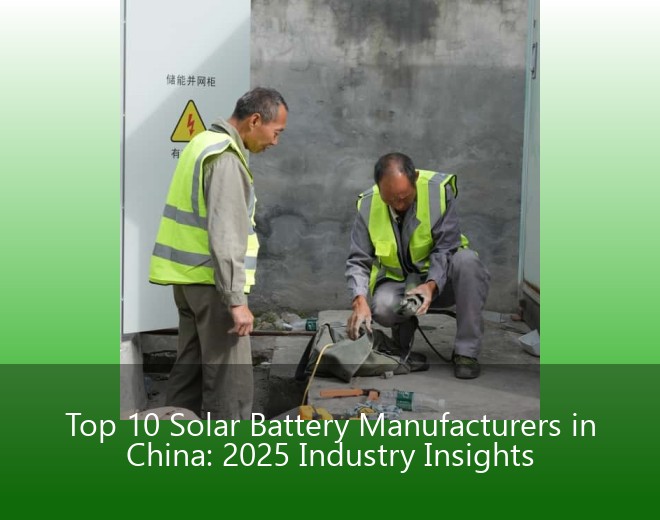
Top 10 Solar Battery Manufacturers in China: 2025 Industry Insights
You know how people keep talking about China's renewable energy dominance? Well, the solar battery sector tells that story better than any statistics. As of March 2025, China accounts for 78% of global lithium-ion battery production capacity - and solar storage systems are driving this growth like never before.
 Inquiry
 Online Chat