


Solar Charging for Deep Cycle Batteries
Table of Contents
What Makes Deep Cycle Batteries Unique?
You know those car batteries that die if you leave the dome light on overnight? Deep cycle batteries are built differently. Designed for renewable energy systems and marine use, they can discharge up to 80% capacity repeatedly without damage. But here's the kicker - improper charging reduces their lifespan faster than you'd expect.
Lead-acid variants dominate 68% of the market, but lithium iron phosphate (LiFePO4) batteries are gaining traction. A 2023 NREL study found lithium models now account for 37% of new solar installations in RV applications. Why the shift? They charge 40% faster and last 3x longer, though initial costs remain higher.
The 150-Watt Myth
"Just get a 150W panel" - you've probably heard this generic advice. But actual needs vary wildly. Let's break it down:
Basic formula: Battery capacity (Ah) × Voltage × 1.2 (inefficiency factor) ÷ Peak sun hours
For a 100Ah 12V battery needing full recharge in 6 peak hours:
100Ah × 12V = 1,200Wh
1,200Wh × 1.2 = 1,440Wh
1,440Wh ÷ 6h = 240W solar required
Wait, no - that's assuming perfect conditions. Reality's messier. Let me tell you about my neighbor's sailboat disaster...
Beyond Basic Math: Real-World Variables
Ever noticed how phone chargers work slower on cloudy days? Solar panels face similar issues. Key factors most guides ignore:
- Temperature coefficients (output drops 0.5%/°C above 25°C)
- Partial shading reducing output by 50-80%
- Dust accumulation causing 7-25% losses monthly
Last summer's heatwave in Phoenix actually decreased solar yields by 18% despite longer daylight hours. Counterintuitive, right? That's why seasoned installers always oversize systems by 20-30%.
Truck Camper Case Study
Meet Sarah - a digital nomad living in her Ford F-150. Her setup:
• 200Ah lithium battery
• 400W solar array
• 12V fridge (1.2kWh/day)
• LED lighting (0.15kWh/day)
On paper, this should work perfectly. But during her Colorado ski trip, snow coverage and short days forced her to ration power. She learned the hard way that winter sun hours can be half of summer levels at high altitudes.
Pro Installation Secrets
Here's what the solar installers won't tell you:
1. Panel orientation matters more than wattage. A 300W panel facing west produces less than a 250W south-facing unit.
2. Cheap charge controllers can waste up to 25% of your harvested energy
3. Parallel vs series wiring affects voltage drop - crucial for long cable runs
I once saw a $15 connector fry an entire system. Don't be that person chasing the lowest Amazon price.
Battery Care for Solar Users
Deep cycle batteries aren't "set and forget" devices. Monthly maintenance tasks:
• Check terminal corrosion (white powder = bad news)
• Test specific gravity with a hydrometer
• Equalize charges for flooded lead-acid models
A Michigan marina reported 73% of battery failures traced to improper watering. Simple maintenance could've prevented most replacements.
The Lithium Revolution
While lead-acid still dominates, lithium's gaining ground fast. Prices dropped 42% since 2020 according to BloombergNEF. Their tolerance for partial charging makes them ideal for solar setups. But here's the rub - they require specialized charge controllers most kits don't include.
Final thought: Solar sizing isn't just math. It's about understanding your energy personality. Are you the meticulous power rationer or the "leave all lights on" camper? Your habits impact system needs more than any spreadsheet calculation.
Related Contents
Solar Charging Deep Cycle Batteries Simplified
You know what's kinda ironic? We've got these amazing deep cycle batteries that can store enough energy to power a small cabin, but most people still charge 'em using grid electricity. Wait, no - that's actually backwards when the sun's right there, free for the taking!
Solar Charging for Deep Cycle Batteries
You’ve probably heard the horror stories – solar panels installed at great expense, only to leave batteries half-charged and deteriorating. In 2023 alone, the National Renewable Energy Laboratory reported 42% of off-grid solar systems underperformed due to improper battery charging. Why does this keep happening?
Solar Deep Cycle Gel Batteries Explained
Ever wondered why your solar panels aren't giving you 24/7 power? The answer might be lurking in your battery cabinet. While most homeowners focus on panel efficiency, the real magic happens in those heavy boxes storing your sunshine. Enter deep cycle gel batteries - the maintenance-free beasts revolutionizing renewable energy storage.
Overcharge in Solar Deep Cycle Batteries: Causes, Risks, and Smart Solutions
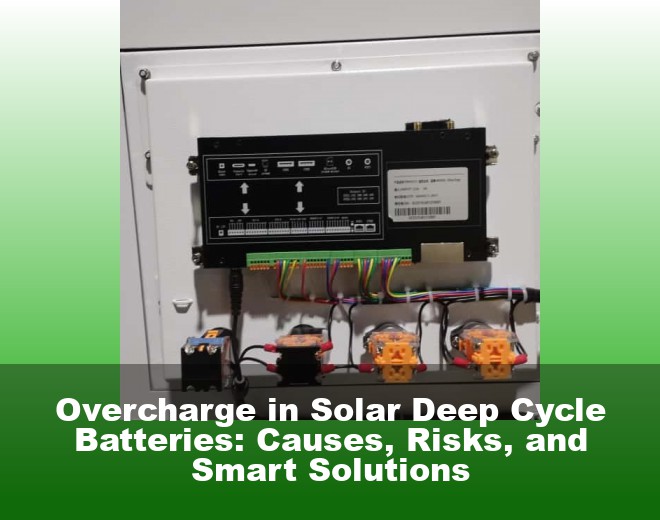
Your solar deep cycle battery sits there soaking up sunlight day after day. But what happens when that energy inflow crosses into dangerous territory? Overcharging occurs when continuous electrical input exceeds a battery’s storage capacity – like trying to pour 2 liters into a 1-liter bottle. Unlike your smartphone that stops charging at 100%, many solar systems lack foolproof safeguards.
Solar Deep Cycle Batteries Explained
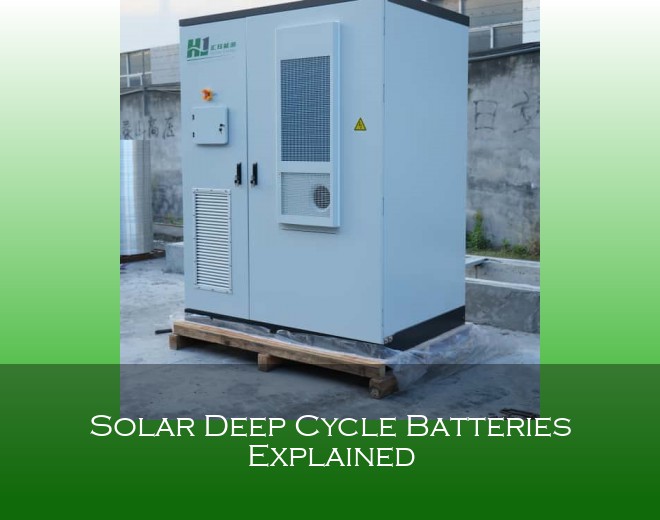
You know how your car battery dies if you leave the headlights on overnight? That's because starter batteries aren't designed for sustained energy release. Deep cycle solar batteries work differently - they're the marathon runners of energy storage, built to discharge up to 80% capacity daily without breaking a sweat.
 Inquiry
 Online Chat