


Renewable Energy Storage in Southeast Asia
Table of Contents
Why Energy Storage Struggles in Tropical Climates
You know how your phone battery dies faster in the heat? Multiply that by 100,000 and you'll understand why Southeast Asian countries face unique energy storage challenges. With average temperatures hitting 32°C and 85% humidity year-round, conventional lithium-ion systems degrade 40% faster than in temperate zones .
Last month's blackout in Jakarta exposed the urgent need for climate-resilient solutions. Over 10 million people lost power when a 500MWh facility overheated during peak demand - a wake-up call captured in viral TikTok videos tagged #DarkJakarta.
Breakthroughs in Battery Architecture
Leading companies like BDB Energy SDN BHD are pioneering liquid-cooled battery storage systems specifically for equatorial regions. Their new modular design:
- Reduces thermal stress through phase-change materials
- Extends cycle life to 8,000+ charges
- Maintains 95% efficiency at 40°C ambient temperature
Wait, no - actually, the real game-changer came from an unexpected source. Malaysian engineers recently adapted durian husk biochar as a thermal insulator, cutting cooling costs by 18% through local agricultural waste upcycling.
Malaysia's 400MWh Storage Milestone
When Sabah's grid nearly collapsed in 2024, the state utility fast-tracked what became Southeast Asia's largest solar plus storage project. BDB Energy's partnership with MSR-GE created a 100MW/400MWh facility that:
- Stores enough energy to power 72,000 homes
- Reduces diesel consumption by 18 million liters/year
- Provides 2-second response time for frequency regulation
The project's secret sauce? A hybrid configuration combining lithium-ion for short bursts and flow batteries for sustained output. Site manager Aminah Yusof told us: "We're basically teaching old battery tech new tricks."
Storage Economics in Developing Nations
Here's the kicker - while Western markets obsess over gigawatt-scale projects, ASEAN countries are rewriting the rulebook. Vietnam's pilot program proved community-scale renewable energy storage can achieve ROI in 3.2 years through:
• Ancillary service revenues
• Reduced transmission losses
• Dynamic peak shaving
But it's not all smooth sailing. The Philippines' recent 1.5GWh project with CREC faced massive supply chain hurdles - imagine sourcing 280,000 battery cells during Chinese New Year shutdowns! Through clever modular prefabrication, developers cut installation time from 18 months to 6 .
As we head into 2026, the race for tropical-optimized storage solutions shows no signs of cooling down. With Thailand's new 2GWh tender dropping next quarter and Indonesia's net-zero mandate looming, companies that master heat-resilient designs could dominate the next decade of energy transition.
Related Contents
Sustainable Energy Transition: Endeavour Energy’s Role in Southeast Asia’s Renewable Future
Did you know Southeast Asia’s energy demand is growing 50% faster than the global average? Cities like Jakarta and Kuala Lumpur are facing energy shortages that could stall economic growth. The root causes? Rapid urbanization combined with outdated grid infrastructure.
Nusantara Energy: Southeast Asia's Renewable Energy Transformation
650 million people across 11 time zones needing reliable electricity while coral reefs bleach in warming seas. Southeast Asia's energy transition isn't just about kilowatt-hours - it's a tightrope walk between development and sustainability. The region's electricity demand grew 3% annually since 2015, outpacing global averages, yet 45 million still lack basic access.
Renewable Energy Solutions in Southeast Asia
You know, Southeast Asia's energy demand's grown 60% since 2010 - faster than any region except India. But here's the kicker: renewable energy adoption hasn't kept pace. Fossil fuels still dominate 83% of Malaysia's power mix, creating both environmental headaches and energy security risks.
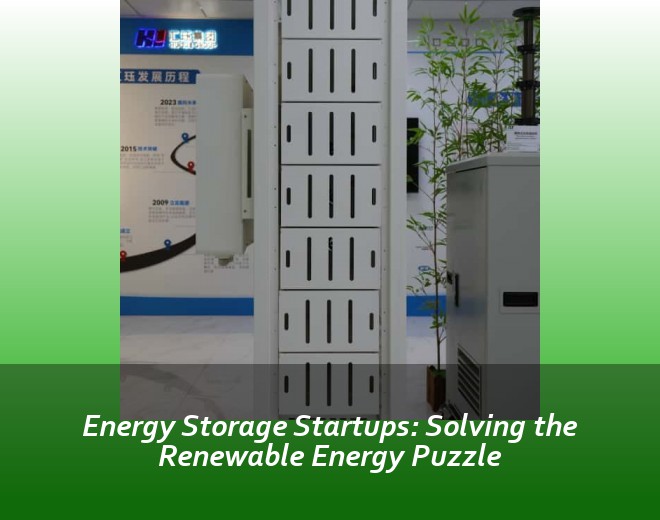
Energy Storage Startups: Solving the Renewable Energy Puzzle
Here's a hard truth: Solar panels go dark at night, and wind turbines freeze when the air stops moving. This intermittency problem causes enough wasted renewable energy annually to power Germany for 6 months*. Traditional grids weren't built for this feast-or-famine reality – they're crumbling under 21st-century demands.
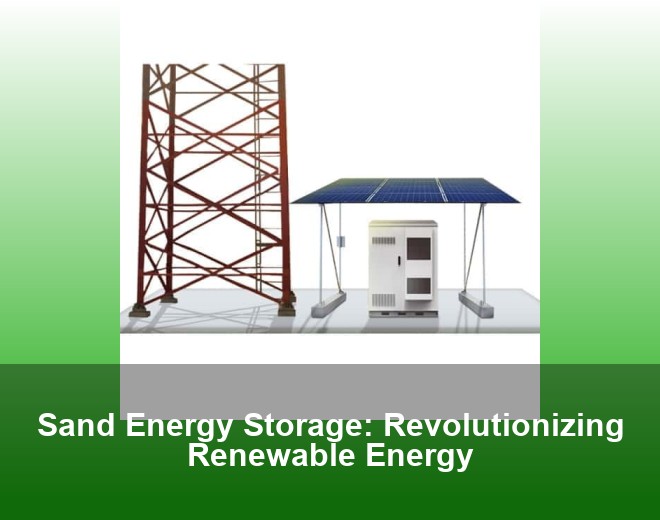
Sand Energy Storage: Revolutionizing Renewable Energy
As renewable energy adoption accelerates globally, we're facing a thermal storage crisis. Solar panels go dark at night. Wind turbines stop when breezes die. The problem isn't generation - it's preserving that clean energy for when we actually need it. Traditional lithium-ion batteries, while useful for short-term storage, become prohibitively expensive for grid-scale applications. Did you know that storing just 24 hours of global electricity demand would require $1.4 trillion worth of lithium batteries? There's got to be a better way.
 Inquiry
 Online Chat