


Renewable Energy Storage: Powering Tomorrow
Table of Contents
The Renewable Reliability Challenge
Let's face it—solar panels don't work when clouds roll in, and wind turbines stand still on calm days. In 2024 alone, California's grid operators reported 127 instances of renewable generation dropping by 40% within 30 minutes. This volatility makes traditional power management strategies about as useful as a chocolate teapot.
But here's the kicker: The global battery energy storage market is projected to grow from $5.4 billion in 2023 to $26.2 billion by 2030. Why the explosive growth? Because BESS (Battery Energy Storage Systems) are becoming the Swiss Army knives of power grids—smoothing fluctuations, storing surplus, and preventing blackouts.
The Duck Curve Conundrum
Remember when solar power was supposed to solve all our energy problems? Well, California's "duck curve" shows midday solar overproduction followed by evening shortages—a 56% ramp requirement that conventional plants can't handle. So how do we stop renewables from becoming their own worst enemy?
Battery Breakthroughs in Action
Hitachi Energy's grid-scale storage solutions in Sweden demonstrate what's possible. Their 20MW/80MWh lithium-ion system in Malmö:
- Reduces wind curtailment by 62%
- Provides 150ms response to grid fluctuations
- Cuts CO₂ emissions equivalent to 5,000 cars annually
Their secret sauce? A hybrid architecture combining lithium-ion batteries for rapid response with flow batteries for long-duration storage. It's like having both a sprinter and marathon runner on your energy team.
Hitachi Energy's Solar+Storage Success
Take their Zhongshan factory project in China . By integrating photovoltaic arrays with modular storage:
"We achieved 83% self-sufficiency during peak hours while reducing energy costs by 37%," says plant manager Li Wei.
The system uses predictive AI that analyzes weather patterns and production schedules 72 hours in advance. During Typhoon Kompasu last September, it seamlessly transitioned to backup power while selling stored energy back to the grid at premium rates.
Virtual Power Plants Emerge
Wait, no—we're not talking about video game simulations. Hitachi's e-mesh™ platform aggregates 2,300+ distributed energy resources across Sweden, creating what's essentially a "Tesla Powerwall network on steroids." This virtual plant can redirect power across municipalities faster than you can say "load balancing."
Smart Grids and Energy Democracy
As Hitachi Energy's CTO noted in a recent webinar: "The future grid isn't about bigger power lines—it's about smarter energy orchestration." Their adaptive protection relays now use machine learning to distinguish between actual faults and temporary disturbances, reducing false trips by 89%.
Looking ahead, three developments are changing the game:
- Second-life EV batteries repurposed for grid storage
- Solid-state batteries achieving 500Wh/kg density
- Blockchain-enabled peer-to-peer energy trading
But let's not get ahead of ourselves. The real revolution isn't in the tech specs—it's in empowering households to become both consumers and producers. When a Stockholm apartment complex recently became Sweden's first prosumer community, residents saw 22% lower bills while improving grid stability.
So where does this leave us? At the precipice of an energy transformation where storage isn't just an accessory—it's the backbone of renewable reliability. And companies like Hitachi Energy aren't just riding this wave; they're the ones generating the swell.
Related Contents
Renewable Energy Storage: Powering Tomorrow
You know what's ironic? We've got enough sunlight hitting Earth in 90 minutes to power the planet for a year. Yet here we are, still burning dinosaurs to keep our phones charged. The missing link? Energy storage systems that can actually keep up with renewable generation.
Powering Tomorrow: Renewable Energy Storage Breakthroughs
We've all seen those shiny solar panels glittering in the sun and towering wind turbines slicing through the breeze. But here's the rub: what happens when the sun isn't shining? Or when the wind decides to take a coffee break? That's where energy storage systems become the unsung heroes of our clean energy transition.
Renewable Energy Storage: Powering Tomorrow's Grid Today
We've all seen those gleaming solar farms and majestic wind turbines - symbols of our clean energy future. But here's the million-dollar question: how do we make renewable energy reliable when the sun isn't shining and the wind isn't blowing? This fundamental challenge has been holding back our transition to renewable energy storage systems that could truly replace fossil fuels.
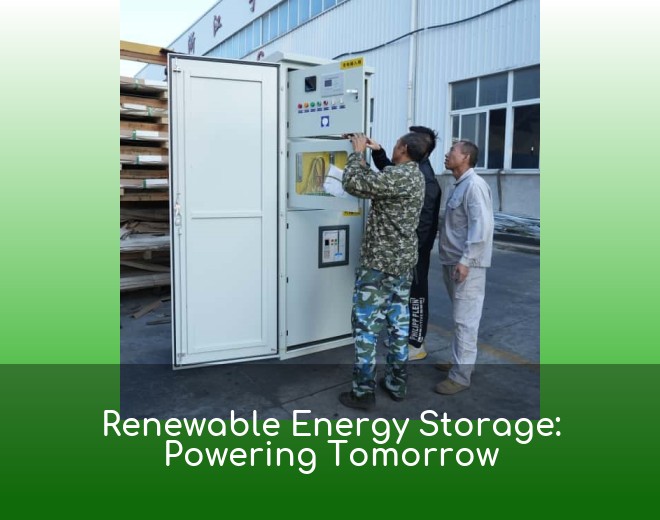
Renewable Energy Storage: Powering Tomorrow
our renewable energy systems sometimes feel like sports cars stuck in first gear. Solar panels go idle at night, wind turbines freeze on calm days, and grid operators scramble to balance supply. In California alone, 2.4 TWh of renewable energy was curtailed in 2024 - enough to power 200,000 homes annually.

Renewable Energy Storage: Powering Tomorrow
Last winter's Texas freeze left 4.5 million homes dark while solar panels sat buried under snow. Wait, no—actually, the real tragedy was the absence of energy storage systems to bridge the gap. Recent data shows the global energy storage market could hit $300 billion by 2030, but we're still solving 21st-century problems with 20th-century infrastructure.
 Inquiry
 Online Chat