


Storing Solar Energy Without Batteries
Table of Contents
Why Batteries Aren’t the Only Answer
Solar energy’s biggest hurdle isn’t generation—it’s storage. While lithium-ion batteries dominate headlines, they’re not the sole option. Let’s face it: mining lithium, limited lifespans (typically 10–15 years), and recycling challenges make batteries a Band-Aid solution for long-term sustainability. Did you know that global solar capacity hit 1 terawatt in 2023, yet energy storage systems still rely heavily on finite resources? The question isn’t whether we need storage—it’s how to rethink it.
The Hidden Costs of Battery Dependency
In 2024, the U.S. Department of Energy reported that battery production emits 150–200 kg of CO₂ per kWh—equivalent to driving a gas car for six months. Worse, only 5% of lithium-ion batteries are recycled globally. Imagine scaling this for 2500 GW of solar capacity by 2030. It’s like swapping fossil fuel addiction for a lithium one.
Heat as a Hidden Power Bank
Here’s where things get spicy. Thermal energy storage uses sunlight to heat materials like molten salt or rocks, which can later generate steam for turbines. Spain’s Andasol plant, for instance, stores heat in 28,000 tons of molten salt, powering 200,000 homes for 7.5 hours after sunset. The kicker? It’s 60–70% efficient—close to lithium-ion’s 80–90%, but without rare metals.
How It Works in Your Backyard
A small solar farm heats crushed volcanic rock to 600°C in insulated silos. At night, fans blow air through the rocks, creating steam to spin turbines. Simple? Yes. Revolutionary? Absolutely. Startups like Malta Inc. (backed by Bill Gates) are already piloting this for grid-scale use.
Gravity, Water, and Air: Old Physics, New Solutions
What if lifting weights could power cities? Swiss company Energy Vault stores energy by stacking 35-ton bricks with cranes. When power’s needed, the bricks descend, generating electricity. It’s 85% efficient and lasts 30+ years—no degradation. Similarly, pumped hydro, which moves water between reservoirs, provides 94% of global grid storage today. But we’re not limited to mountains: underground caves can store compressed air, releasing it to spin turbines after sunset.
When Water Replaces Lithium
Take Australia’s Kidston Pumped Storage Project. By linking two old mining pits, it stores 250 MW of solar energy—enough for 140,000 homes. The best part? Water cycles infinitely, with minimal environmental impact. Meanwhile, Canada’s Hydrostor uses compressed air in underwater balloons, achieving 70% efficiency. These aren’t sci-fi concepts—they’re live projects cutting battery reliance.
Global Projects Leading the Charge
In Morocco’s Noor Ouarzazate complex, mirrors focus sunlight to melt salt at 565°C, providing 20 hours of storage. Chile’s Cerro Dominador uses similar tech to power 380,000 homes 24/7. Even colder climates adapt: Finland’s Polar Night Energy stores heat in sand, warming entire cities during dark winters. These aren’t niche experiments—they’re blueprints for a battery-free future.
The Role of Policy and Innovation
Governments are catching on. The EU’s 2024 Solar Strategy mandates non-battery storage for 30% of new projects. California’s 2025 grid plan prioritizes thermal storage and gravity systems. And let’s not forget startups: Germany’s Gravity Storage GmbH raised €80 million in March 2024 to build 100-meter “energy towers” across Africa. The race isn’t about who makes the best battery—it’s about who renders them obsolete.
A Personal Perspective
Last year, I visited a village in Kenya using sand-based storage. Kids studied under solar-powered LEDs at night, charged by heat from daytime sun. No lithium. No complex tech. Just ingenuity. It hit me: sometimes, the best solutions are the ones we’ve overlooked for decades.
So, next time someone says “solar needs batteries,” ask: What if we’ve been solving the wrong problem? The sun gives us energy—it’s time we stored it smarter.
Related Contents
Grid-Tied Solar Systems Without Batteries: A Smart Energy Solution
when most people picture solar power, they imagine battery banks humming in basements. But here's the kicker: modern grid-tied systems are achieving 93% customer satisfaction rates without any storage components. The secret sauce? Direct energy swapping with utility companies through net metering programs.
Storing Sunlight: Solar Energy in Batteries
You know that feeling when your phone dies right when you need directions? That's essentially what happens with solar panels at night - they stop generating power when we need it most. The global energy storage market grew 62% last year according to BloombergNEF, but why's everyone suddenly obsessed with storing sunlight?
Chloride Exide Solar Batteries 100Ah: Reliable Energy Storage for Modern Solar Systems
Ever wondered why some solar installations outperform others by 30-40% annually? The secret often lies in their energy storage backbone. As global solar capacity surges past 1.6 terawatts this year, the real challenge isn't generating power - it's storing it effectively when clouds roll in or the sun dips below the horizon.
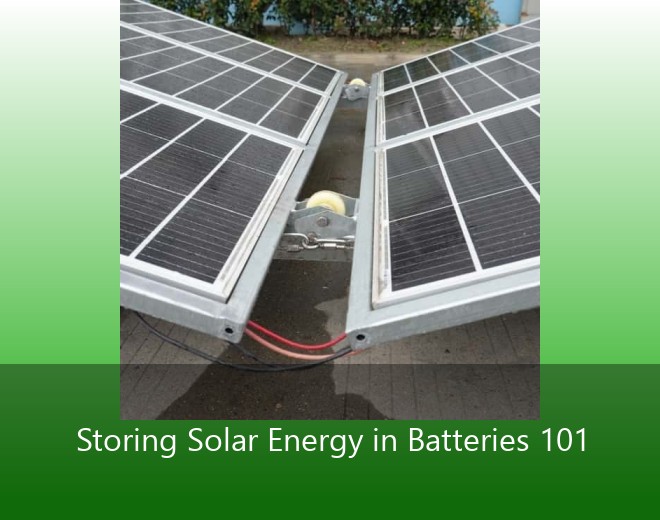
Storing Solar Energy in Batteries 101
You've probably heard the stats - a single hour of sunlight could power the world for a year. But here's the rub: solar panels only produce energy when the sun's shining. Come nighttime or cloudy days, you're back to drawing grid power like everyone else. It's sort of like having a water pump that only works during rainstorms - useful, but hardly a complete solution.
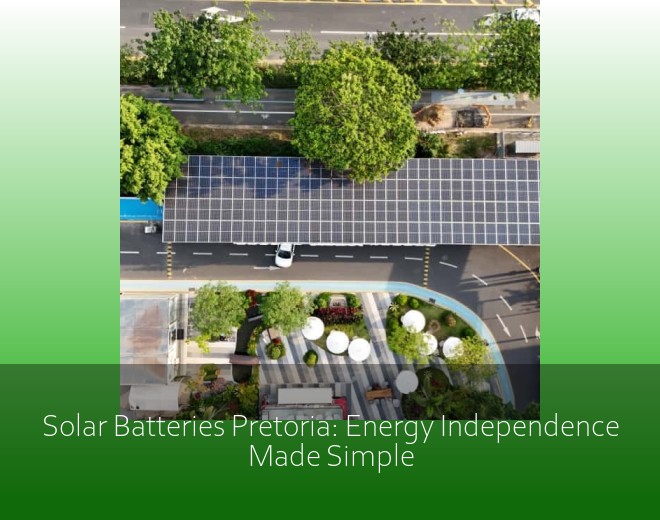
Solar Batteries Pretoria: Energy Independence Made Simple
Ever counted how many times your fridge rebooted during last month's blackouts? You're not alone. Pretoria's grid instability isn't some temporary glitch – Eskom's own reports show 48% more outages in 2024 compared to pre-pandemic levels. But here's the kicker: while we're sitting in the dark, our rooftops bake under 2,500+ annual sunshine hours. Makes you wonder – why aren't we harnessing this?
 Inquiry
 Online Chat