


Understanding 7.2kW Solar Battery Costs
Table of Contents
The Evolving Landscape of Solar Battery Pricing
You know how everyone's talking about energy independence these days? Well, the price of 7.2 kW solar battery systems has become the million-dollar question for homeowners. Current market data shows prices ranging from $8,000 to $15,000 before incentives - but why such a huge gap? Let's unpack this.
The Lithium-Ion Dominance
Nearly 92% of residential systems now use lithium-based chemistry. Tesla's Powerwall 3 (13.5kWh) and LG Chem's RESU Prime (16kWh) dominate the market, but new players like Huawei's Luna 2000 are shaking things up. Wait, no—actually, Huawei's system uses DC coupling which changes the installation math completely.
What Dictates 7.2kW Battery Prices?
Two identical Phoenix homes install 7.2kW systems. One pays $9,200, the other $14,700. The devil's in these details:
- Battery chemistry (NMC vs LFP)
- Depth of discharge rating
- Inverter compatibility
- Smart energy management features
LFP batteries (like those from BYD) typically cost 15-20% more upfront but promise double the cycle life. As we approach Q4 2024, supply chain improvements are sort of easing raw material costs, but skilled labor shortages are creating new bottlenecks.
Hidden Costs Homeowners Often Miss
Ever heard of "balance of system" costs? They account for 30-40% of total expenses. We're talking:
"Electrical upgrades, mounting hardware, and permitting fees can ambush budget-conscious buyers. Last month, a Texas family faced $2,100 in unexpected panel upgrades."
Game-Changing Cost Reductions
Here's where it gets interesting. The Inflation Reduction Act's 30% tax credit still applies, but new state-level incentives are changing the game. California's SGIP program now offers $200/kWh rebates for fire-prone areas. Pair that with time-of-use rate optimization, and payback periods have shrunk from 10 years to 6-7 years in many cases.
| Component | 2023 Cost | 2024 Projection |
|---|---|---|
| Battery Cells | $137/kWh | $122/kWh |
| Inverter | $1,800 | $1,650 |
| Installation | $3,200 | $3,500 |
Coast-to-Coast Price Wars
Midwestern installations now average $11,200 compared to California's $14,300 premium. Why the $3K difference? It's not just labor costs—permitting timelines and utility interconnection fees play massive roles. Arizona's recent "Solar Rights Act" overhaul has actually reduced approval times by 40%, creating a mini boom in Tucson installations.
The DIY Trap
Social media's flooded with #SolarDIY tutorials, but here's the kicker: Most municipalities require licensed installers for battery systems. A Seattle millennial learned this hard way when their $8,000 "budget" install failed inspection three times, adding $2,400 in rework costs. Adulting with solar isn't for the faint-hearted.
Future-Proofing Your Investment
With virtual power plants (VPPs) gaining traction, 7.2kW systems are becoming income generators. South Australia's Tesla VPP pays participants up to $1,000/year for grid support. Could this be the new normal? Major utilities from Duke Energy to PG&E are piloting similar programs.
Lithium prices might be falling, but nickel and cobalt supply chain issues persist. The real wild card? Solid-state battery tech that could potentially double storage density by 2027. Early adopters face a classic conundrum: Buy now or wait for the next breakthrough?
Maintenance Real Talk
"My system's like a tamagotchi," jokes a Florida homeowner. "It needs firmware updates, thermal checks, and occasional troubleshooting via the app."
Extended warranties now cover 95% capacity retention for 10 years, but only if you maintain optimal operating temperatures. Battery cabinets with integrated cooling (like SolarEdge's new model) add $700-900 upfront but prevent $2,000+ replacement costs down the line.
The Financing Revolution
Solar loans have gone mainstream, with credit unions offering 3.99% APR deals. But the real innovation? PACE financing that ties repayment to property taxes. California's Mosaic reports a 200% increase in solar+storage loan applications since January - though some critics call it a "Band-Aid solution" for deeper affordability issues.
Here's a thought: What if your EV could double as a backup battery? Ford's Intelligent Backup System already lets F-150 Lightning owners power homes during outages. This vehicle-to-home (V2H) tech might eventually reduce required battery sizes, potentially making 7.2kW systems overkill for some households.
Related Contents
Solar vs Non-Solar Battery Showdown
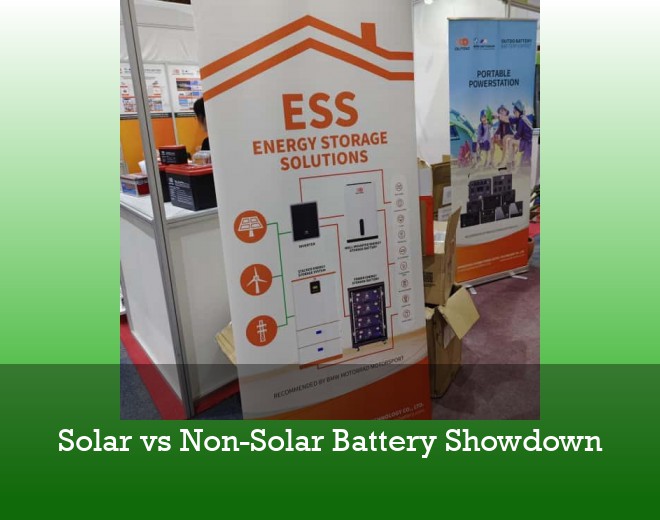
Let's cut through the jargon. Solar batteries and non-solar batteries might look identical to your untrained eye, but their DNA tells different stories. your neighbor's Tesla Powerwall humming quietly vs the lead-acid monster in your uncle's vintage RV. One's built for renewable marriage, the other for old-school power hookups.
Solar Panels and Battery Storage Costs Decoded
Let's cut through the hype - a typical 6kW solar array with 10kWh battery backup now costs $18,000-$25,000 after tax credits in most U.S. states. But wait, that's before you factor in California's SGIP rebates or Texas' property tax exemptions. The national average payback period? Down to 8.7 years from 12.5 years in 2020.

Solar Battery Prices in Ghana: Costs & Solutions
You've probably noticed the electricity bills climbing faster than Accra's new skyscrapers. With grid power costs increasing 22% since 2022 according to Energy Commission reports, over 60% of Ghanaian businesses now consider solar battery storage essential for survival. But here's the kicker - while demand surges, most buyers can't decipher why similar-looking systems vary wildly in price.
Tesla Solar Battery Costs in South Africa
You know how it goes – load shedding hits again, and suddenly your dinner plans are lit by candlelight. South Africa's power grid reliability has fallen to 56% operational capacity in Q1 2024, creating unprecedented demand for solar energy storage. But here's the kicker: while solar panels capture sunlight, it's the batteries that keep lights on during those 4-hour blackouts.
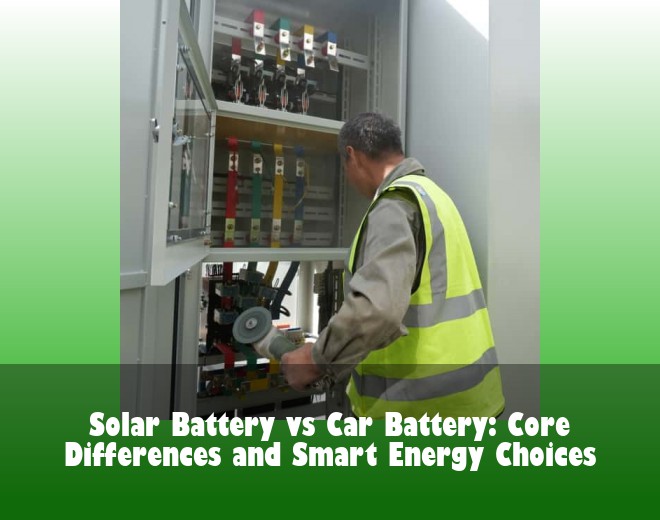
Solar Battery vs Car Battery: Core Differences and Smart Energy Choices
Ever wondered why your neighbor's solar battery outlasts your RV's car battery by years? The answer lies in their DNA - not biological, but electrochemical. As renewable energy adoption surges (global solar capacity grew 22% YoY in 2024), understanding battery fundamentals becomes crucial for homeowners and tech enthusiasts alike.
 Inquiry
 Online Chat