


Solar Panels with Built-In AA Battery: Revolutionizing Portable Energy
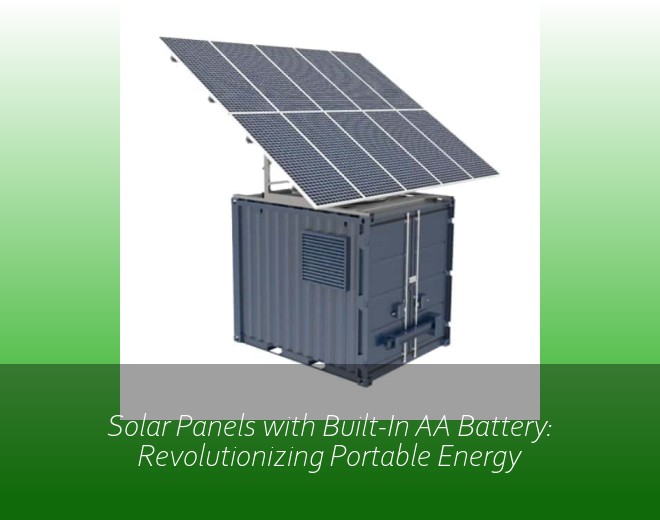
Table of Contents
The Energy Dilemma: Why Traditional Solar Falls Short
Let's face it – standard solar panels have a dirty little secret. They're kind of useless when you need electricity most: at night, during storms, or when you're moving between locations. The global energy storage market hit $33 billion last year , yet 1.2 billion people still lack reliable electricity access. Why hasn't this wealth of innovation reached everyday users?
Traditional systems force users to choose between portability and functionality. Campers haul suitcase-sized battery banks. Homeowners install expensive lithium-ion walls. Neither solution addresses the core problem – energy should be adaptable, not anchored.
The Storage Bottleneck
Solar panels typically lose 15-30% efficiency when paired with external batteries. The wiring alone creates enough resistance to power a small LED bulb continuously. What if we could eliminate these losses while simplifying setup?
The Built-In AA Battery Solution
Enter the game-changer: solar panels with integrated AA battery storage. These aren't your grandma's solar calculators. We're talking about high-efficiency photovoltaic cells directly coupled with standardized battery slots – a marriage of convenience and cutting-edge tech.
Imagine this: A foldable 20W panel (about tablet-sized) containing 8 AA lithium-ion cells. During daylight, it charges devices directly while stockpiling 96Wh – enough to recharge a smartphone 6 times. At night, it becomes a power bank using the same batteries that fueled your flashlight earlier.
How It Actually Works
- Modular Design: Swap batteries like film cartridges
- Smart Routing: Prioritizes direct solar power when available
- Universal Compatibility: Uses existing AA battery infrastructure
Nigerian startup Reeddi proved the concept's viability , renting solar-powered battery packs that reduced energy costs by 30% for Lagos residents. Their secret? Standardized, user-replaceable cells.
Real-World Success Stories
Take Sarah, a Colorado hiking guide. "Last summer, my group got stranded overnight. Our 26,800mAh power bank died charging a satellite phone. Now I use a solar panel with built-in AAs – when the main battery depletes, I just pop in the backups from our headlamps."
Technical Breakthroughs
Recent advancements solved the voltage mismatch problem. While solar panels output 18-24V, AA batteries charge at 1.5V. The solution? A miniature MPPT (Maximum Power Point Tracking) system in each battery slot – think of it as a traffic cop directing energy flow.
Beyond Camping: Societal Impact
This isn't just about keeping phones charged during forest hikes. In Malawi, health workers use solar-powered AA battery systems to refrigerate vaccines. Each night, they redistribute charged batteries to villages without electricity – a modernized version of milk delivery routes.
The technology addresses energy poverty through infrastructure everyone understands: AA batteries. Over 15 billion are sold annually worldwide – imagine converting even 1% into renewable energy nodes.
The Cost Factor
By leveraging existing battery manufacturing (Panasonic produces 6 billion cells yearly), these systems cost 40% less than equivalent lithium power banks. Users aren't locked into proprietary batteries either – standard rechargeables work fine.
So, is this the ultimate energy democratization tool? Well, it's not perfect. The systems max out around 150W currently. But for 90% of personal energy needs, they're rewriting the rules of off-grid power. And that's something worth charging about.
Related Contents
Harnessing Solar Power: The Complete Guide to 9V Solar Panels with Battery Systems
Ever found yourself stranded with dead devices during a camping trip? That's where 9-volt solar battery systems become game-changers. Unlike their bulkier 12V cousins, these compact units have seen a 15% surge in adoption since 2022 according to REA's latest market report. But why the sudden hype?
Solar Panels with Battery Backup: Energy Independence Made Simple
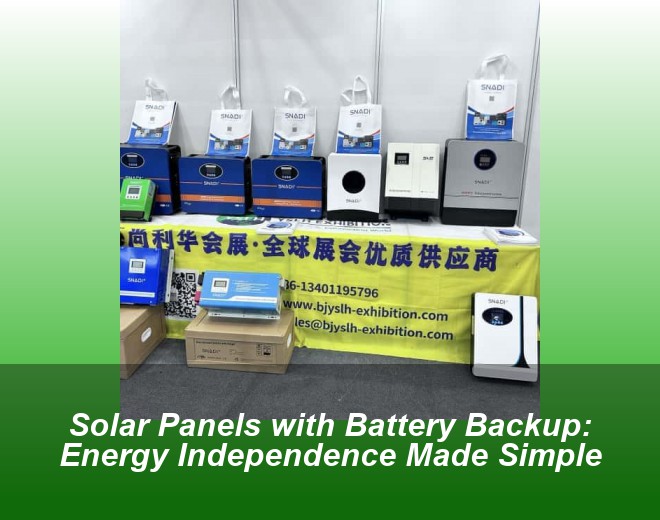
Last month's rolling blackouts across California left 150,000 households scrambling - but not the Rodriguez family in San Diego. Their solar panels with battery backup kept lights on while others faced spoiled food and freezing homes. This isn't about being "green" anymore; it's about basic household resilience.
Grid-Tied Solar Systems with Battery Backup: The Smart Energy Solution
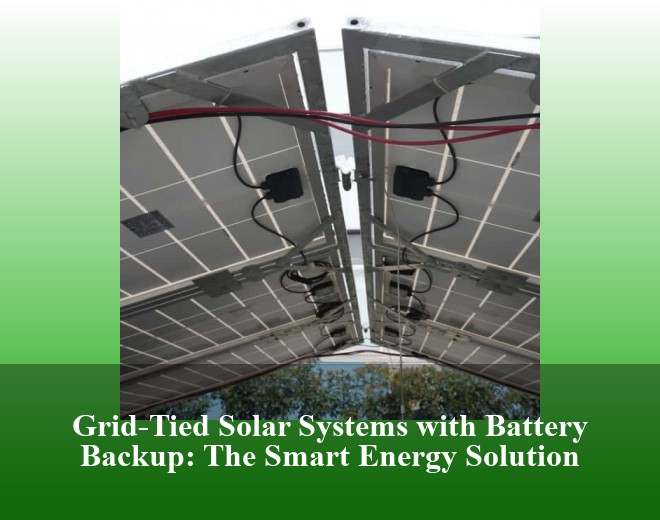
Let's start with the basics - a standard grid-tied solar system connects directly to your local utility grid. You've probably seen these setups on rooftops across neighborhoods. But here's the kicker: when the grid goes down, these systems typically shut off automatically for safety reasons. That's where the battery backup comes into play, acting like an energy safety net.
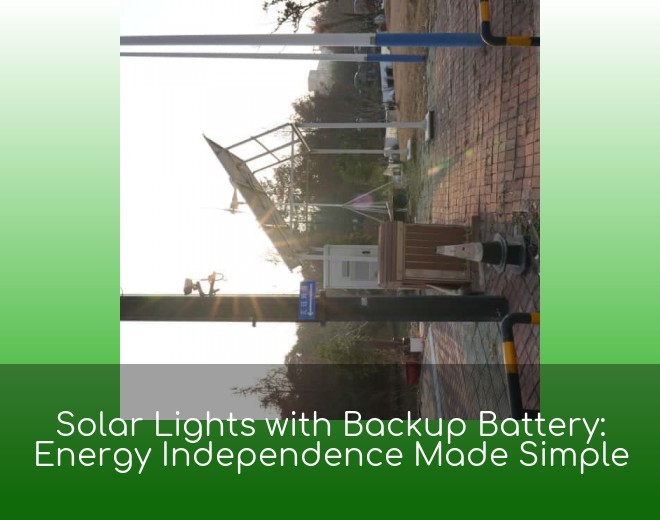
Solar Lights with Backup Battery: Energy Independence Made Simple
Ever wondered what happens to solar-powered lights during three consecutive rainy days? Last winter's polar vortex in Texas exposed the Achilles' heel of standalone solar systems - 72% of solar street lights failed within 48 hours of cloud cover. This isn't just about convenience; it's about safety in remote clinics, food preservation in off-grid communities, and maintaining critical infrastructure.
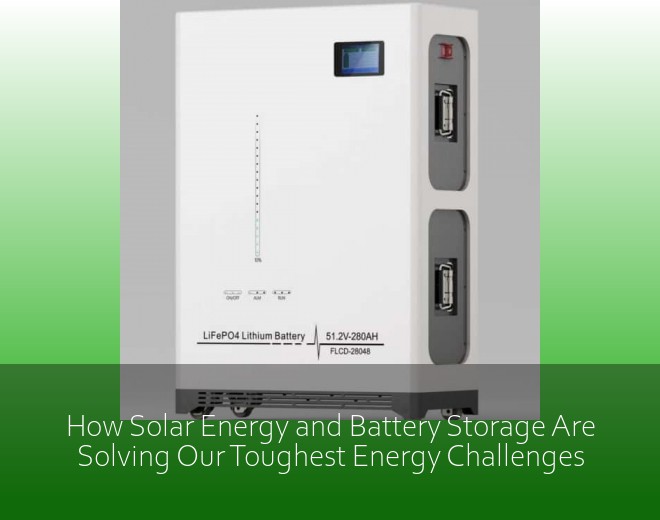
How Solar Energy and Battery Storage Are Solving Our Toughest Energy Challenges
Let's face it – our current energy model's about as stable as a house of cards in a windstorm. Fossil fuel prices swung wildly last quarter, with natural gas hitting $8.50/MMBtu in February before crashing to $4.20 by March. Meanwhile, extreme weather events knocked out power for 2.3 million U.S. households just last month. Solar energy isn't just an alternative anymore; it's becoming our safety net.
 Inquiry
 Online Chat