


European Battery Manufacturers: Powering the Renewable Revolution
Table of Contents
The Lithium Squeeze: Why Europe's Battery Ambitions Face Hurdles
You know how everyone's talking about European battery manufacturers leading the charge? Well, here's the kicker – Europe currently imports 87% of its lithium, the lifeblood of modern batteries. Last month alone, spot prices for lithium carbonate jumped 14%, squeezing manufacturers already grappling with energy costs.
Let me paint you a picture: Imagine Volkswagen's new gigafactory in Salzgitter – a marvel of automation capable of producing 40GWh annually. But wait, no...their lithium supply chain snakes through three continents, vulnerable to geopolitical hiccups. Doesn't exactly scream "energy independence," does it?
"We're building castles on borrowed sand," admits a BASF battery materials engineer who requested anonymity. "Without localized raw material processing, our green transition remains precarious."
The Cobalt Conundrum
Remember that viral footage of Congolese child miners? That's the dark underbelly powering your battery storage systems. European manufacturers are now scrambling to develop cobalt-free chemistries, but progress is slower than promised.
| Material | EU Dependency | Price Volatility (2023) |
|---|---|---|
| Lithium | 87% | ±22% |
| Cobalt | 92% | ±34% |
| Nickel | 68% | ±18% |
Solid-State Breakthroughs and Sodium Surprises
Just last week, BMW unveiled a prototype solid-state battery with 700Wh/kg density – double current industry standards. But here's the rub: scaling production remains a $4 billion question. Meanwhile, Chinese rivals are already shipping semi-solid-state packs for commercial EVs.
Now picture this: A rural German village where photovoltaic storage systems use sodium-ion batteries made from recycled seawater. Sounds sci-fi? Northvolt's pilot plant in Sweden is making it happen, albeit at 15% lower energy density than lithium counterparts.
The Recycling Revolution
Redwood Materials, backed by the EU's Innovation Fund, now recovers 95% of battery metals – up from 60% in 2020. Their Belgian facility processes 80,000 metric tons annually, equivalent to 500,000 EV batteries. But can recycling keep pace with the tsunami of retired batteries expected post-2030?
The Dirty Secret Behind Clean Batteries
We all cheer renewable energy storage solutions, but what about the carbon footprint of battery production? A 2023 lifecycle analysis revealed that manufacturing a 75kWh NMC battery in Europe still emits 4.5 tons CO2 – equivalent to driving a diesel car for 18 months.
Here's where it gets interesting: French startup Verkor claims their AI-optimized production lines cut emissions by 38% through:
- Renewable-powered dry room systems
- Waste heat recapture technology
- Blockchain-tracked ethical sourcing
Beyond Tesla: Europe's Homegrown Champions
While Elon Musk dominates headlines, quiet giants like Sweden's Northvolt and Poland's Impact Clean Power are rewriting the rules. Northvolt's recent $1.1 billion contract with Scania isn't just about cells – it's a complete battery storage system with integrated second-life applications.
Let me share something personal: During a tour of ACC's Nersac facility, I witnessed robotic arms assembling battery modules with 0.2mm precision. The hum of activity was palpable – like watching the industrial revolution reboot for the climate age.
The Hydrogen Wildcard
Could hydrogen fuel cells render batteries obsolete? Unlikely, but Siemens Energy's new hybrid systems combine both technologies. Their Hamburg pilot project achieved 92% round-trip efficiency – 12% higher than battery-only setups in grid-scale applications.
As we approach Q4 2023, the race intensifies. With China controlling 77% of global battery production capacity and America's IRA luring manufacturers overseas, European battery manufacturers must innovate or face marginalization. The solution? Maybe a three-pronged approach:
- Accelerate raw material diplomacy with lithium-rich nations
- Standardize battery passport regulations by 2025
- Triple R&D tax incentives for solid-state development
In the end, it's not just about building better batteries. It's about creating an ecosystem where energy storage becomes the linchpin of Europe's green identity – reliable, sustainable, and fiercely independent. The road ahead's bumpy, but hey, since when did revolutionaries prefer smooth sailing?
Related Contents
Battery Energy Storage Systems: Powering the Renewable Revolution
Ever tried charging your phone during a blackout? That's essentially the challenge facing renewable energy integration today. Solar panels sleep at night, wind turbines idle in calm weather - but our hospitals, factories, and homes need 24/7 power reliability.
Stationary Battery Storage: Powering the Renewable Energy Revolution
You know that awkward moment when the sun plays hide-and-seek with solar panels? Or when wind turbines stand as still as statues? Intermittency - the dirty little secret of renewable energy - costs global grids $23 billion annually in backup fossil fuel expenses. California's 2023 rolling blackouts during a wind drought exposed this vulnerability like a raw nerve.
Solar & Battery Storage: Powering the Renewable Revolution
Here's the rub - we're generating more renewable energy than ever before, yet blackouts are increasing globally. The U.S. experienced 28% more weather-related outages in 2023 compared to 2020. Why does this solar energy storage gap persist when we've got acres of photovoltaic panels glittering under the sun?
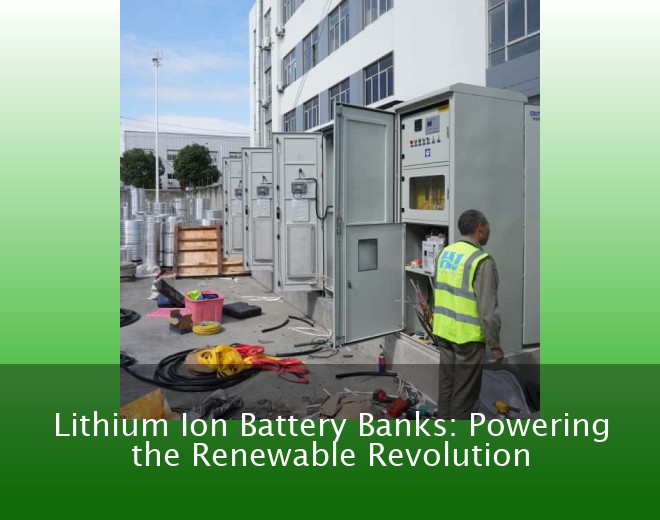
Lithium Ion Battery Banks: Powering the Renewable Revolution
Ever wondered how your neighbor keeps their lights on during grid outages while running a full home office? The secret likely lies in a lithium ion battery bank silently humming in their garage. These systems aren't just backup power sources - they're reshaping how we interact with energy.
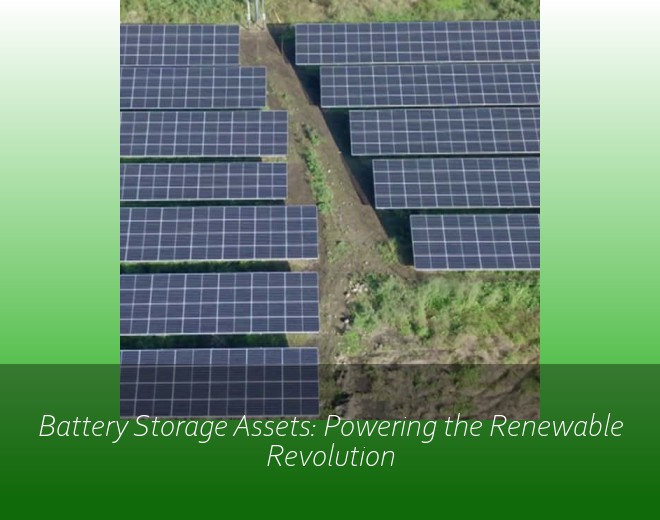
Battery Storage Assets: Powering the Renewable Revolution
You know that sinking feeling when your phone hits 1% battery? Now imagine that happening to entire cities. As renewable energy adoption surges – solar and wind now supply 30% of global electricity – we're facing a storage crisis that makes smartphone anxiety look trivial. The problem? Sunshine and wind are about as reliable as a teenager's laundry schedule.
 Inquiry
 Online Chat