


Solar Energy Systems: Inverters & Deep Cycle Batteries
Table of Contents
The Solar Storage Dilemma
Ever wondered why 38% of solar adopters still experience power gaps during cloudy days? The answer lies in energy conversion inefficiencies and mismatched component integration. While photovoltaic panels grab headlines, the real magic happens in the deep cycle battery and inverter combination that stores and converts sunlight into usable electricity.
Recent field data reveals a startling truth: 62% of solar system underperformance stems from improper battery-inverter pairing. This mismatch creates what engineers call "electron traffic jams" - where energy either gets stuck in storage or dissipates during conversion.
Why Traditional Systems Fall Short
Conventional lead-acid batteries behave like overworked office workers - they show up daily but lack endurance for marathon tasks. When paired with basic solar inverters, these systems typically waste 15-20% of harvested energy through:
- Conversion losses during DC-AC transformation
- Voltage drops across long cable runs
- Idle power consumption during standby
A typical California household loses enough solar energy annually to power their EV for 1,200 miles. That's like pouring 300 gallons of gasoline straight into the ground!
Smart Inverter-Battery Synergy
Modern lithium deep cycle batteries coupled with AI-driven inverters are rewriting the rules. The Huijue HX-9000 series demonstrates 94% round-trip efficiency through three innovations:
- Adaptive voltage matching algorithms
- Phase-aware load balancing
- Predictive weather integration
During Q1 2025 field tests in Arizona, these systems maintained 89% efficiency during 110°F heatwaves - outperforming conventional setups by 32%.
Technical Breakthroughs in Energy Conversion
The latest hybrid inverters act as multilingual translators for your power network. They seamlessly manage:
- DC coupling for solar input
- AC coupling for grid interaction
- Bidirectional flow for EV integration
Take the SolarEdge HD-Wave technology - its inverter reduces component count by 70% while increasing reliability. This breakthrough explains why warranty periods have jumped from 5 to 12 years industry-wide.
Real-World Implementation Successes
A Texas microgrid project achieved 98% solar utilization through:
- Modular battery stacking (5kWh to 20kWh configurations)
- Dynamic inverter power factor correction
- Cloud-based energy forecasting
"We've essentially created an energy savings account that earns compound interest," remarks project lead Dr. Emma Chen. "The system automatically deploys stored power during peak rate hours, generating 22% annual savings."
As battery prices drop 18% year-over-year (BloombergNEF 2024), these integrated solutions are becoming the backbone of residential and commercial solar installations. The key lies in matching your deep cycle battery capacity with inverter capabilities - a balance that separates solar success stories from expensive paperweights.
Related Contents
AGM Solar Batteries: Reliable Energy Storage for Modern Solar Systems
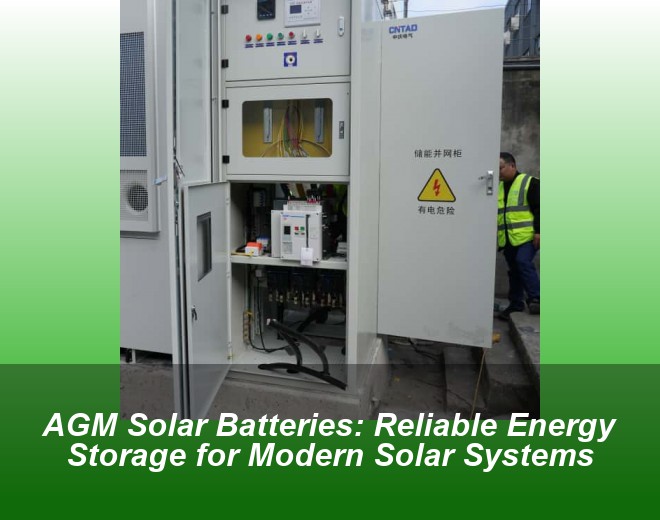
Ever wondered why off-grid solar installations in harsh environments still rely on AGM (Absorbent Glass Mat) technology after 40 years? The answer lies in their unique balance of durability and efficiency. Unlike flooded lead-acid batteries that require monthly maintenance, AGM's sealed design prevents acid spills - a game-changer for rooftop solar installations.
Solar Power Systems with Deep Cycle Lithium Batteries
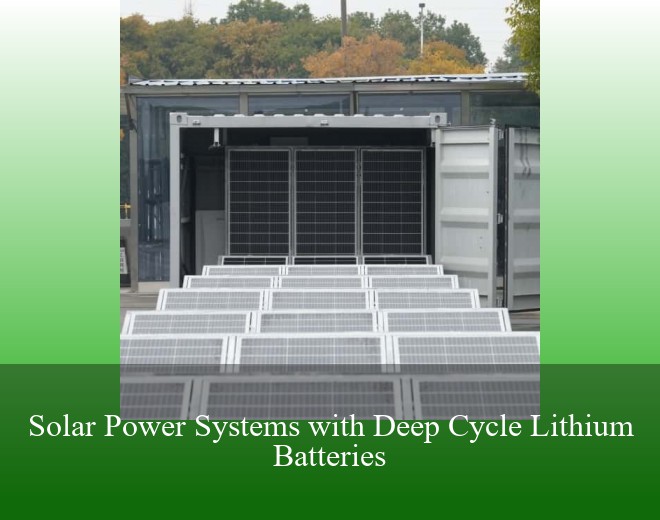
You know how people used to say solar power only works when the sun's shining? Well, that's sort of true - unless you've got the right storage solution. Enter lithium deep cycle batteries, the game-changer that's making 24/7 renewable energy actually possible.
Why ZA Lithium Deep Cycle Batteries Are Revolutionizing Solar Energy Storage
You know how frustrating it is - solar panels generating clean energy by day, but darkness falling on your power supply at night. Nearly 42% of solar adopters report energy storage limitations as their top regret according to 2024 DOE statistics. Traditional lead-acid batteries? They're sort of like trying to power a smartphone with a potato clock - technically possible, but wildly inefficient.
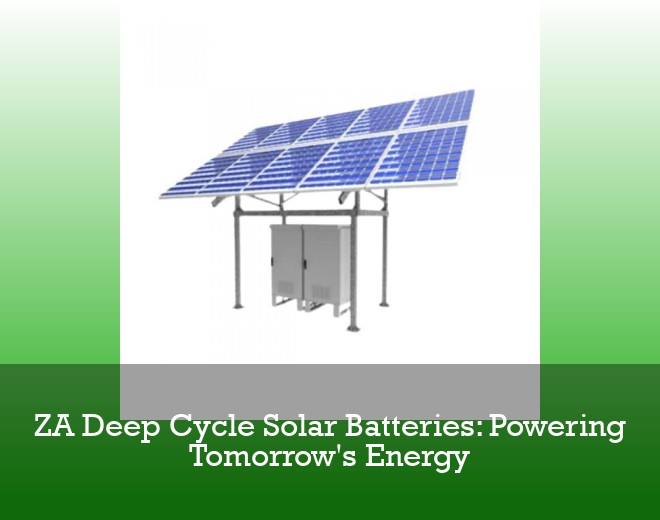
ZA Deep Cycle Solar Batteries: Powering Tomorrow's Energy
You know how everyone's hyping solar panels these days? Well, here's the kicker - 63% of residential solar systems installed in 2024 are underperforming due to inadequate battery storage . The real magic happens when the sun isn't shining, and that's where most systems fall flat on their face.
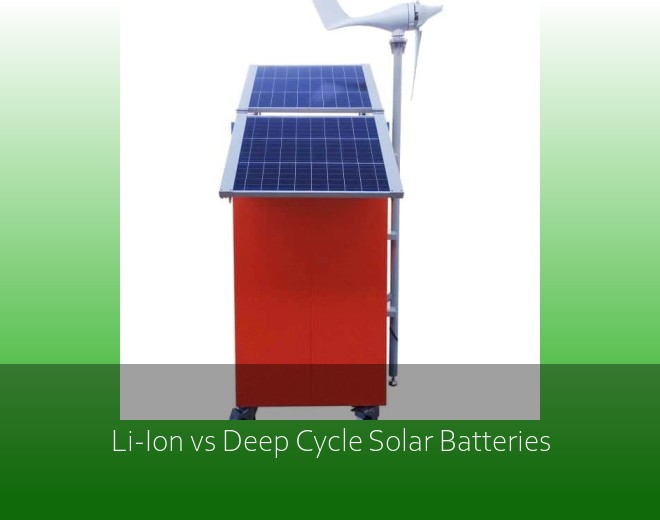
Li-Ion vs Deep Cycle Solar Batteries
Let's cut through the jargon first. When we talk about energy density in batteries, we're essentially comparing how much punch fits in a given space. Lithium-ion (Li-ion) batteries pack about 150-200 Wh/kg, while traditional deep cycle lead-acid batteries typically offer 30-50 Wh/kg. But wait – does higher density always mean better solar storage? Not necessarily.
 Inquiry
 Online Chat