


Industrial Battery Supply Revolution
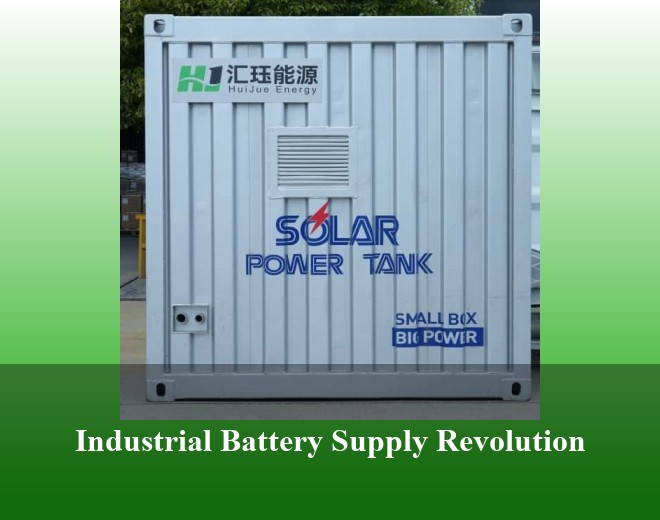
Table of Contents
The Burning Questions in Energy Storage
Why hasn't battery innovation kept pace with renewable energy growth? You know, the global industrial battery supply chain currently meets only 63% of projected demand for grid-scale storage, according to 2023 BloombergNEF data. Solar farms in Arizona are literally turning off panels during peak production hours because there's nowhere to store the excess energy. That's like filling your gas tank while simultaneously draining it!
Wait, no – let's correct that analogy. It's more akin to baking a hundred pizzas for a party where only thirty guests show up. The waste isn't just frustrating; it's economically catastrophic. In 2023 alone, California's grid operators reported $850 million in renewable energy curtailment costs. Ouch.
Silicon Anodes & Solid-State Innovations
Here's where things get exciting. The industrial battery storage systems sector is buzzing about Tesla's new silicon anode prototype showing 420 Wh/kg density – that's 40% higher than current lithium-ion batteries. Imagine powering a medium-sized factory for 18 hours instead of 12. But hold on, there's a catch. Silicon expands like popcorn during charging, which has historically caused catastrophic failures.
A mining operation in Chile's Atacama Desert replaced 30% of its diesel generators with solid-state batteries last quarter. The result? A 22% reduction in operational costs despite initial skepticism. "We thought it'd be a Band-Aid solution," admits their chief engineer, "but these babies outperformed our wildest specs."
Cobalt Dilemmas & Recycling Breakthroughs
Let's tackle the elephant in the room – ethical sourcing. Over 70% of cobalt still comes from artisanal mines in the DRC. But Redwood Materials' new hydrometallurgical process can recover 95% of lithium from dead batteries. That's not just greenwashing; it's a full-circle solution for industrial battery production sustainability.
Take Northvolt's Revolt Ett plant in Sweden. They're turning battery recycling into an exact science, recovering nickel manganese cobalt (NMC) cathodes that meet virgin material specs. It's like alchemy for the EV age, really.
Mining Operations & Grid Stability Case Studies
How about some real-world proof? Australia's Broken Hill solar farm paired their 200MW array with Tesla's Megapack system. During a recent grid outage, they kept 15,000 homes powered for 9 hours straight. That's the kind of resilience industrial battery storage brings to the table when properly implemented.
But here's the kicker – these systems aren't just for emergencies. A German cement plant uses battery buffers to shave peak demand charges, saving €2.3 million annually. Their secret sauce? Predictive AI that anticipates energy price spikes 36 hours in advance.
Future-Proofing Energy Infrastructure
As we approach Q4 2023, the race for alternative chemistries heats up. Sodium-ion batteries are making waves with their 150-160 Wh/kg density – not stellar, but perfect for stationary storage where weight doesn't matter. CATL's new sodium-ion line claims 80% capacity retention after 3,000 cycles. Not bad for a technology that was considered "not cricket" just five years ago.
And let's not forget flow batteries. While they've been the nerdy cousin of lithium-ion, new organic electrolytes could slash costs by 60%. A pilot project in Texas is testing a 100MWh vanadium-free system that uses quinones – the same molecules found in rhubarb, of all things. Talk about thinking outside the battery box!
Workforce Development Hurdles
The human factor often gets overlooked. Installing industrial battery systems requires certified technicians – a workforce that's currently 40% undersupplied in North America. Community colleges in Michigan are rolling out accelerated programs, but will it be enough? Time will tell.
Meanwhile, digital twins are bridging the skills gap. Siemens' new virtual training platform lets engineers troubleshoot battery thermal runaway scenarios without risking actual equipment. It's like flight simulators for the clean energy transition – complete with (simulated) smoke and sparks.
Cost vs Performance Breakthroughs
Remember when lithium-ion costs plummeted 89% from 2010-2020? Buckle up – we're entering round two. Sila Nanotechnologies' titanium nitride coatings could push prices below $75/kWh by 2025. For context, that's cheaper than most peaker plants' operational costs. Utilities are taking notice, with Southern California Edison recently approving a 2.4GWh battery farm that'll pay for itself in under seven years.
But here's a curveball – insurance premiums. Some underwriters are charging 30% more for battery installations after several high-profile thermal incidents. It's the classic "new technology teething problems" scenario all over again. The solution? Third-party testing certifications like UL 9540A are becoming the industry's safety golden standard.
Regulatory Landscape Shifts
Policy makers are finally catching up. The EU's new Battery Passport mandate requires full material tracing by 2026 – a game-changer for ethical sourcing. Meanwhile, FERC Order 841 in the US forces grid operators to remove barriers for storage participation. It's not perfect, but hey, progress rarely is.
In developing nations, the picture's more nuanced. India's draft battery policy incentivizes localized production but lacks recycling mandates. Will this lead to a patchwork of regional standards? Possibly. But it's better than the free-for-all we've had till now.
Material Science Frontiers
Graphene-enhanced cathodes. Lithium-sulfur prototypes. Dry electrode manufacturing. The lab-to-fab pipeline has never been busier. IBM's SeaWater battery – using materials extracted from seawater – recently clocked 10,000 cycles with 90% retention. Imagine marine-based industrial battery supply chains powering coastal cities. The mind boggles.
But let's not get ahead of ourselves. Scaling these innovations requires patient capital – something venture firms aren't exactly known for. The recent collapse of Britishvolt serves as a cautionary tale. Maybe government-backed "valley of death" funding bridges are the answer? Sweden's ALF program seems to think so, having nurtured Northvolt from startup to titan.
Circular Economy Realities
Recycling isn't just feel-good PR anymore. Li-Cycle's spoke-and-hub model recovers 95% of battery materials at costs 40% below mining. Their Rochester hub processes 25,000 tonnes annually – equivalent to 50,000 EV batteries. Numbers like these make linear production models look positively medieval.
Yet challenges persist. Cross-border shipping of spent batteries remains a regulatory minefield. A recent attempt to transport degraded cells from France to a Belgian recycler got held up for six weeks over classification disputes. Clearly, we need harmonized standards – and fast.
Final Thoughts on Power Paradigms
The industrial battery revolution isn't coming – it's already here. From AI-optimized charging algorithms to biomimetic battery designs, the pace of change is breathtaking. But success hinges on three pillars: sustainable sourcing, smart policy, and workforce development. Miss any one, and the whole house of cards collapses.
Consider this: When a single grid-scale battery can store enough energy to power 30,000 homes, we're not just talking about gadgets. We're reshaping civilization's energy foundations. And that, dear reader, is why every kilowatt-hour matters in this grand, electrifying transformation.
Related Contents
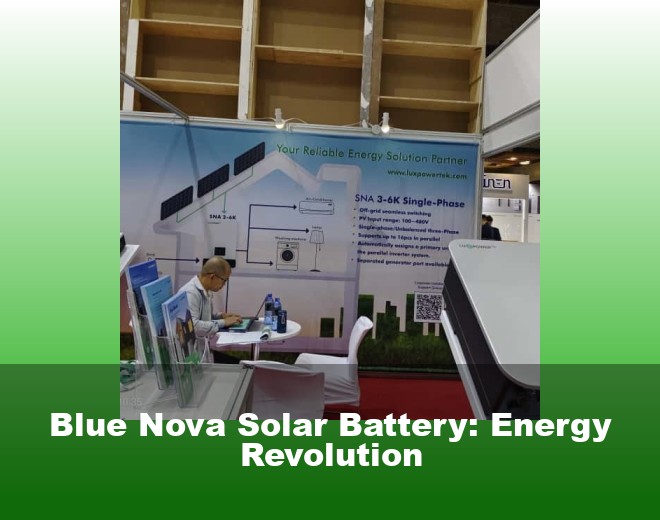
Blue Nova Solar Battery: Energy Revolution
Ever wondered why solar battery systems became the talk of energy conferences this year? The brutal truth: 38% of solar energy gets wasted globally because we're still using 20th-century storage methods. That's like filling a bathtub without a plug - all that precious sunlight literally down the drain.
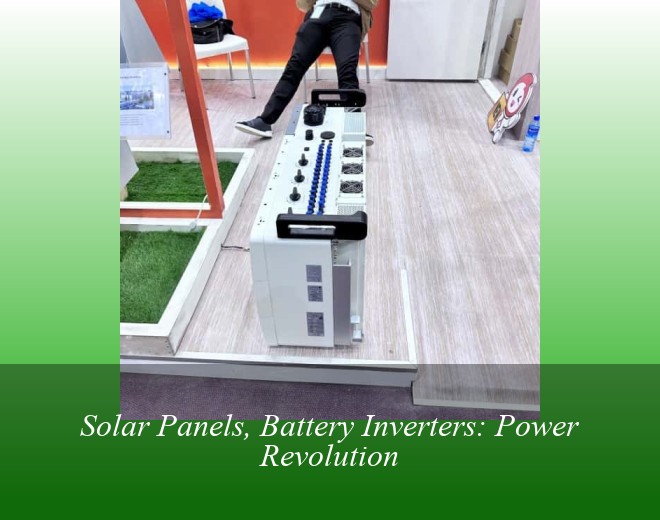
Solar Panels, Battery Inverters: Power Revolution
Did you know the average U.S. household wastes $142/year through inefficient energy storage? I discovered this the hard way when my neighbor's Tesla Powerwall survived a 14-hour blackout last winter, while my traditional generator... well, let's just say it became an expensive paperweight.

Solar Power House Battery Revolution
You know what's ironic? Last month in Phoenix, 37 households with solar panels faced $800 utility bills during a heatwave. Why? Their systems couldn't store excess energy. This is the dirty secret of renewable energy - solar power house battery systems aren't optional anymore, they're survival gear.
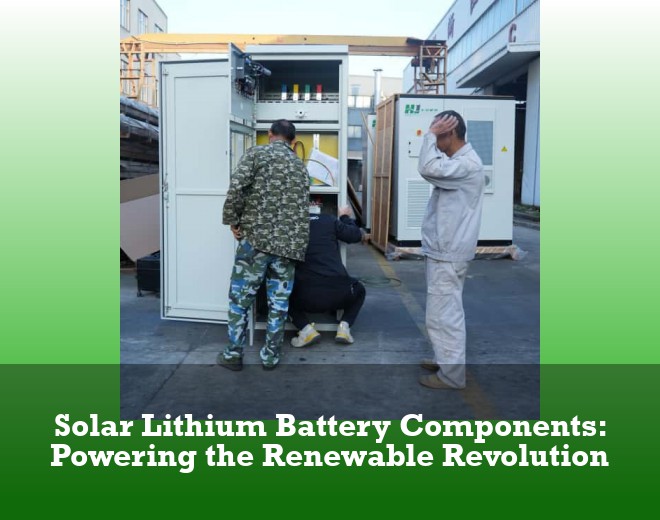
Solar Lithium Battery Components: Powering the Renewable Revolution
Ever wondered why your solar-powered garden lights die during cloudy weeks? The answer lies in outdated storage technology. Traditional lead-acid batteries, still used in 42% of solar installations according to 2024 market data, lose up to 20% efficiency in cold weather. They're like trying to store spring water in a leaky bucket - you'll always lose precious drops.
The Victorian Big Battery Megapack Revolution
As the world transitions to renewable energy, Tesla's Megapack has emerged as the Swiss Army knife of grid-scale storage. Each unit packs 3.9MWh capacity - enough to power 3,600 homes for an hour. But here's the kicker: these containerized systems can be deployed 50% faster than traditional solutions, slashing installation costs by up to 40%.
 Inquiry
 Online Chat