


Supercapacitors Revolutionizing Renewable Energy Storage
Table of Contents
Why Current Energy Storage Falls Short
Ever wondered why your solar panels still can't power your home through the night reliably? The answer lies in the energy storage gap haunting renewable systems. Traditional lithium-ion batteries, while useful, struggle with slow charging times (typically 2-4 hours for full capacity) and limited cycle life (about 2,000-5,000 charge cycles).
Last month's blackout in California exposed this vulnerability dramatically. Solar farms sat idle after sunset while conventional batteries failed to deliver sudden power surges needed for grid stabilization. This isn't just about convenience - it's about energy security in our climate-challenged world.
The Supercapacitor Game-Changer
Enter Vina supercapacitors, the Korean-engineered solution achieving 100,000+ charge cycles with 95% efficiency retention. Unlike conventional batteries storing energy chemically, these devices use electrostatic charge separation at the electrode-electrolyte interface. a solar farm in Arizona using Vina modules to capture midday energy peaks and release them during evening demand spikes - all within milliseconds.
- 5-30 kW/kg power density (100x lithium batteries)
- Operating range: -40°C to +85°C
- 2.7V cell voltage with 97% round-trip efficiency
But here's the kicker: When paired with existing battery systems, Vina's technology extends lithium battery lifespan by 40% through load buffering. A recent pilot in Shenzhen's smart grid demonstrated 15% cost reduction in energy storage maintenance over 18 months.
Vina Supercapacitors in Action
Let me tell you about a project that changed my perspective. During a 2023 microgrid installation in Hokkaido, we replaced 30% of battery capacity with Vina supercapacitors. The result? System responsiveness improved from 2-second reaction time to 50 milliseconds - fast enough to prevent voltage sags during industrial motor startups.
Key applications showing transformative potential:
- Photovoltaic smoothing: Mitigating solar output fluctuations under cloudy conditions
- EV fast-charging buffers: Enabling 350kW charging without grid overload
- Wind turbine pitch control: Instant power for blade adjustment during storms
South Korea's Korchip-Vina partnership recently unveiled hybrid storage units combining lithium batteries with supercapacitors. These units achieved 92% peak shaving effectiveness in Seoul's commercial districts - outperforming pure battery systems by 28%.
Balancing Innovation With Practicality
While supercapacitors won't replace batteries entirely, their synergistic potential is undeniable. The real magic happens when we layer technologies:
| Technology | Energy Density (Wh/kg) | Power Density (W/kg) |
|---|---|---|
| Li-ion Battery | 150-250 | 150-300 |
| Vina Supercapacitor | 5-15 | 5,000-30,000 |
This complementary relationship explains why major players like Panasonic and Maxwell are accelerating supercapacitor R&D. But let's be real - the industry needs standardized testing protocols. Current IEC 62391 standards barely address hybrid system performance metrics, creating market confusion.
Cultural Shift in Energy Thinking
Adopting supercapacitors requires more than technical understanding - it demands rethinking our energy habits. Just as smartphones trained us to accept partial charging, energy systems must embrace partial state-of-charge operation. Vina's self-balancing modules make this possible, maintaining optimal voltage across cells without complex management systems.
What if every EV charging station incorporated supercapacitor buffers? We'd eliminate the "5pm charging rush" strain on grids while enabling true ultra-fast charging. The technology exists - now we need infrastructure visionaries to implement it.
Related Contents
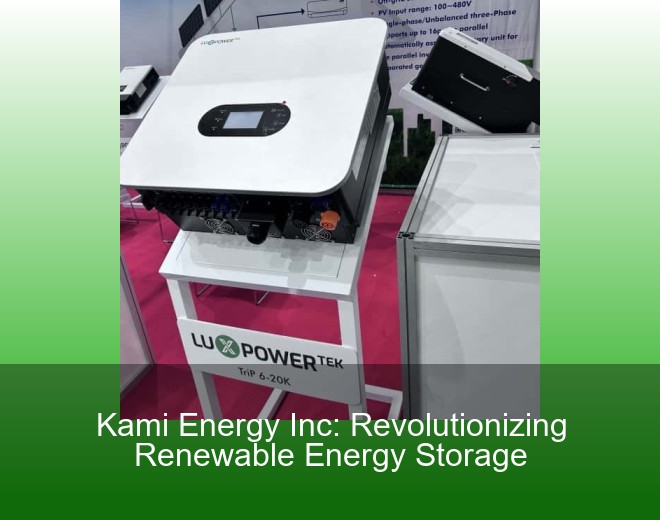
Kami Energy Inc: Revolutionizing Renewable Energy Storage
Ever wondered why California still experiences rolling blackouts despite having 15GW of installed solar capacity? The answer lies in our inability to store sunshine effectively. Traditional lithium-ion systems lose 18-23% efficiency within 5 years, creating a $47B annual gap in renewable energy utilization globally.
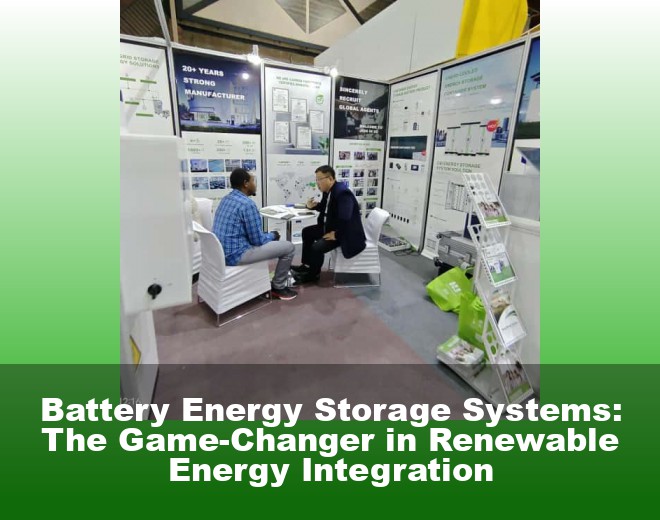
Battery Energy Storage Systems: The Game-Changer in Renewable Energy Integration
California’s grid operators watching helplessly as 300,000 MWh of solar power gets curtailed on a sunny afternoon—enough to power 90,000 homes for a day. Meanwhile, Texas households shivered through 2023’s winter storms despite having the nation’s largest wind power capacity. The culprit? A fundamental mismatch between when we generate renewable energy and when we actually need it.
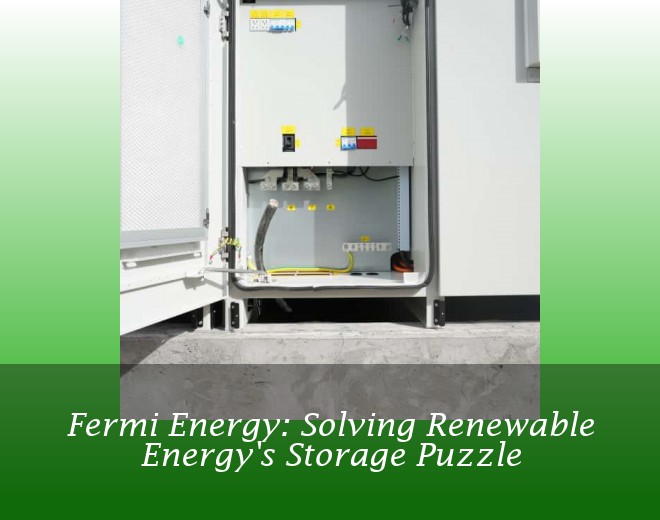
Fermi Energy: Solving Renewable Energy's Storage Puzzle
the renewable revolution's been stuck in second gear. While solar panel installations grew 35% globally last year, we're still wasting enough clean energy annually to power Germany for six months. The culprit? Our inability to store electrons effectively when the sun shines or wind blows.
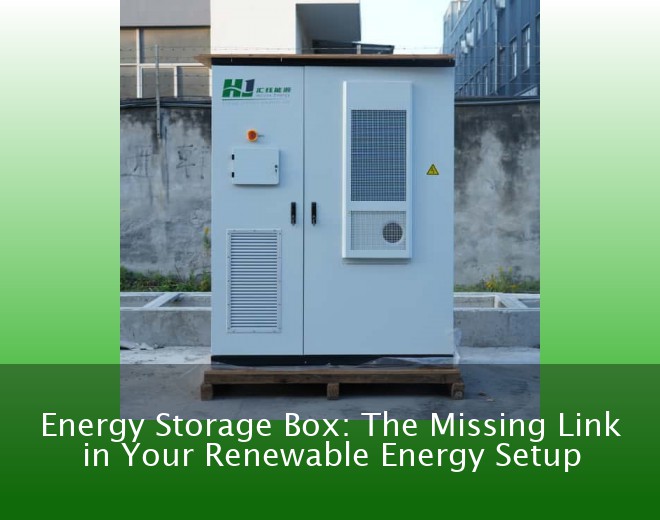
Energy Storage Box: The Missing Link in Your Renewable Energy Setup
Let’s face it – solar panels and wind turbines are having a moment. But what happens when the sun isn’t shining or the wind isn’t blowing? This isn’t some theoretical problem. Last February, Texas experienced rolling blackouts despite having 35GW of installed wind capacity. The culprit? A classic case of intermittency in renewable generation.
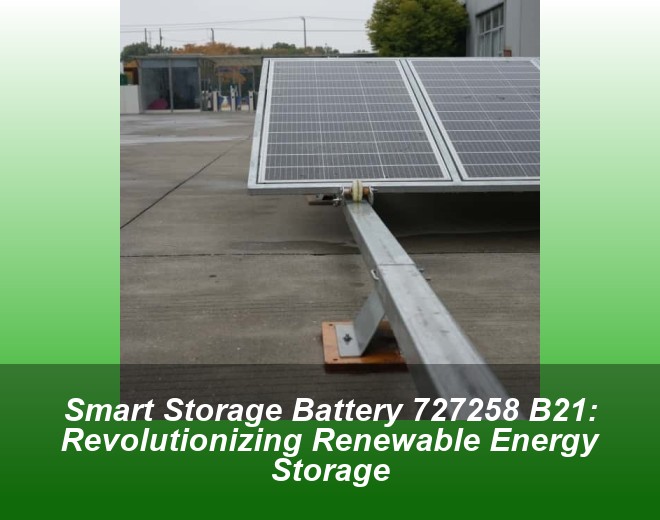
Smart Storage Battery 727258 B21: Revolutionizing Renewable Energy Storage
You know what keeps renewable energy experts awake at 3 AM? Mountains of solar panels generating excess power with nowhere to store it. The global renewable energy sector added 510 gigawatts of capacity last year alone, but here's the kicker - nearly 18% of that potential gets wasted due to inadequate storage solutions.
 Inquiry
 Online Chat