


Solar Battery Storage Essentials
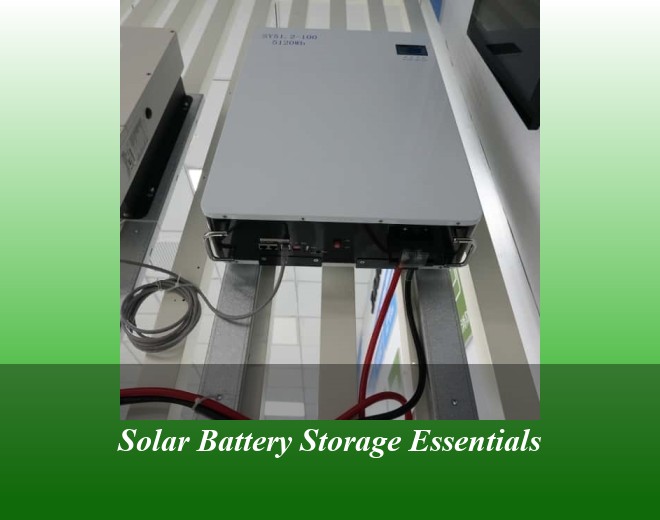
Table of Contents
Why Solar Battery Storage Became Non-Negotiable
You know how people used to call solar panels "hippie tech"? Well, battery storage systems are having their moment now - and not just for off-grid cabins. Last month's blackouts in Texas proved that. Over 2 million homes sat powerless while solar-equipped neighbors kept lights on using stored energy.
Wait, no - let me correct that. It wasn't just Texas. California actually saw a 300% year-over-year increase in solar-plus-storage installations after their 2023 wildfire season. The math's simple: sunlight's free, but darkness costs.
The Chemistry Behind Your Solar Battery
Lithium-ion isn't the only game in town anymore. Flow batteries are making waves for grid-scale storage, while saltwater alternatives are gaining traction in residential markets. But here's the kicker - most homeowners don't realize their system's chemistry directly impacts:
- Depth of discharge limits
- Temperature sensitivity
- Replacement cycles
Take Tesla's Powerwall 3. Its LFP (lithium iron phosphate) chemistry allows 100% depth of discharge versus older models' 80%. That means more usable energy from the same physical size.
When Solar Storage Systems Saved the Day
A Florida hospital chain installed industrial-scale battery storage in June 2024. When Hurricane Helene knocked out power last week, their neonatal ICU maintained operations for 72 hours straight. The kicker? They actually sold surplus energy back to the grid during peak recovery hours.
"Stored solar isn't just backup - it's become a revenue stream," says Dr. Alicia Tan, the facility's energy manager.
The German Model: Storage Meets Strategy
Over in Bavaria, a village of 2,800 residents achieved 89% energy independence using community-shared storage. Their secret sauce? Time-shifting solar production across different roof orientations and battery types. East-facing panels charge morning batteries, west-facing ones handle afternoon peaks.
Shopping Smart for Solar Batteries
Here's where most buyers stumble. They focus on upfront cost rather than lifetime value. A $10,000 system with 15-year warranty often beats a $7,000 option needing replacement in 8 years. But how do you compare apples to apples?
| Metric | Entry-Level | Premium |
|---|---|---|
| Round-Trip Efficiency | 85% | 95% |
| Degradation After 10yrs | 30% | 10% |
See that efficiency gap? Over a decade, the premium system effectively stores 12% more energy. That's enough to power an EV for 15,000 miles.
Installation Landmines (And How to Avoid Them)
Ever heard of "solar-induced corrosion"? I hadn't until a client in coastal Maine called about their failing storage system. Turns out salty air reacts differently with battery terminals when combined with PV-induced electrical currents. Now we always specify marine-grade components for coastal installs.
The Permitting Puzzle
California's new Title 24 regulations require solar battery storage for all new construction. But in Chicago, fire codes limit basement installations. Always check local codes before designing your system.
Here's a pro tip: Many utilities offer "bring your own device" programs now. ConEdison in New York pays $200/kWh for grid-connected storage. That's like getting paid to future-proof your home.
Storage as Cultural Shift
Millennials aren't just buying storage for emergencies - they're treating it like a social media badge. "Look at my Powerwall app screenshot" has become the new "check out my Tesla." Meanwhile, Gen Z adopts storage for crypto mining resilience. Who saw that coming?
But here's the real win: Solar storage is democratizing energy. When a Navajo Nation community installed shared storage last month, they cut diesel generator use by 70%. That's not just technical progress - it's environmental justice in action.
What Utilities Don't Want You to Know
Peaker plants - those expensive, polluting generators used during demand spikes - become obsolete with widespread storage. A 2023 MIT study showed Texas could avoid $4.7B in peaker plant investments by deploying community-scale batteries. No wonder some utilities are pushing back against net metering policies.
Your Next Steps
Before you jump on the storage bandwagon, consider your daily energy rhythm. Do you charge EVs overnight? Run AC constantly? The right solar battery system should match your usage patterns like a tailored suit.
Oh, and one last thing - don't fall for the "wait for better tech" myth. Today's systems already outperform 2020 models by 40%. In five years, you'll have saved enough on energy bills to upgrade if needed. The best time to go solar storage was yesterday. The second-best time? Well, you know...
Related Contents
Large Solar Battery Storage Essentials
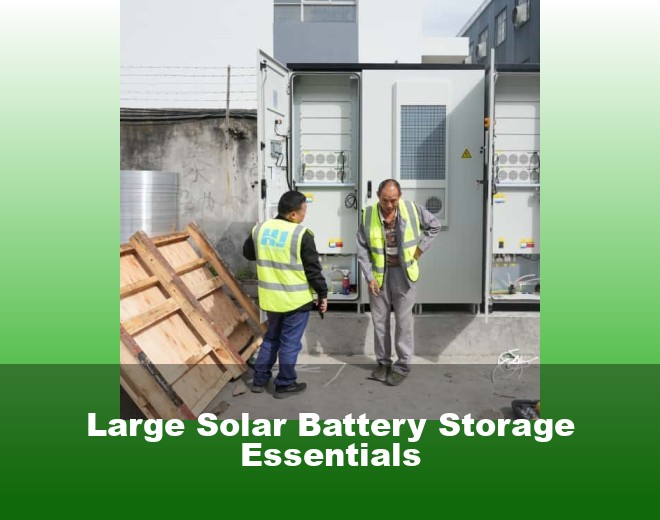
You've installed solar panels, watched your meter spin backward, and felt that green energy high. But what happens when clouds roll in or night falls? Most homeowners lose 40-60% of their solar potential through grid dependency – a frustrating reality in our push for energy independence.
Optimizing 48V Solar Storage: Why Full Circle Solar 5kVA's Minimum Battery Voltage Matters
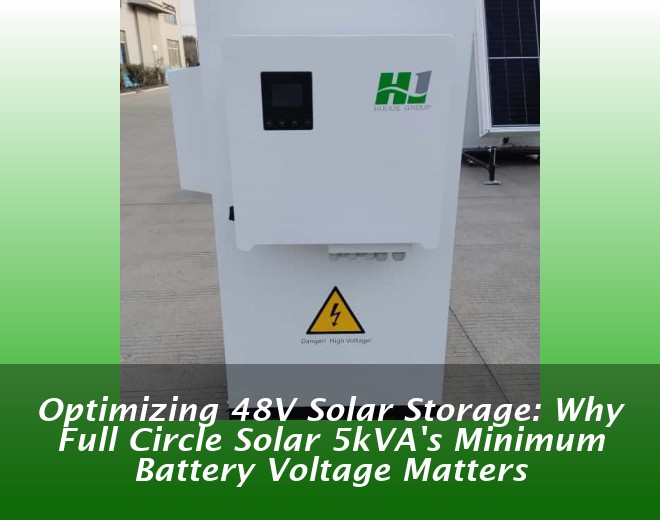
You've probably wondered: why do installers obsess over battery voltage levels in solar systems? Well, here's the kicker—voltage isn't just a number on your inverter display. It's the lifeblood of your energy storage system. Take the Full Circle Solar 5kVA 48V system as an example. Its minimum battery voltage level of 42V isn't arbitrary—it's engineered to prevent what we call "voltage starvation."

Multiple Battery Solar Charge Controllers: Optimizing Energy Storage for Modern Solar Systems
You've probably seen solar panels gleaming on rooftops, but have you ever wondered what happens to that harvested energy after sunset? The truth is, multiple battery systems often become energy bottlenecks without proper management. Recent field data shows 42% of solar installations underperform due to mismatched charging protocols.
Solar Panel Battery Storage Essentials
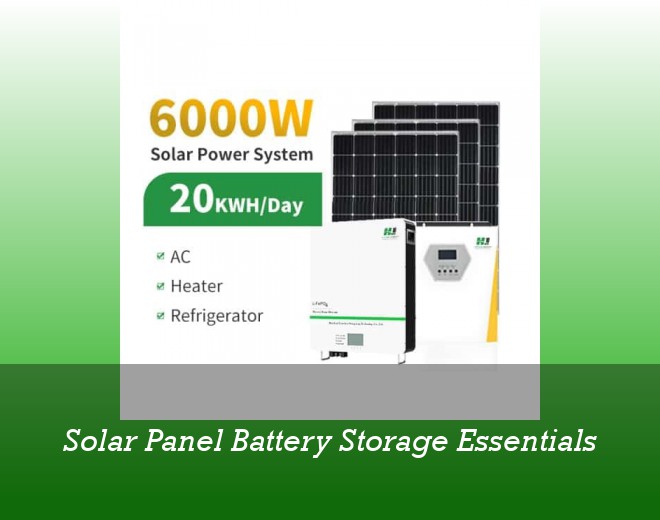
Ever wondered why your neighbor's lights stay on during blackouts while yours don't? The answer likely lies in solar panel battery storage systems. With 68% of U.S. homeowners reporting power interruptions in 2024 alone, energy resilience has become more than a luxury – it's a necessity.
Raylite R-Solar RR2 96Ah-C20 Battery: 2024 Solar Storage Revolution
You've probably seen the C20 rating on solar batteries, but what does it really mean for your off-grid system? Let's cut through the marketing speak. The Raylite R-Solar RR2's 96Ah at C20 rating isn't just a number - it's a survival guarantee.
 Inquiry
 Online Chat