


Lithium-Ion Battery Fabrication: From Lab to Grid
Table of Contents
Why Lithium-Ion Dominates Yet Struggles?
we're all power addicts. Your smartphone, EV, even grid-scale storage systems demand better lithium-ion batteries. But here's the rub: while global lithium-ion production surpassed 700 GWh in 2024, manufacturers still grapple with 18-23% production yield losses. Why does this trillion-dollar industry keep tripping over electrode alignment and electrolyte filling?
A battery gigafactory humming with robotic arms. Suddenly, moisture alarms blare - a single droplet sneaked into the dry room. Twenty thousand pouch cells become scrap metal. This isn't fiction; it's Tuesday at most battery plants. The strict humidity requirements (<1% RH) account for 34% of capital expenditure - a cost passed down to every EV buyer.
The Electrode Arms Race: Beyond Graphite
Traditional graphite anodes hit their theoretical limits years ago. Enter silicon-dominant anodes promising 4000 mAh/g capacity. But here's the catch - they swell like overfed pythons during cycling. Our team recently tested a hybrid approach:
- 40% nano-silicon particles
- 55% artificial graphite scaffold
- 5% self-healing binder
Result? 82% capacity retention after 1000 cycles - not perfect, but getting there. The real breakthrough came from Stanford's "egg-yolk" design where silicon particles expand harmlessly within carbon shells.
Game Changer: Dry Electrode Manufacturing
Remember the toxic NMP solvent headache? Dry electrode processing eliminates it completely. Instead of slurry casting, imagine compressing electrode powder like pharmaceutical tablets. Tesla's acquisition of Maxwell Technologies brought this technique mainstream, reducing factory footprint by 40% while boosting energy density.
But wait - no free lunches. Dry electrodes demand perfect particle dispersion. Our trial with 300μm-thick cathodes achieved 98.3% active material utilization, yet required 12-ton/cm² pressing force. Equipment wear became the new bottleneck.
Taming the Dragon: Dendrite Prevention Tactics
Dendrites - the microscopic assassins lurking in every lithium battery. Recent fires in New York's battery storage facilities remind us this battle's far from won. The solution? A three-pronged approach:
- Electrolyte additives (1.5% LiNO3)
- 3D copper current collectors
- Pressure-regulated cycling
Chinese researchers just unveiled a self-healing separator that automatically patches dendrite punctures. Early tests show 0 thermal runaway incidents in 1500 abuse tests.
From Batch to Giga: Scaling Nightmares
Here's where theory meets reality. That brilliant lab-formulated cathode? It might fail spectacularly at 50-meter/minute coating speeds. We learned this hard truth when scaling up nickel-rich cathodes:
| Parameter | Lab Scale | Pilot Line | Mass Production |
|---|---|---|---|
| Coating Speed | 0.5 m/min | 5 m/min | 35 m/min |
| Defect Rate | 0.2% | 3.1% | 11.7% |
The fix? AI-powered vision systems now inspect every square millimeter of electrode foil at 120 fps. Combined with self-correcting die heads, defect rates plummeted to 1.8% in Q1 2025.
The Human Factor in Automation
Ironically, our most reliable quality control remains veteran technicians. When a new cylindrical cell line kept misfiling welds, 58-year-old Engineer Liu spotted the pattern: full moons. Lunar gravity was minutely affecting liquid electrolyte filling. We installed lunar-phase compensation algorithms - problem solved.
Future-Proofing Factories
With solid-state batteries looming, how do we avoid stranded assets? Smart factories now use modular designs where swapping a few tools converts lines between lithium-ion and emerging chemistries. BMW's latest plant can pivot 60% of capacity to sodium-ion in 12 weeks.
So where does this leave us? Battery fabrication isn't just about chemistry - it's a ballet of materials science, mechanical engineering, and sheer operational grit. The companies winning this race understand that innovation happens not just in labs, but on gritty factory floors where microns matter and seconds translate to millions.
Related Contents
Solar Charger for 4S Lithium-Ion Battery: Off-Grid Power Simplified
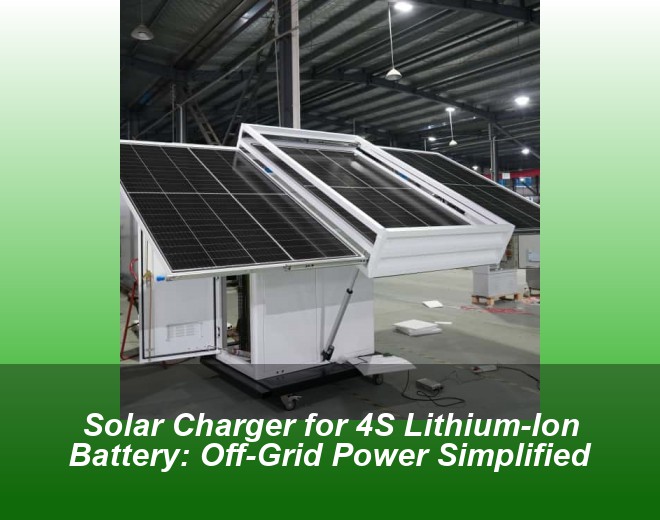
Let’s face it – solar charging a 4S lithium-ion battery isn’t as simple as plugging in your phone. Unlike standard power banks, these 16.8V battery packs demand precise voltage control. I’ve seen DIYers fry their $300 drone batteries by using generic solar panels – talk about learning the hard way!
Off-Grid Solar Lithium Battery Systems
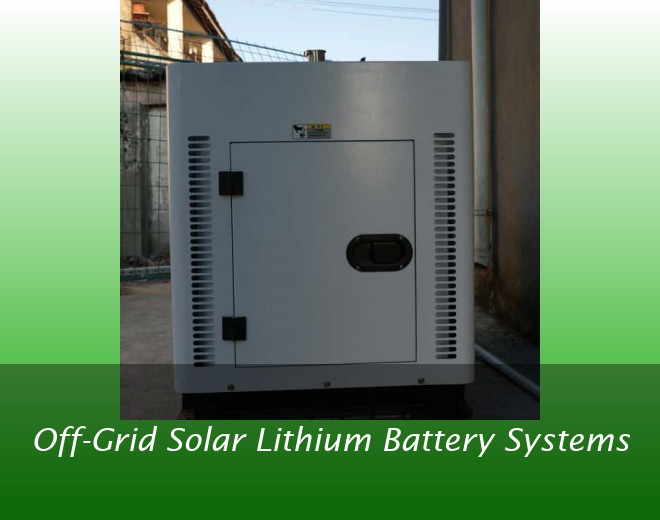
Ever tried powering a modern home with 19th-century technology? That's essentially what happens when people use lead-acid batteries for off-grid solar systems. Last month, a Colorado family learned this the hard way when their $20,000 solar setup failed during a snowstorm - all because their 1980s-style battery bank couldn't handle -15°F temperatures.
Grid Storage Battery: Powering Tomorrow's Grid
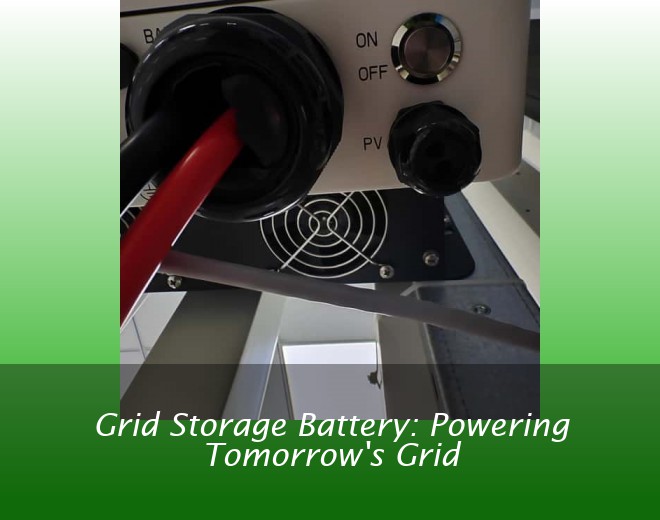
You know how frustrating it is when your phone dies during a video call? Now imagine entire cities facing that problem. Grid storage batteries have become the unsung heroes of our renewable energy transition, with global installations skyrocketing by 200% since 2020. These systems don't just store power—they're rewriting the rules of energy reliability.
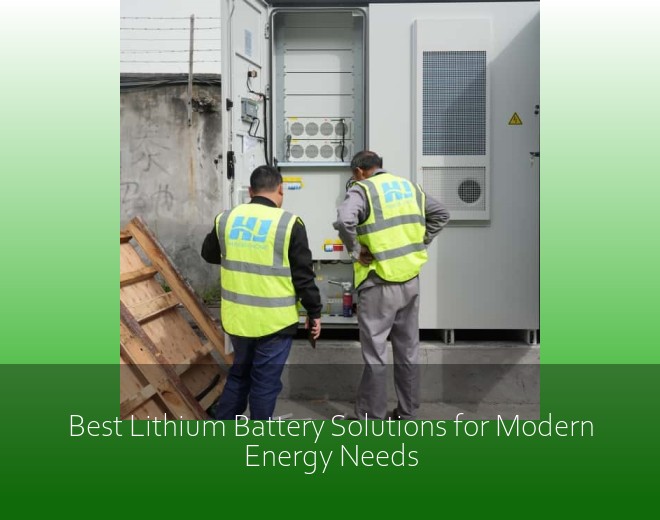
Best Lithium Battery Solutions for Modern Energy Needs
Let's face it—lithium batteries power our world, from smartphones to solar farms. But here's the kicker: while they've revolutionized energy storage, we're still wrestling with three stubborn issues that keep engineers like me up at night.
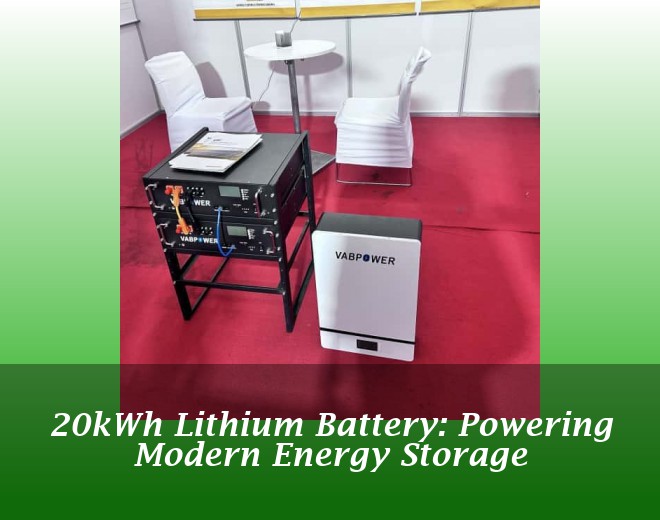
20kWh Lithium Battery: Powering Modern Energy Storage
Ever wondered why your neighbor's solar panels kept working during last month's blackout? The secret sauce might be a 20kWh lithium battery silently humming in their garage. These energy storage units are kind of like the Swiss Army knives of renewable systems - compact, versatile, and surprisingly powerful.
 Inquiry
 Online Chat