


Grid-Scale Battery Storage: Powering the Solar Revolution
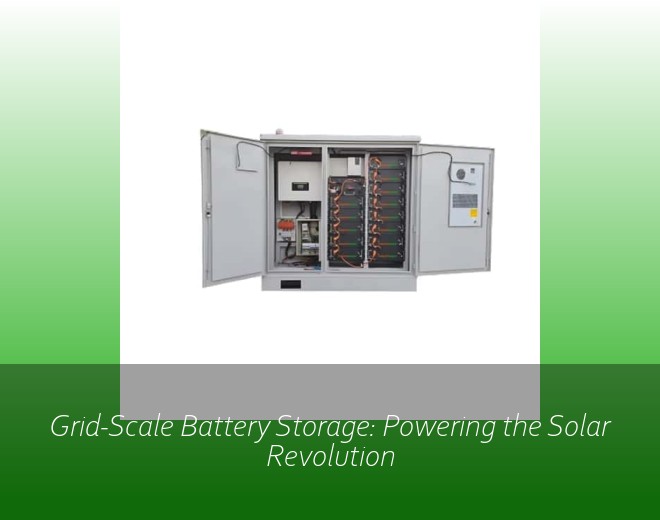
Table of Contents
The Solar Storage Dilemma
Imagine a world where solar panels could power entire cities night and day. We're halfway there - modern photovoltaic systems already generate surplus energy during peak sunlight hours. But here's the rub: what happens when the sun goes down or clouds roll in? This intermittency issue has become the Achilles' heel of renewable energy adoption.
The numbers don't lie. While global solar capacity reached 1.2 terawatts in 2024, curtailment rates (wasted energy) exceeded 15% in sun-rich regions like California and Spain. That's enough electricity to power 25 million homes literally vanishing into thin air. Grid operators face a paradoxical challenge - too much energy when it's not needed, not enough when demand peaks.
The Duck Curve Quandary
Visualize this: net energy demand resembles a duck's silhouette. With solar flooding the grid midday, the "belly" of the duck drops alarmingly low. Come evening, when solar production plummets but demand surges, we see a steep neck curve. This daily rollercoaster strains conventional power plants and risks blackouts.
Battery Technologies Leading the Charge
Enter grid-scale batteries, the shock absorbers for our renewable energy systems. Lithium-ion dominates today's installations, but alternatives are emerging:
- Flow batteries (vanadium redox) offering 20+ year lifespans
- Thermal storage using molten salts
- Compressed air energy storage in underground caverns
Take Tesla's Megapack installations. Each 3 MWh unit can power 1,000 homes for 6 hours. The Hornsdale Power Reserve in Australia - once the world's largest lithium battery - slashed grid stabilization costs by 90% during its first two years.
The Chemistry Behind the Magic
Battery selection isn't one-size-fits-all. Lithium iron phosphate (LFP) batteries now dominate new installations due to their safety and longevity. "We're seeing LFP cycle counts exceed 8,000 with only 20% degradation," notes Dr. Elena Marquez, CTO of Huijue Energy Solutions. "That's a 25-year lifespan with daily cycling - unthinkable a decade ago."
Costs vs. Benefits: The Storage Equation
Let's address the elephant in the room - upfront costs. While battery storage systems require significant investment, the levelized cost of storage (LCOS) has plummeted 62% since 2018. In sunbelt regions, solar-plus-storage now undercuts natural gas peaker plants on $/MWh basis.
Consider Texas' recent winter storm crisis. Utilities with battery buffers maintained power while others collapsed. ERCOT data shows battery responders reacted 9x faster than gas plants during frequency drops. The financial upside? Participants earned $17/MWh normally versus $9,000/MWh during peak demand.
When Batteries Saved the Grid
Puerto Rico's post-hurricane rebuild offers a blueprint. The island's new solar microgrids with Tesla batteries provided critical backup during 2024's hurricane season. One community in Adjuntas kept lights on for 72 hours straight while the main grid failed - all powered by solar panels and energy storage installed just six months prior.
A Day in the Life of Grid Batteries
04:30 AM: Begin discharging to meet morning demand surge
10:00 AM: Soak up solar surplus as panels hit peak output
03:00 PM: Export stored energy to neighboring states
08:00 PM: Ramp up discharge during evening peak
12:00 AM: Accept wind energy excess from overnight generation
Beyond Lithium: What's Next?
While lithium batteries dominate headlines, alternative technologies promise game-changing potential. Sodium-ion batteries using abundant materials could slash costs by 40%. Experimental "sand batteries" storing heat at 600°C show promise for industrial applications. Even hydrogen hybrids are entering the conversation, though efficiency challenges remain.
The race for better storage isn't just technical - it's cultural. As homeowners from Berlin to Beijing install rooftop solar with battery walls, they're not just consumers anymore. They're "prosumers" actively shaping grid dynamics. This democratization of energy could prove more disruptive than any battery chemistry breakthrough.
So where does this leave us? The solar revolution's success hinges on our ability to store sunshine. With storage costs projected to fall another 45% by 2030, the age of 24/7 solar power isn't a fantasy - it's an inevitability being built today in battery farms and research labs worldwide.
Related Contents
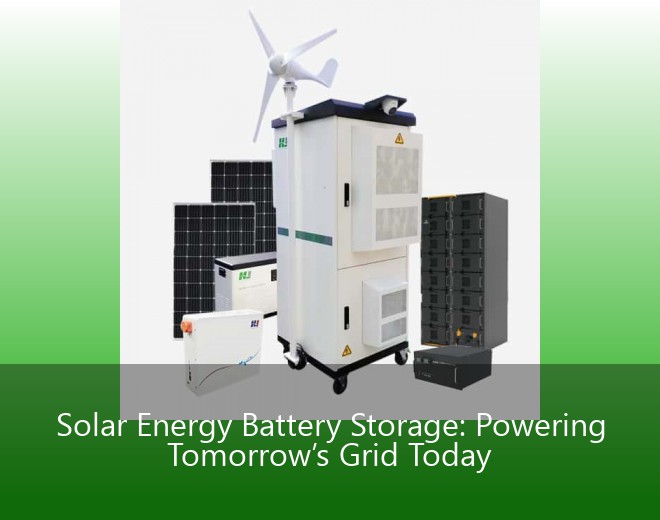
Solar Energy Battery Storage: Powering Tomorrow’s Grid Today
California’s grid operator just reported solar curtailment rates hitting 15% during peak daylight hours last month. That’s enough wasted energy to power 600,000 homes – gone. Why? Because traditional grids weren’t built to handle renewable energy’s feast-or-famine nature. Here’s the kicker: battery storage could’ve captured 92% of that lost power according to NREL models.
Utility-Scale Solar Storage: Powering Tomorrow's Grid
California's grid operator just faced another "Oh come on!" moment last month when solar farms had to curtail 2.3 gigawatt-hours of clean energy - enough to power 270,000 homes - simply because there was nowhere to store it. That's where large-scale solar storage steps in, acting like a giant electricity savings account for the grid.
Solar Battery Storage Systems: Powering the Renewable Energy Revolution
Ever wondered why your solar panels sometimes feel like expensive roof decorations? Here's the kicker: 35% of solar energy generated globally goes to waste because we can't store it properly. That's enough to power all of South America for six months – gone. Poof.
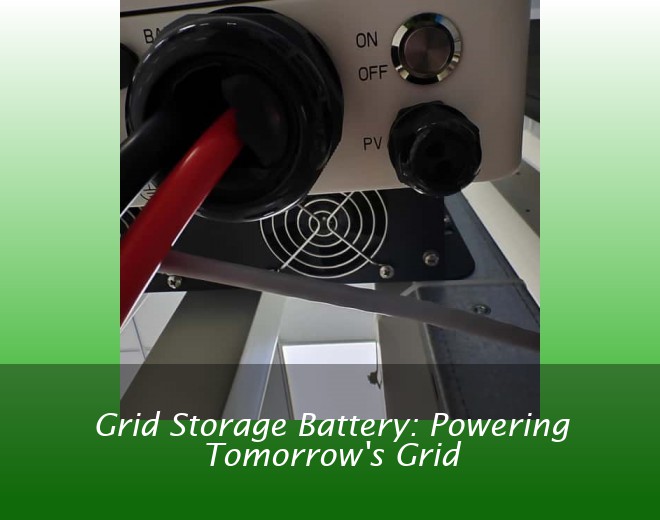
Grid Storage Battery: Powering Tomorrow's Grid
You know how frustrating it is when your phone dies during a video call? Now imagine entire cities facing that problem. Grid storage batteries have become the unsung heroes of our renewable energy transition, with global installations skyrocketing by 200% since 2020. These systems don't just store power—they're rewriting the rules of energy reliability.
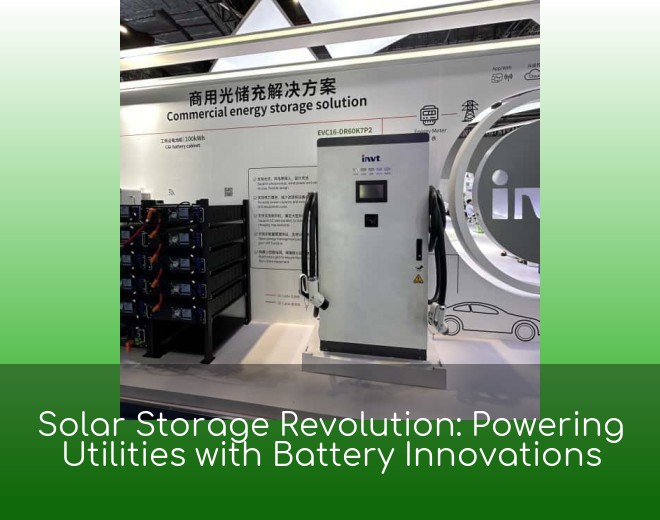
Solar Storage Revolution: Powering Utilities with Battery Innovations
Ever wondered why your electricity bill keeps climbing despite solar panel installations hitting record numbers? The harsh truth: Our grids were designed for steady coal plants, not sunshine that disappears at night. California's 2024 rolling blackouts exposed this vulnerability - 12GW of solar energy became useless after sunset during peak demand.
 Inquiry
 Online Chat