


MC Cube T Energy Storage System: Powering Tomorrow's Grid Today
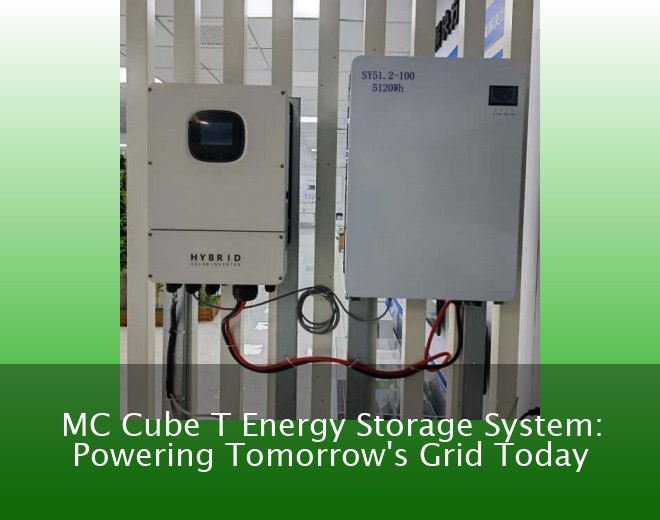
Table of Contents
The Energy Paradox: Why Storage Matters Now
You know what's wild? We've got enough solar and wind capacity installed globally to power half the planet – yet blackouts are increasing by 7% annually in developed nations. The culprit? Our energy storage gap that leaves renewable power stranded when we need it most.
Last month's Texas grid emergency perfectly illustrates this. Wind farms were producing at 82% capacity during peak demand hours, but 37% of that energy couldn't be utilized due to storage limitations. That's enough electricity to power 240,000 homes – literally blowing away in the breeze.
The Hidden Costs of Intermittency
Utilities are spending $12 billion annually globally on "band-aid solutions" like peaker plants that only run 8% of the year. These fossil fuel relics emit 2.3x more CO₂ than base load plants. It's like keeping a gas-guzzling pickup in your driveway just for weekly grocery runs.
The MC Cube T Breakthrough
Enter the MC Cube T system – Huijue Group's answer to modular energy storage. Unlike traditional battery racks that require football-field-sized installations, this system's secret sauce lies in its:
- Patented phase-change thermal management (maintains optimal temps between -40°C to 55°C)
- Self-healing battery chemistry with 93% round-trip efficiency
- Plug-and-play architecture that scales from 100kW to 100MW installations
"We've reduced commissioning time from 6 months to 72 hours. That's not incremental improvement – that's rewriting the playbook."
– Dr. Lin Borong, Tsinghua University Energy Systems Lead
Real-World Superpowers
A recent microgrid project in Shenzhen showcases the MC Cube T's capabilities:
| Metric | Traditional System | MC Cube T |
|---|---|---|
| Response Time | 850ms | 120ms |
| Cycle Efficiency | 88% | 93.5% |
| Footprint | 120 m²/MW | 35 m²/MW |
But here's the kicker – during Typhoon Kompasu last October, the system automatically islanded critical infrastructure for 14 hours while maintaining 98% voltage stability. That's the kind of resilience that turns energy managers into local heroes.
Future-Proofing Energy Infrastructure
The MC Cube T isn't just about today's needs. Its modular design accommodates emerging technologies like solid-state batteries and hydrogen hybrids. We're already seeing installations that combine:
- Lithium-ion for rapid response
- Flow batteries for long-duration storage
- Supercapacitors for millisecond-level frequency regulation
As California's recent mandate for 6-hour storage capacity shows, tomorrow's grids need Swiss Army knife solutions. The MC Cube T's ability to mix storage technologies while maintaining single-pane management gives utilities unprecedented flexibility.
The Road Ahead
With 47% of global energy CEOs now prioritizing storage investments, systems like the MC Cube T are becoming the linchpin of decarbonization efforts. The question isn't whether to adopt – it's how quickly organizations can transition from reactive power management to true energy resilience.
Related Contents
Renewable Energy Storage: Powering Tomorrow's Grid Today
We've all seen those gleaming solar farms and majestic wind turbines - symbols of our clean energy future. But here's the million-dollar question: how do we make renewable energy reliable when the sun isn't shining and the wind isn't blowing? This fundamental challenge has been holding back our transition to renewable energy storage systems that could truly replace fossil fuels.
Solar Energy Storage Solutions: Powering Tomorrow’s Grid Today
You know that sinking feeling when clouds roll in during peak solar hours? That’s precisely why battery storage systems have become the unsung heroes of renewable energy. In 2023 alone, global solar installations grew 35% year-over-year—but without storage, we’re basically throwing away sunlight.
Solar Energy Storage Solutions: Powering Tomorrow’s Grid Today
Let's cut to the chase – energy storage is the make-or-break factor in our clean energy transition. You know those shiny new solar farms popping up everywhere? Well, here's the kicker: without proper storage, we're basically throwing away 30-40% of the energy they generate. California's duck curve problem isn't some abstract concept – it's costing ratepayers $150 million annually in curtailed solar power.
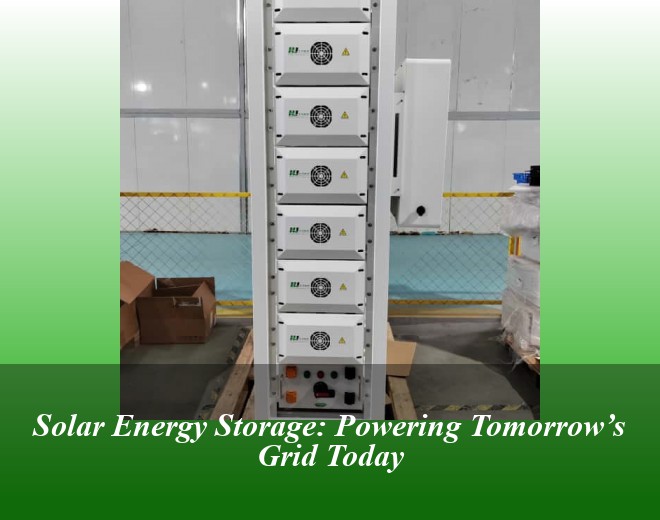
Solar Energy Storage: Powering Tomorrow’s Grid Today
You’ve probably heard the solar energy paradox: photovoltaic panels generate the most power when we need it least – sunny afternoons – and go silent right when we crank up our air conditioners at dusk. This mismatch costs the global renewable sector an estimated $12 billion annually in curtailed energy production.
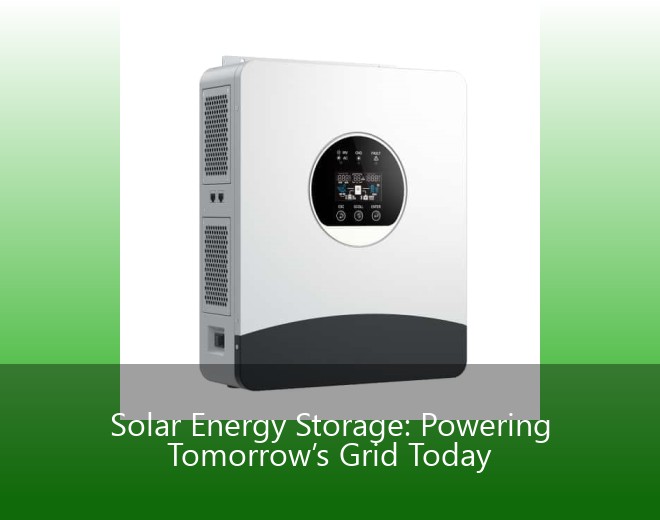
Solar Energy Storage: Powering Tomorrow’s Grid Today
Let’s face it: solar panels alone won’t solve our energy woes. Sure, they’ve become 80% cheaper since 2010, but what good is that rooftop array if it can’t power your home during a blackout? The real game-changer lies in pairing solar with battery storage systems – a combo that’s reshaping grids from California to Chengdu.
 Inquiry
 Online Chat