


Battery Storage Farms: Powering Tomorrow's Grid
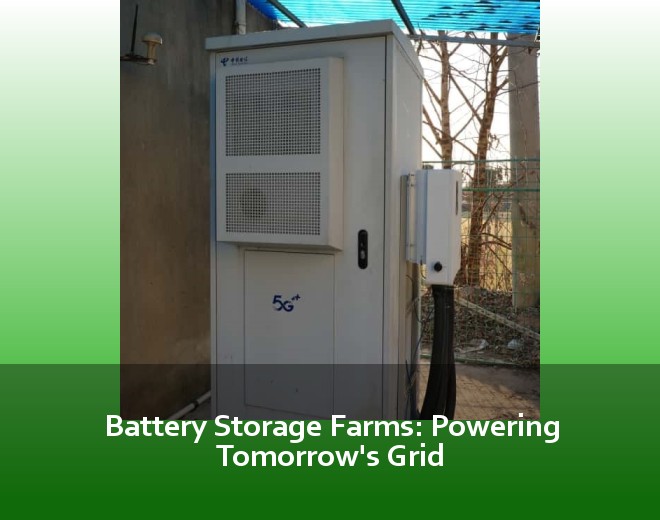
Table of Contents
Why Our Energy Grids Are Failing
Ever noticed how your smartphone battery dies right when you need it most? Now imagine that frustration multiplied by a million - that's essentially what's happening to power grids worldwide. As renewable energy adoption surges (wind and solar now supply 20% of global electricity), we're facing a peculiar paradox: clean energy abundance during off-peak hours, and scarcity when demand spikes.
Traditional grids were designed for steady coal and gas plants, not the intermittent nature of renewables. In California alone, over 1.3 gigawatt-hours of solar energy gets curtailed daily - enough to power 100,000 homes. This isn't just an engineering problem; it's economic madness.
The Duck Curve Dilemma
Grid operators call it the "duck curve" - that awkward midday dip in net load when solar floods the system. Without large-scale energy storage, utilities must ramp up fossil fuel plants rapidly as the sun sets, like trying to U-turn a cargo ship. The result? Higher costs and emissions from inefficient "peaker plants".
How Battery Farms Solve the Puzzle
Enter battery storage farms - essentially giant power banks for the grid. These facilities, like Tesla's 300MW Moss Landing installation in California, store excess renewable energy during low demand and discharge during peak hours. Think of them as shock absorbers for the energy transition.
Here's what makes modern BESS (Battery Energy Storage Systems) game-changers:
- Response time under 1 second (vs 15 minutes for gas plants)
- 90%+ round-trip efficiency
- Modular design allowing incremental expansion
But how do these massive battery arrays actually work? Let's peel back the layers.
The Nuts and Bolts of Grid-Scale Storage
At its core, a battery farm contains three key components:
- Battery racks - Modular units containing thousands of individual cells
- Power conversion systems (PCS) - The "translators" between DC storage and AC grid
- Energy management systems (EMS) - The brain coordinating charge/discharge cycles
Most current projects use lithium-ion chemistry, but alternatives are gaining ground. Take Form Energy's iron-air batteries - they can store energy for 100 hours versus lithium's typical 4-hour duration. Then there's flow batteries, where liquid electrolytes in separate tanks promise decades-long lifespans.
Case Study: Texas' ERCOT Market
During the 2023 heatwave, battery farms provided 2.3GW of critical power during evening peaks - preventing blackouts while earning operators $27/MWh price arbitrage. This dual value proposition explains why storage deployments in Texas grew 800% year-over-year.
Dollars and Sense of Energy Banking
The financial math finally works. Since 2018, battery pack costs dropped 70% to $139/kWh. Combined with IRA tax credits covering 30-50% of project costs, storage now beats gas peakers on levelized cost. New revenue stacking models help too:
- Energy arbitrage (buy low, sell high)
- Capacity payments for reliability
- Ancillary services like frequency regulation
But wait - isn't mining lithium environmentally destructive? Valid concern. Recycling programs now recover 95% of battery materials, while new sodium-ion alternatives using abundant materials enter pilot projects.
Beyond Lithium: What's Next in Storage
While lithium dominates today, the storage revolution is just getting started. Compressed air storage in salt caverns, gravity systems using mine shafts, even hydrogen hybridization - the innovation pipeline bursts with alternatives. China's new sodium-ion mega factory signals a potential chemistry shift, leveraging cheaper materials for stationary storage.
The ultimate prize? Multi-day storage that can weather prolonged cloudy/windless periods. Early projects like Australia's 250MW/8h Victorian Big Battery show what's possible. As utilities increasingly pair storage with renewables, we're not just building backup systems - we're creating an entirely new energy architecture.
So next time you charge your phone, remember - the same basic concept scaled up might just save the grid. Not bad for some humble electrons in a box.
Related Contents
Battery Storage Farms: Powering Tomorrow's Grid
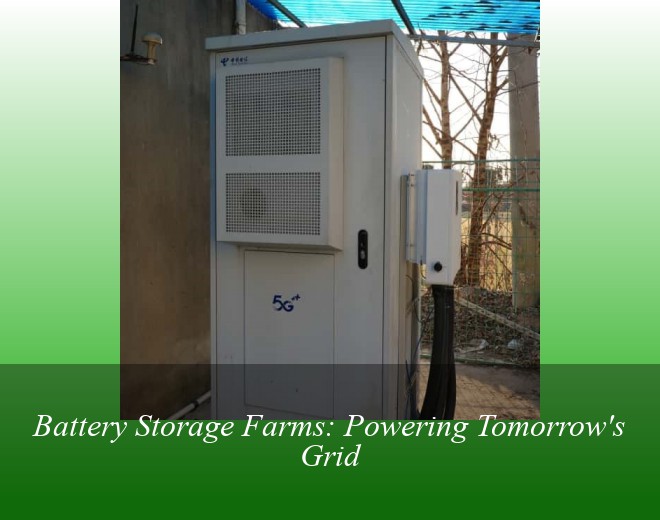
Ever noticed how your smartphone battery dies right when you need it most? Now imagine that frustration multiplied by a million - that's essentially what's happening to power grids worldwide. As renewable energy adoption surges (wind and solar now supply 20% of global electricity), we're facing a peculiar paradox: clean energy abundance during off-peak hours, and scarcity when demand spikes.
Battery Storage: Powering Tomorrow's Grid
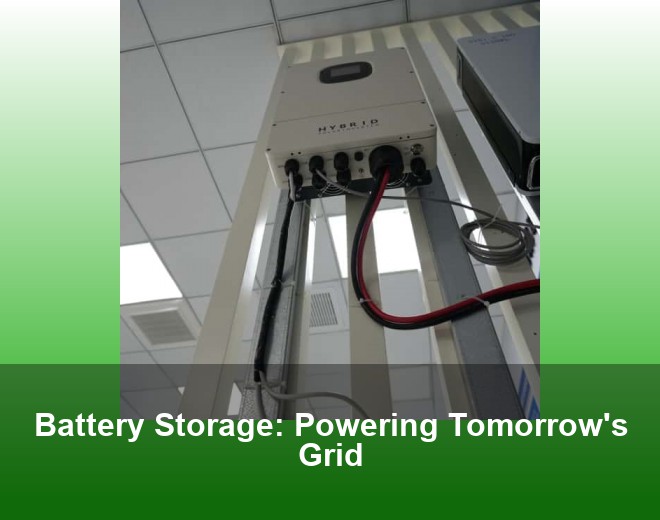
You know how frustrating it is when your phone dies during a video call? Now imagine that happening to entire cities. Last February, Texas faced rolling blackouts despite having 15 GW of installed wind capacity - the turbines froze while demand skyrocketed. This exposes the Achilles' heel of renewable energy: intermittency.
Solar PV and Battery Storage: Powering Tomorrow's Grid
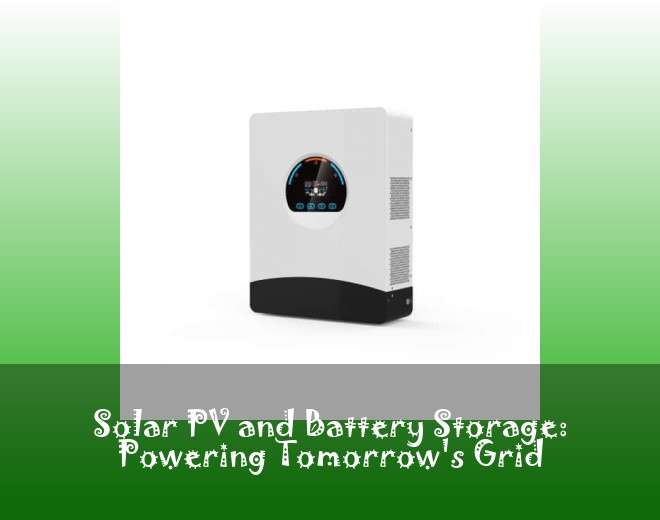
Let's face it—solar PV has an inconvenient truth. While panels generate clean energy during daylight, what happens when clouds roll in or night falls? This intermittency causes frustrating mismatches between energy production and consumption patterns.
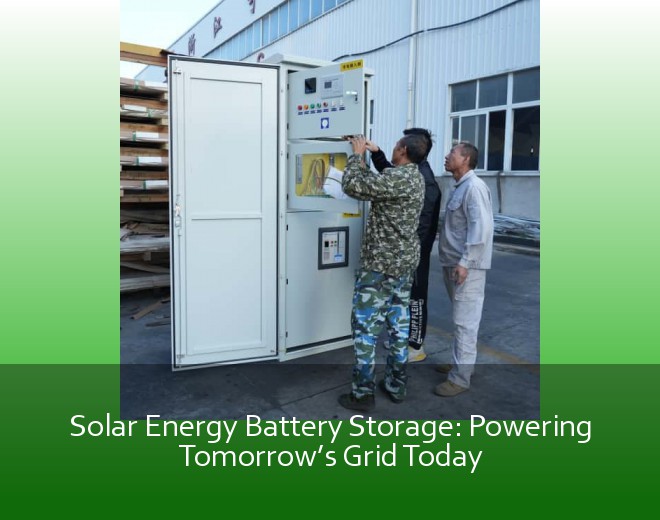
Solar Energy Battery Storage: Powering Tomorrow’s Grid Today
Let’s cut to the chase: **solar energy battery storage** isn’t just a nice-to-have—it’s the linchpin of our clean energy transition. Imagine this: California generated so much solar power last summer that grid operators paid neighboring states to take the excess. Meanwhile, Texas faced blackouts during winter storms because frozen wind turbines couldn’t deliver. What’s missing? A reliable way to store renewable energy when the sun isn’t shining or the wind isn’t blowing.
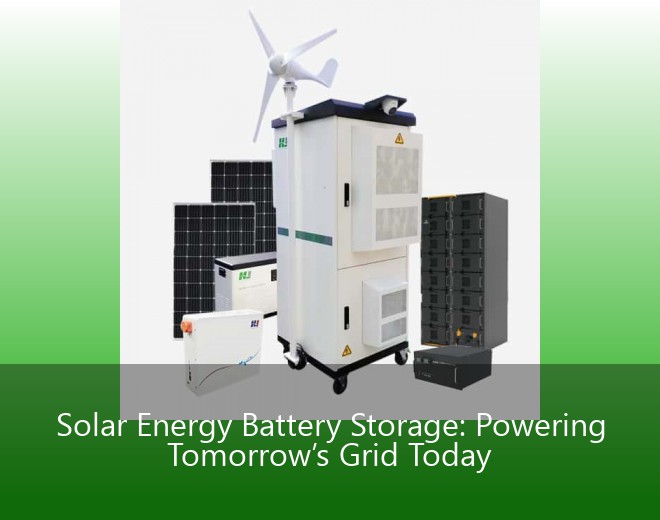
Solar Energy Battery Storage: Powering Tomorrow’s Grid Today
California’s grid operator just reported solar curtailment rates hitting 15% during peak daylight hours last month. That’s enough wasted energy to power 600,000 homes – gone. Why? Because traditional grids weren’t built to handle renewable energy’s feast-or-famine nature. Here’s the kicker: battery storage could’ve captured 92% of that lost power according to NREL models.
 Inquiry
 Online Chat