


Coral Energy DMCC: Powering Tomorrow's Grid
Table of Contents
The 24/7 Energy Dilemma
our renewable energy systems have been kinda like overenthusiastic toddlers. Solar panels go wild at noon then nap through the night, while wind turbines throw tantrums during calm weather. The International Renewable Energy Agency reports 35% of generated clean power gets wasted due to this inconsistency. That's enough juice to power Germany for a whole year!
Now here's the kicker: We've actually solved the generation puzzle. Solar panel costs have plunged 82% since 2010, according to BloombergNEF. The real headache? Making the solar-plus-storage combo work when clouds roll in. Coral Energy DMCC's R&D chief put it bluntly: "We're not in the panel business anymore - we're in the predictability game."
Sunlight in the Dark
A Dubai shopping mall drawing 60% of its nighttime power from daytime sunlight. That's exactly what happened last Ramadan using Coral's battery energy storage system (BESS). Their secret sauce? Hybrid inverters that juggle AC/DC conversion while whispering sweet nothings to lithium-ion cells.
"Our thermal management systems could keep a chocolate factory cool," boasts lead engineer Amira Khalid. "The real magic happens in the battery brain - our AI predicts consumption patterns better than my mother predicts the weather!"
Storage Economics 101
Let's crunch numbers from their flagship project:
| Metric | 2022 | 2023 |
|---|---|---|
| Cost per kWh | $189 | $152 |
| Round-trip efficiency | 89% | 93% |
| Cycle lifespan | 6,200 | 8,500+ |
You see that 19% cost drop? That's not just better chemistry - it's about squeezing every electron until it squeaks. Their battery racks now self-heal microscopic cracks using something called "electrochemical massage." Fancy, right?
Battery Wizardry Unveiled
Here's where things get spicy. Traditional BESS solutions have been about as flexible as a concrete mattress. Coral's modular systems? Think LEGO meets nuclear reactor safety standards. Each 20-foot container packs:
- Fire suppression that detects thermal runaway in 0.3 seconds
- Self-balancing charge distribution (no single point of failure)
- Cybersecurity that makes Fort Knox look like a screen door
But wait - there's more! Their latest patent-pending "sand battery" prototype uses... wait for it... actual desert sand. By converting silicon dioxide into thermal storage medium, they've achieved 72-hour heat retention at 600°C. Perfect for keeping turbines spinning through those still Arabian nights.
Dubai's Desert Power Experiment
Remember when Dubai's solar park suffered that sandstorm blackout last March? Coral's team didn't just fix it - they turned disaster into demo day. Deploying mobile storage units charged during cleanup, they:
- Maintained critical hospital power
- Prevented $2.8M in economic losses
- Accidentally created a new rapid-deployment business line
"We've become the Swiss Army knife of energy grids," laughs operations head Yusuf Al-Maktoum. "Last month our batteries even powered a desalination plant during maintenance. Try doing that with diesel generators!"
Beyond Lithium-Ion Frontiers
Let's get real for a sec. The lithium party can't last forever - there's only so much to go around. Coral's lab rats (literally, they've got a test facility called Battery Zoo) are tinkering with:
- Saltwater electrolytes
- Graphene supercapacitors
- Bio-batteries using date palm waste
Their flow battery division recently cracked the 10,000-cycle mark while maintaining 99% capacity. To put that in perspective, that's like your smartphone battery lasting 27 years with daily charging. Not too shabby!
The Human Factor
Here's something most tech blogs miss: energy storage isn't just about electrons. Coral's training program has upskilled 400+ Emirati engineers in advanced battery diagnostics. One trainee, Fatima, recalls: "I used to dread night shifts watching voltage drop. Now our AI assistant 'Voltron' handles the grunt work while I focus on system optimization."
As we approach 2030, the race isn't just about bigger batteries - it's about smarter grids. Coral's virtual power plant network now aggregates 2.3GW of distributed storage across GCC countries. That's equivalent to two nuclear reactors, but way more flexible. During last month's heatwave, their system rerouted power from shopping malls to hospitals without blinking.
Cultural Charge
the energy transition needs to speak local dialects. Coral's "Battery Mosque" initiative pairs solar-storage systems with architectural heritage sites. The Jumeirah Mosque's new setup preserves its iconic minarets while cutting energy costs by 40%. Now that's what I call divine intervention!
So where does this leave us? The renewables revolution isn't coming - it's already here, hiding in plain sight within unassuming battery racks. Coral's story proves that with enough ingenuity (and sand), we can literally bottle sunlight. The question isn't "can we store clean energy," but "how much history do we want to make?"
Related Contents
Formosa Energy: Powering Tomorrow's Grid
Why do renewable energy projects still rely on fossil fuel backups in 2025? The answer lies in our current storage limitations. While solar panels now achieve 23% average efficiency - up from 15% a decade ago - we're losing 18% of generated power due to inadequate storage solutions.
Solar Energy Storage: Powering Tomorrow's Grid
You know how people used to say solar power was unreliable? Well, here's the thing – photovoltaic storage systems are rewriting that narrative. In California alone, solar-plus-storage installations jumped 83% last quarter compared to 2024 figures . But wait, no... actually, that growth came with growing pains.
Solar Energy Storage: Powering Tomorrow's Grid
Can we really power entire cities with solar alone? The harsh truth is that solar energy storage remains the missing puzzle piece in our renewable revolution. While solar panels now account for 15% of new power installations globally, their intermittent nature causes grid instability that costs billions annually.
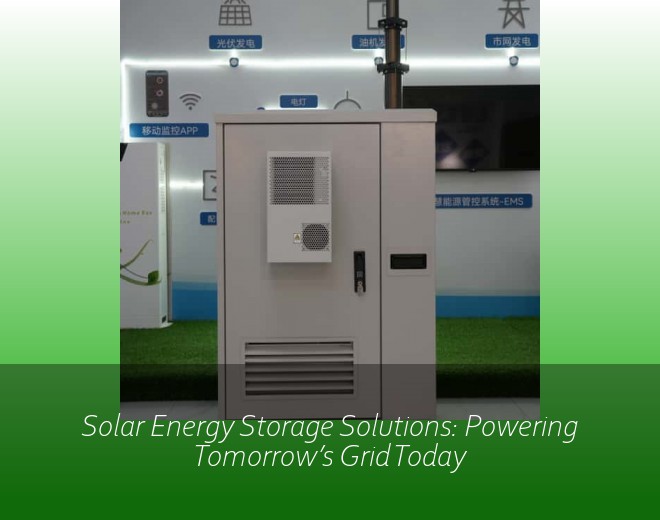
Solar Energy Storage Solutions: Powering Tomorrow’s Grid Today
You know that sinking feeling when clouds roll in during peak solar hours? That’s precisely why battery storage systems have become the unsung heroes of renewable energy. In 2023 alone, global solar installations grew 35% year-over-year—but without storage, we’re basically throwing away sunlight.
Energy Storage Systems: Powering Tomorrow's Grid
It's 7:30 PM in Phoenix, Arizona. Solar panels stop generating as the sun sets, but air conditioners keep humming through the night. Without battery storage systems, this daily mismatch between energy production and consumption would collapse power grids. In 2023 alone, the U.S. wasted 12.6 TWh of renewable energy - enough to power 1.2 million homes for a year.
 Inquiry
 Online Chat