


Solar Storage Breakthroughs Reshaping Energy
Table of Contents
Why Energy Storage Can't Wait?
California's grid operators scrambling when solar farms go dark at sunset, or Texas wind turbines sitting idle during peak demand hours. Sound familiar? These aren't hypotheticals - they're daily realities in 2025's energy landscape.
Here's the kicker: The U.S. wasted 12.5 TWh of renewable energy last year due to inadequate storage. That's enough to power 1 million homes for a full year. The problem's not going away - solar and wind installations are outpacing storage deployments 3:1 globally.
The Fragile Dance of Power Grids
Modern grids weren't built for renewables' intermittent nature. Traditional "baseload" plants can't ramp up/down quickly enough to match solar/wind fluctuations. Battery storage systems act as the shock absorbers here, but deployment lags behind need.
Take Texas' ERCOT grid - they've seen a 200% increase in renewable curtailment since 2023. Without storage, all those shiny new solar panels might as well be lawn ornaments during grid congestion events.
Storage Systems Saving the Day
Enter the new generation of solar-plus-storage solutions. Hithium's 5MWh ∞block system (deployed in 23 projects last quarter) uses 314Ah cells with 11,000-cycle durability - that's 30 years of daily use. Their secret sauce? Proprietary thermal management that reduces degradation by 40% in extreme climates.
- 72-hour continuous backup power
- 20% smaller footprint than 2023 models
- Grid-forming capabilities for black start scenarios
But wait - aren't these systems prohibitively expensive? Actually, Levelized Cost of Storage (LCOS) dropped to $132/MWh in Q1 2025. That's cheaper than peaker plants in 38 states. For developers like Perfect Power, this economics makes storage-first projects bankable without subsidies.
Real-World Heroes: Texas to Shanghai
Let's break down two game-changing deployments:
Case 1: ERCOT's Solar Savior
Perfect Power's 800MWh project near Austin uses Hithium's batteries to time-shift solar generation. During February's deep freeze, this system provided critical grid support when gas plants faltered. The result? 72,000 homes kept power when neighboring areas went dark.
Case 2: Shanghai's Mega Deployment
Zhiguang Storage's 1.2GWh installation (commissioned March 2025) uses cascading topology for direct 35kV grid connection. This eliminates transformer losses, achieving 92% round-trip efficiency. Their secret? Advanced SOC balancing keeps cell variations under 2% - a 5x improvement over 2023 systems.
Beyond Lithium: What's Next?
While lithium-ion dominates today, the storage Olympics have multiple contenders:
- Flow batteries for long-duration storage (8+ hours)
- Thermal storage using molten salts
- Hydrogen hybrids for seasonal storage
The real dark horse? Sodium-ion batteries. China's CATL promises commercial systems by 2026 at half of lithium's cost. For now, lithium-based energy storage systems remain the workhorse - but the race for tomorrow's tech is wide open.
As we approach the 2025 EESA Storage Expo in Shanghai, one thing's clear: The storage revolution isn't coming - it's already here. The question isn't whether to adopt these solutions, but how quickly we can scale them before grid instability becomes unmanageable. After all, the sun doesn't wait - shouldn't our storage solutions keep pace?
Related Contents
Solar Storage Breakthroughs Reshaping Energy
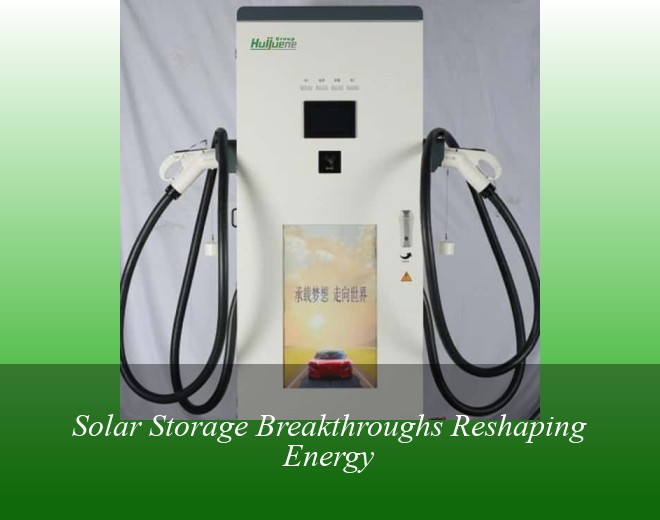
Ever wondered why your lights flicker during cloudy days despite solar panels covering every rooftop? The dirty secret of renewable energy isn't about generation anymore - it's about storage. Last month, California's grid operators faced a heart-stopping moment when 12GW of solar suddenly dropped during partial eclipse conditions. That's equivalent to 24 coal plants vanishing mid-operation.

Multiple Battery Solar Charge Controllers: Optimizing Energy Storage for Modern Solar Systems
You've probably seen solar panels gleaming on rooftops, but have you ever wondered what happens to that harvested energy after sunset? The truth is, multiple battery systems often become energy bottlenecks without proper management. Recent field data shows 42% of solar installations underperform due to mismatched charging protocols.
Solar & Storage Innovation: SECA Energy GmbH's Path to Energy Resilience
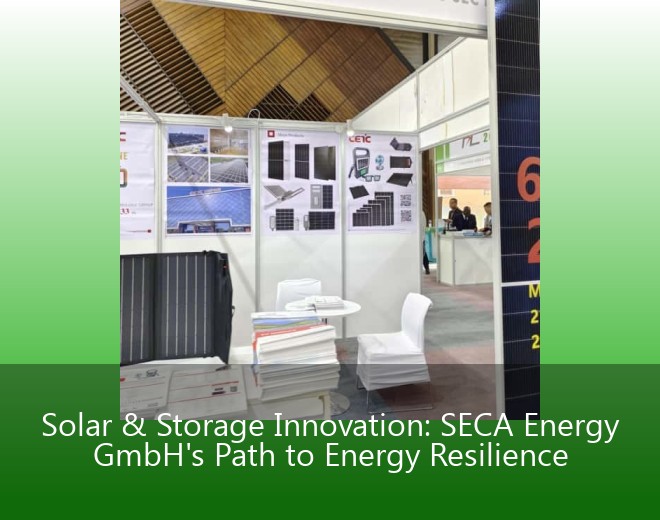
Germany generated 58 GW of solar power last summer - enough to power 29 million homes. Yet during January's "dunkelflaute" (dark doldrums), solar output plummeted to 5% capacity. This rollercoaster of abundance and scarcity explains why SECA Energy GmbH prioritizes storage solutions alongside photovoltaic innovation.
Chloride Exide Solar Batteries 100Ah: Reliable Energy Storage for Modern Solar Systems
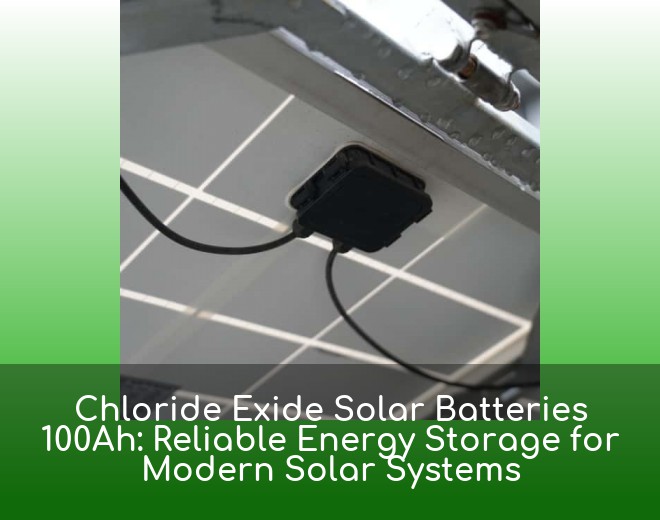
Ever wondered why some solar installations outperform others by 30-40% annually? The secret often lies in their energy storage backbone. As global solar capacity surges past 1.6 terawatts this year, the real challenge isn't generating power - it's storing it effectively when clouds roll in or the sun dips below the horizon.
Solar Storage Breakthroughs Reshaping Energy
California's grid operators scrambling when solar farms go dark at sunset, or Texas wind turbines sitting idle during peak demand hours. Sound familiar? These aren't hypotheticals - they're daily realities in 2025's energy landscape.
 Inquiry
 Online Chat