


Solar Energy Storage: Powering Tomorrow's Grids Today
Table of Contents
The Unstable Truth About Renewable Power
You know that feeling when your phone dies at 15% battery? Now imagine that happening to entire cities. That's essentially the challenge we're facing with solar energy storage today. While photovoltaic panels have become 85% cheaper since 2010 according to IRENA, the real headache lies in keeping the lights on when clouds roll in or night falls.
Last March, California's grid operators faced this exact dilemma. They'd achieved 103% renewable generation during peak daylight hours - a historic first! But by sunset, they were scrambling to fire up natural gas plants. This rollercoaster ride exposes the Achilles' heel of renewable systems: battery storage systems currently only provide 4-6 hours of backup at utility scale.
The Duck Curve That Quacked the Grid
Solar production peaks at noon, then plummets just as everyone comes home, turns on ACs, and charges EVs. Grid operators call this the "duck curve" - and it's getting more extreme yearly. In 2023 alone, California curtailed (essentially threw away) enough solar energy to power 750,000 homes during sunny days. What a waste, right?
When Sunshine Fades: Storage Solutions That Don't Quit
Here's where photovoltaic storage becomes the hero we need. Modern solutions aren't just about storing electrons - they're about intelligent energy management. Take Tesla's Hornsdale Power Reserve in Australia. What started as a 129 MWh facility in 2017 has now evolved into a virtual power plant that:
- Responds to grid fluctuations within 140 milliseconds
- Provides frequency control for 30% of South Australia
- Stores enough energy to power 75,000 homes for 1 hour
But lithium-ion isn't the only game in town. Flow batteries using vanadium electrolytes can last 20+ years with zero degradation - perfect for stationary storage. And get this: Some Chinese manufacturers have brought flow battery costs down to $300/kWh, making them viable for large-scale solar energy storage systems.
Battery vs. Thermal vs. Mechanical: The Storage Tech Showdown
Let's break down the top contenders in energy storage tech:
| Technology | Efficiency | Duration | Cost ($/kWh) |
|---|---|---|---|
| Lithium-ion | 92-95% | 4h | 150-200 |
| Pumped Hydro | 70-85% | 12h+ | 50-150 |
| Thermal Salt | 40-50% | 10h | 80-100 |
Notice something odd? The cheapest solution (pumped hydro) has the lowest efficiency. That's why we're seeing hybrid systems emerge. In Chile's Atacama Desert, a new plant combines lithium batteries for short-term needs with molten salt thermal storage for overnight baseload. It's like having both a sprinter and marathon runner on your energy team!
From Texas Blackouts to Sahara Sun: Real-World Storage Wins
Remember the 2021 Texas power crisis? Fast forward to this May - a new 100 MW/400 MWh battery energy storage system in Houston successfully powered 20,000 homes through a heatwave-induced grid strain. The kicker? It automatically sold stored energy back to the grid during peak pricing, paying back 18% of its construction costs in just three days!
"Storage isn't just backup anymore - it's becoming the grid's stock market trader," says Dr. Elena Martinez, grid resilience expert at MIT.
Meanwhile in Morocco's Noor Complex, engineers are testing sand-based thermal storage. Yep, regular desert sand heated to 600°C can retain enough thermal energy for 8 hours of nighttime power generation. Talk about working with what you've got!
Beyond Lithium: The Next Frontier in Energy Banking
As we approach Q4 2023, the storage race is heating up (pun intended). Sodium-ion batteries are making waves with their $75/kWh price point - perfect for stationary storage. And get this: Chinese manufacturers BYD and CATL are already scaling production for 2024 deployment.
But here's the rub: Even with all these advances, global energy storage capacity needs to grow 35-fold by 2040 to meet net-zero targets. That means installing the equivalent of 1,300 Hornsdale-scale facilities every year. Can we build fast enough? Should we prioritize grid-scale solutions or distributed home systems? Honestly, we'll probably need both.
One thing's clear: The future of solar power storage isn't about finding a silver bullet. It's about creating a smart mosaic of solutions - from your neighbor's Powerwall to massive underground salt caverns storing hydrogen. Because at the end of the day (literally), we need to keep the lights on when the sun clocks out.
Related Contents
Solar Energy Storage Revolution: Powering Tomorrow’s Grids Today
You've probably seen those sleek solar panels glittering on rooftops - symbols of our clean energy future. But here's the rub: solar energy production peaks at noon while our Netflix binge peaks at night. This mismatch creates what industry folks call the "duck curve" - a graph shaped like waterfowl that shows the daily imbalance between renewable supply and consumer demand.
Solar Energy Storage: Powering Tomorrow's Grids Today
You know that feeling when your phone dies at 15% battery? Now imagine that happening to entire cities. That's essentially the challenge we're facing with solar energy storage today. While photovoltaic panels have become 85% cheaper since 2010 according to IRENA, the real headache lies in keeping the lights on when clouds roll in or night falls.
Solar Energy Storage Breakthroughs: Powering Tomorrow’s Grids Today
You’ve probably seen those dystopian headlines – “Grid Collapse Imminent!” or “Blackouts Threaten Major Cities.” Well, here’s the kicker: we’ve got enough sunlight hitting Earth every 90 minutes to power the planet for a year. The real challenge? Storing that solar juice effectively when clouds roll in or the sun dips below the horizon.
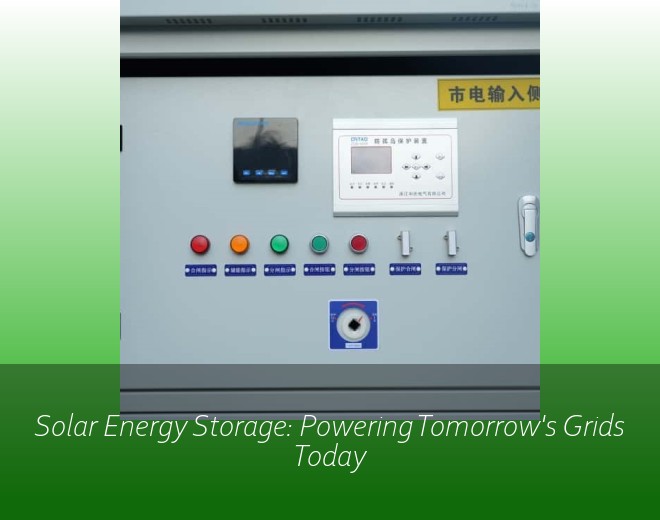
Solar Energy Storage: Powering Tomorrow's Grids Today
Ever wondered why your neighbor's lights stay on during blackouts while yours don't? The answer's probably sitting in their garage – a solar energy storage system. With global renewable capacity projected to double by 2030, energy storage has become the missing piece in our clean energy puzzle.
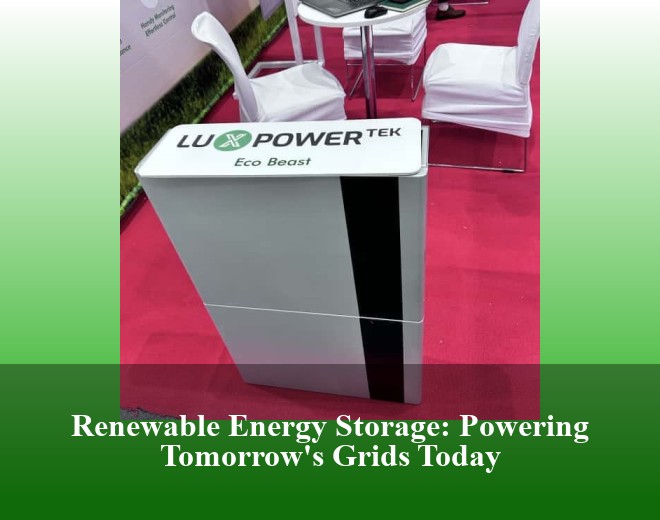
Renewable Energy Storage: Powering Tomorrow's Grids Today
You know that feeling when your phone dies during an important call? Now imagine entire cities facing that problem. As renewables supply 34% of global electricity according to recent data, the storage challenge has become impossible to ignore. Last winter's grid instability in Texas and Germany's frequency fluctuations in March 2024 prove one thing: clean energy needs reliable backup.
 Inquiry
 Online Chat