


100kWh Lithium Batteries: Powering Tomorrow
Table of Contents
Why 100kWh Capacity Matters Now
Ever wondered why 100kWh lithium battery systems are suddenly everywhere? The answer lies in our energy-hungry world's perfect storm: rising electricity demands meet urgent climate goals. A single 100kWh unit can power an average American home for 3 days straight, making it the Goldilocks solution for residential and commercial storage needs.
The Grid Flexibility Factor
California's 2024 grid collapse taught us hard lessons. When rolling blackouts hit, homes with lithium-ion storage systems became neighborhood lifelines. Utilities now actively partner with battery manufacturers, creating virtual power plants from decentralized home systems.
The Chemistry Behind the Magic
Modern 100kWh units aren't your grandad's lead-acid batteries. They're using nickel-manganese-cobalt (NMC) cathodes that boost energy density by 40% compared to 2020 models. But here's the kicker - some manufacturers are experimenting with silicon-dominant anodes that could potentially squeeze 150kWh into the same physical space.
"We've reduced thermal runaway risks by 80% through ceramic separators," reveals Huijue Group's lead engineer in their Q1 2025 technical brief.
Where These Batteries Shine Brightest
From Berlin to Brisbane, 100kWh systems are rewriting energy rules:
- Solar farms pairing 1MW arrays with 10-unit battery banks
- EV fast-charging stations using buffer storage to avoid grid demand charges
- Hospital backup systems achieving 98.7% uptime during extreme weather
Case Study: Alaskan Microgrid Revolution
Remote Kotzebue replaced diesel generators with a lithium battery array paired with wind turbines. Result? Energy costs dropped 60% while reliability jumped to 99.4% - all through a 500kWh storage setup using modular 100kWh units.
Breaking Down the Economics
While upfront costs still hover around $28,000 per unit, the math gets interesting:
| Application | Payback Period | 25-Year Savings |
|---|---|---|
| Residential Solar | 6-8 years | $42,000+ |
| Commercial Peak Shaving | 3-5 years | $180,000+ |
Safety in Energy Storage
After the 2023 Arizona battery fire incident, the industry adopted multiple safeguards:
- AI-powered thermal monitoring
- Automatic fire suppression systems
- Cell-level fusing technology
New UL 9540A certification requirements have actually improved battery lifespan by 20% through rigorous testing protocols. It's not just about preventing disasters anymore - it's about building systems that outlive their warranties.
Future-Proofing Your Investment
With battery recycling rates hitting 96% in Europe, the sustainability angle keeps getting stronger. Companies like Redwood Materials can now recover 95% of a battery's cobalt and 80% of its lithium - numbers that seemed impossible just five years ago.
As we approach Q4 2025, watch for new solid-state prototypes promising 30% faster charging. These advancements aren't just incremental - they're redefining what energy storage systems can achieve in our lifetime.
Related Contents
100kWh Lithium Batteries: Powering Tomorrow
Ever wondered why 100kWh lithium battery systems are suddenly everywhere? The answer lies in our energy-hungry world's perfect storm: rising electricity demands meet urgent climate goals. A single 100kWh unit can power an average American home for 3 days straight, making it the Goldilocks solution for residential and commercial storage needs.
Lithium Solar Batteries: Powering Tomorrow
You know what's crazy? Lithium solar batteries now store 93% of residential solar energy worldwide, completely overshadowing lead-acid alternatives. This shift didn't happen overnight - it's the result of lithium's unique ability to pack more power into smaller spaces while lasting through thousands of charge cycles.
Lithium Solar Batteries: Powering Tomorrow
Ever wondered how California kept lights on during its 2024 grid emergency? The answer lies in lithium solar batteries quietly revolutionizing energy storage. These systems stored excess solar power during daylight, preventing blackouts for 2.1 million households when traditional grids faltered.
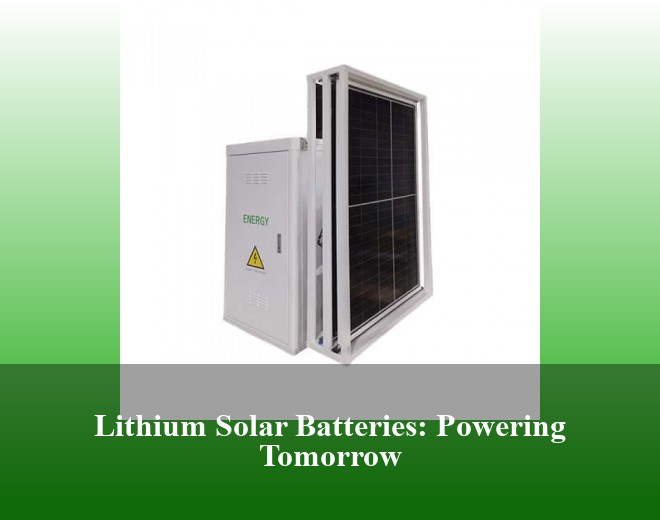
Lithium Solar Batteries: Powering Tomorrow
the solar storage game's changed completely since lithium-ion entered the scene. Back in 2015, lead-acid batteries still held 67% of the residential market. Fast forward to 2023, and lithium solar solutions command 89% of new installations. What flipped the script?
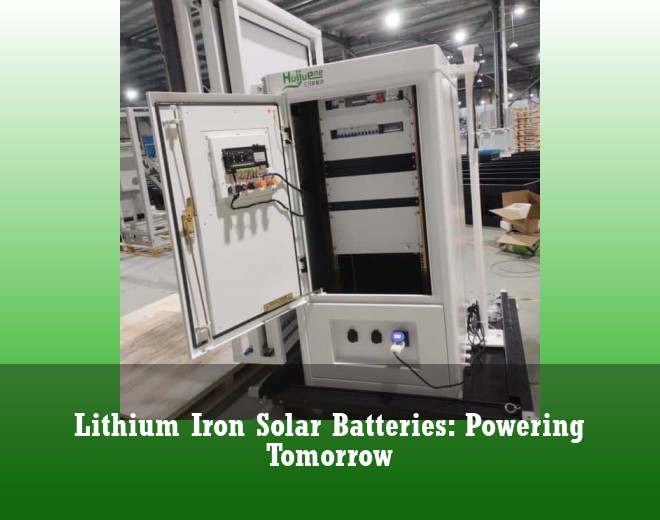
Lithium Iron Solar Batteries: Powering Tomorrow
You've probably seen those viral videos of solar farms sitting idle during peak sunshine hours. What if we told you the solution isn't just more panels, but smarter storage? The International Renewable Energy Agency reports 14% of generated solar energy gets wasted globally due to inadequate storage - enough to power 30 million homes annually.
 Inquiry
 Online Chat